
A little out of tune!
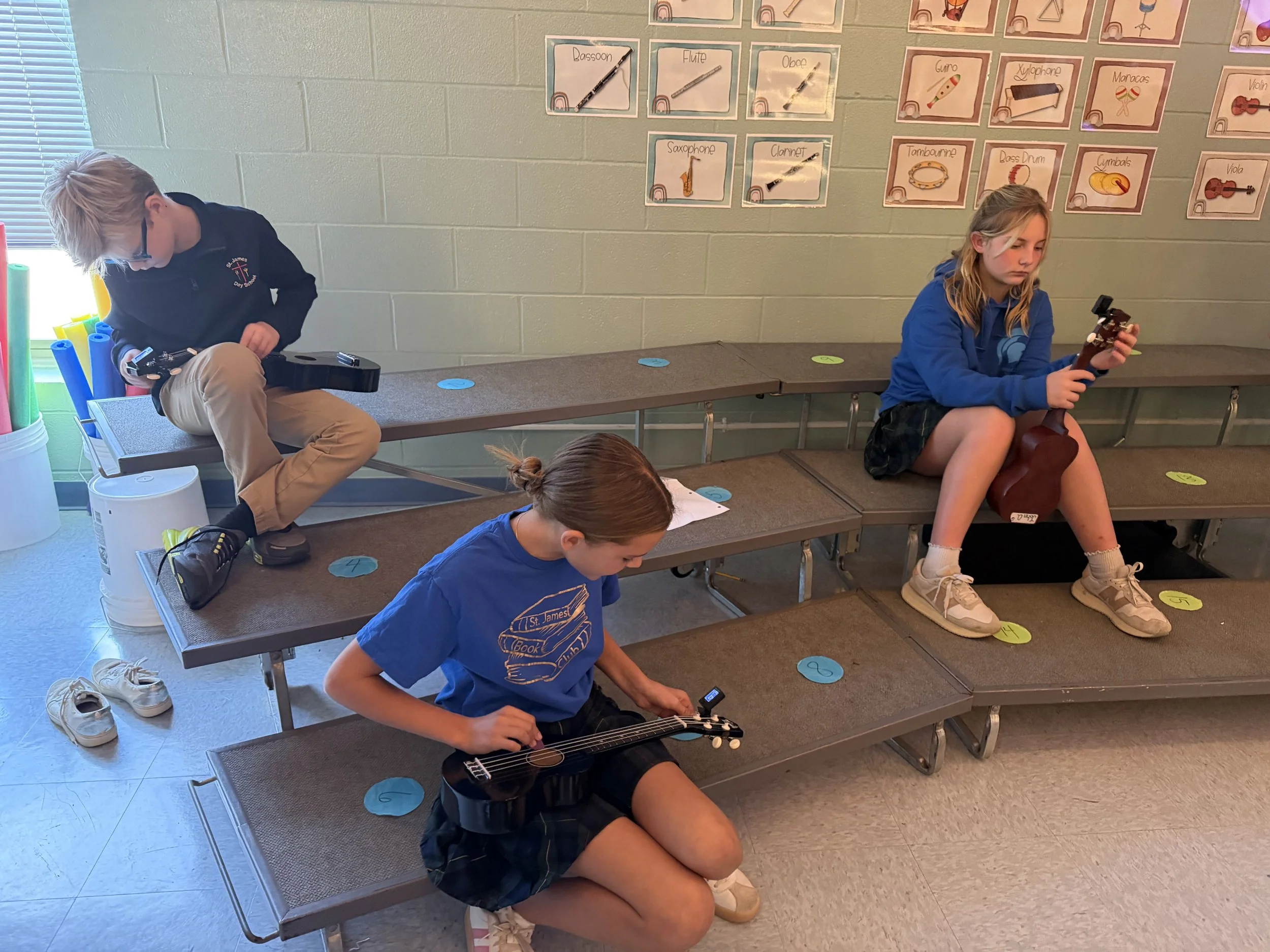

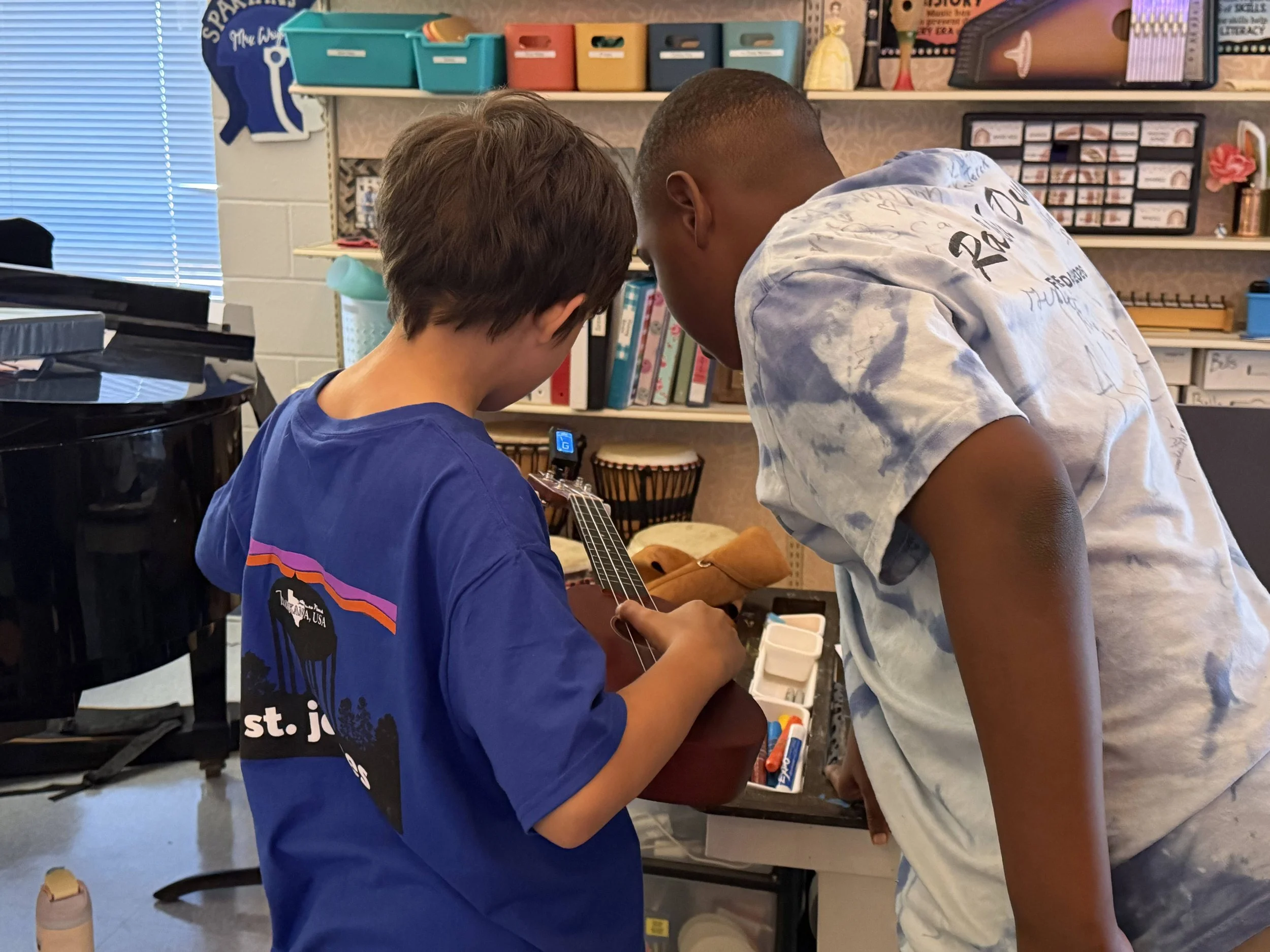

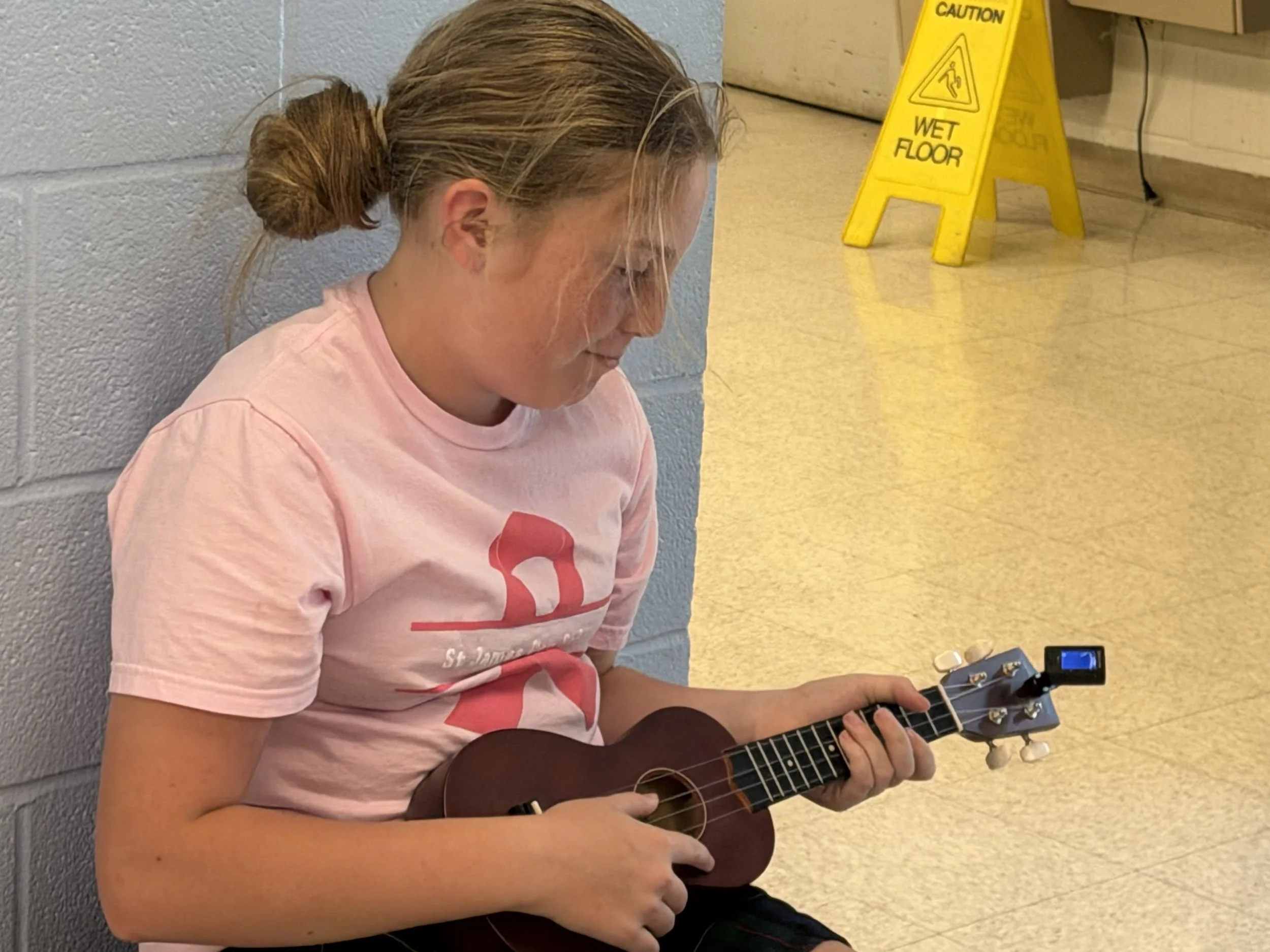
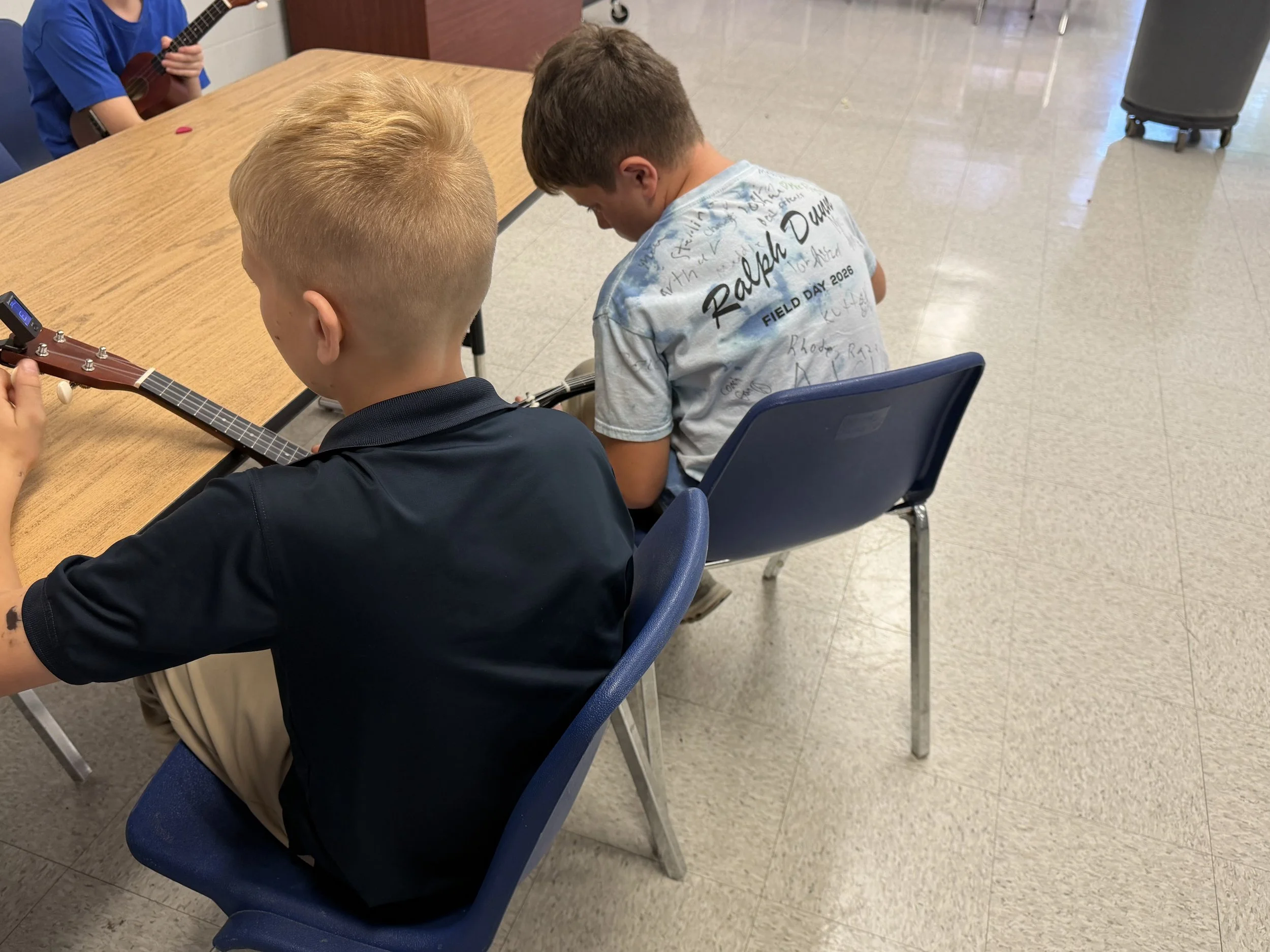

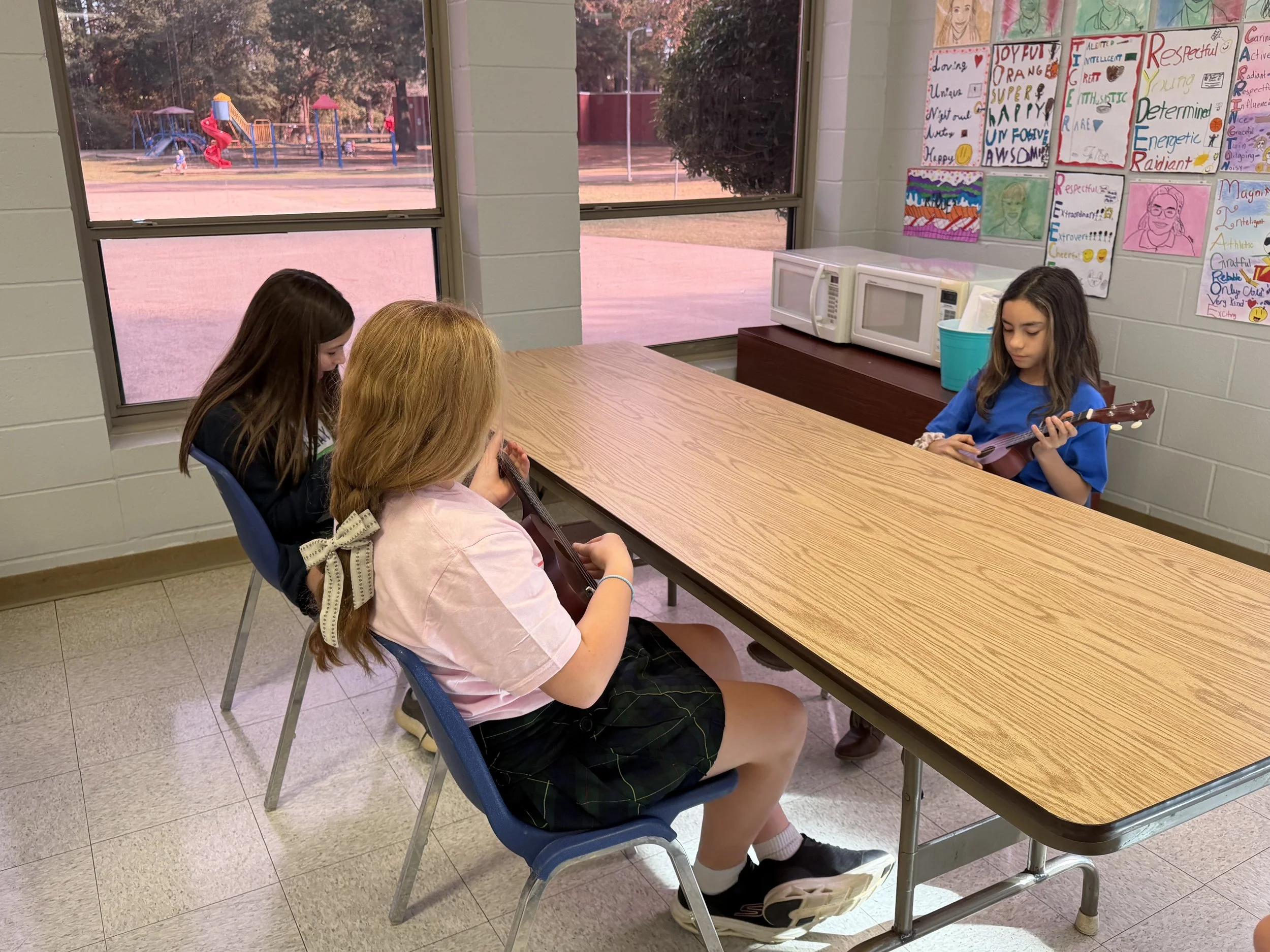
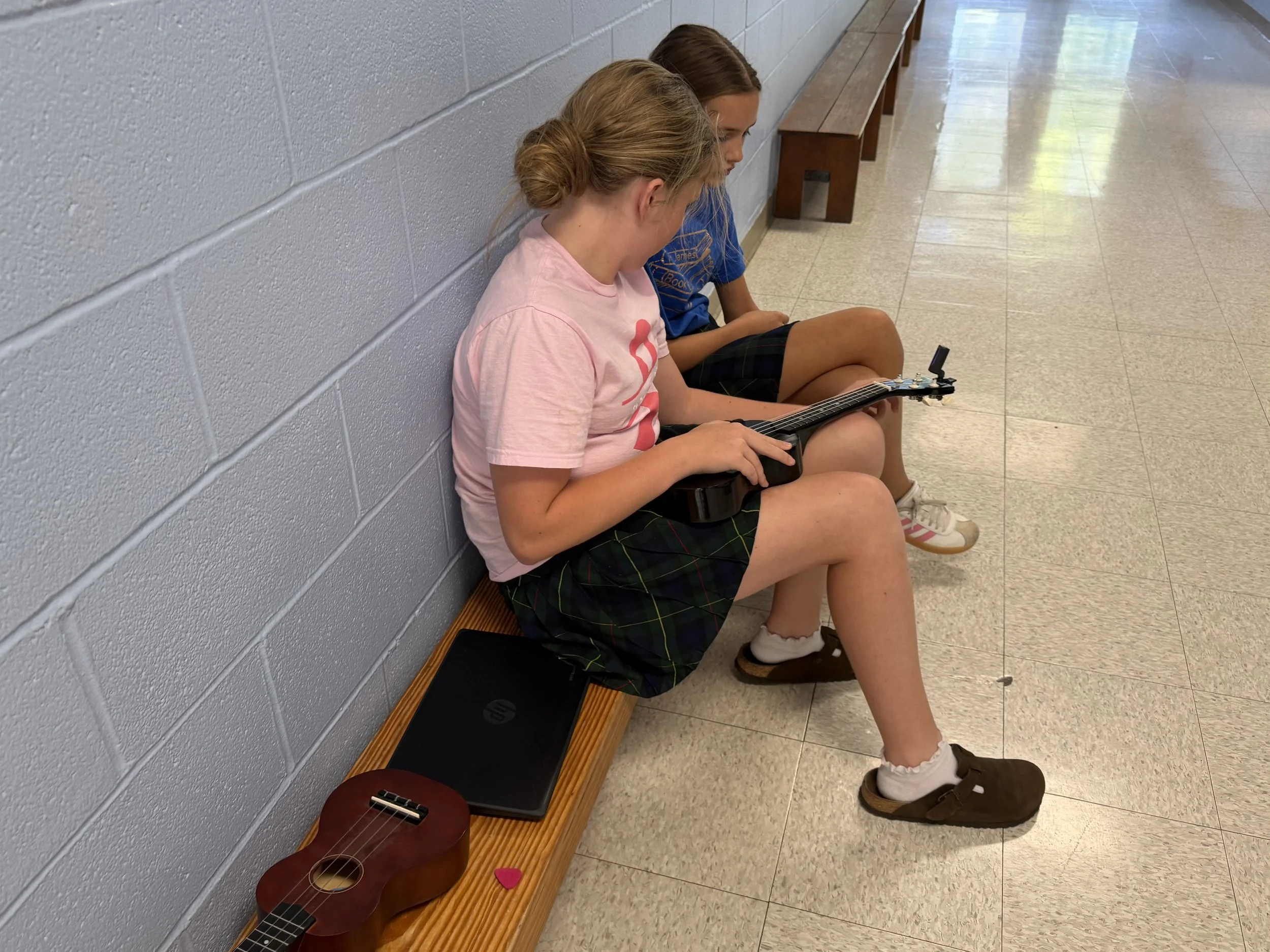
Fifth and Sixth grade get the opportunity to learn how to play the ukulele. They learn about the history, parts, how to hold it, the notes of each string, and this week, how to tune them! Tuning a ukulele requires the player to twist the tuning pegs on the head of the instrument. To raise the pitch, each student will need to tighten the string. Lowering the pitch involves loosening the string. The notes of each string are G, C, E, and A or more fondly known as Green Cats Eat Ants. They used their ears as well as digital tuners to get the strings on the right pitch.
Learning how to tune a ukulele helps students develop several important musical skills, including listening, pitch recognition, concentration, problem-solving, and musical independence. When students learn to tune by ear, they strengthen their ability to recognize differences in pitch, identify when a string sounds too high or too low, and make adjustments to create the correct sound. This process develops their musical ear and helps them become more confident and attentive musicians. Learning to use a digital tuner is equally important because it teaches students how to use technology as a musical tool while providing a visual guide to accurate tuning. Digital tuners can help beginners understand the correct pitch of each string and build confidence as they learn. By practicing both methods, students gain a well-rounded understanding of tuning and become better prepared to care for their instruments. Most importantly, learning to tune a ukulele encourages responsibility, patience, self-reliance, and independence, allowing students to prepare their instruments and enjoy making music with others.