
Let's start at the very beginning...and also drums...and other stuff!
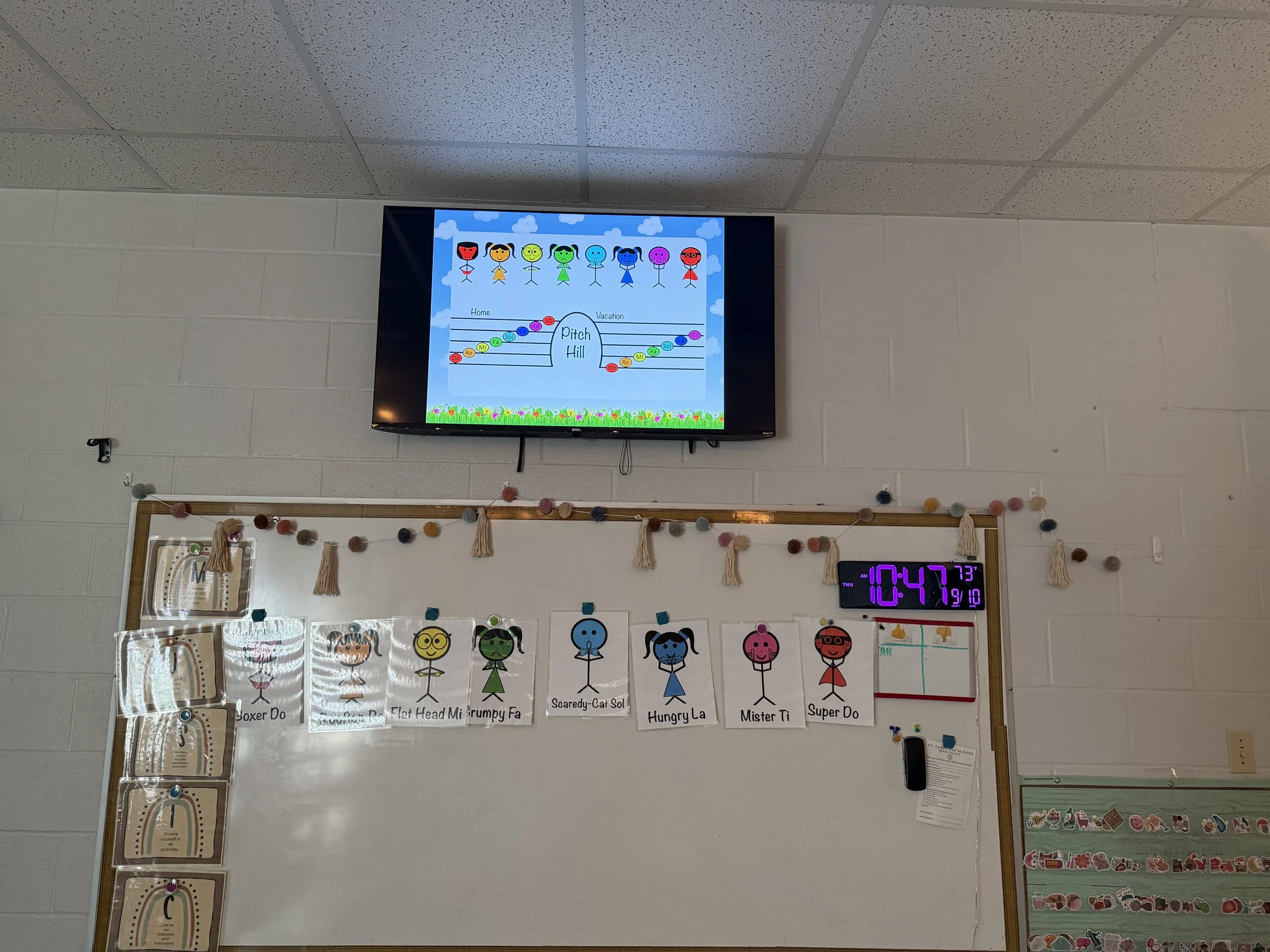
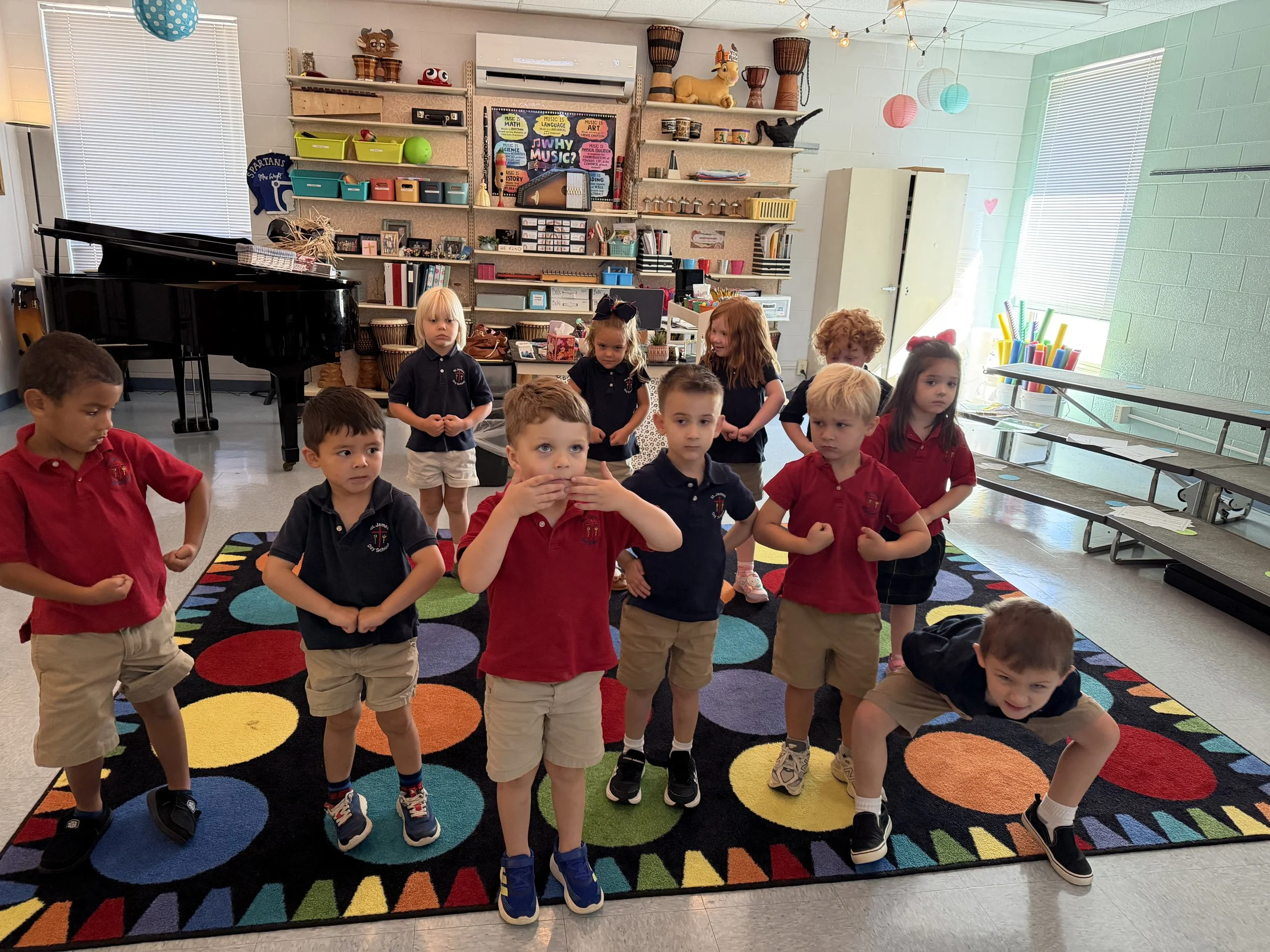
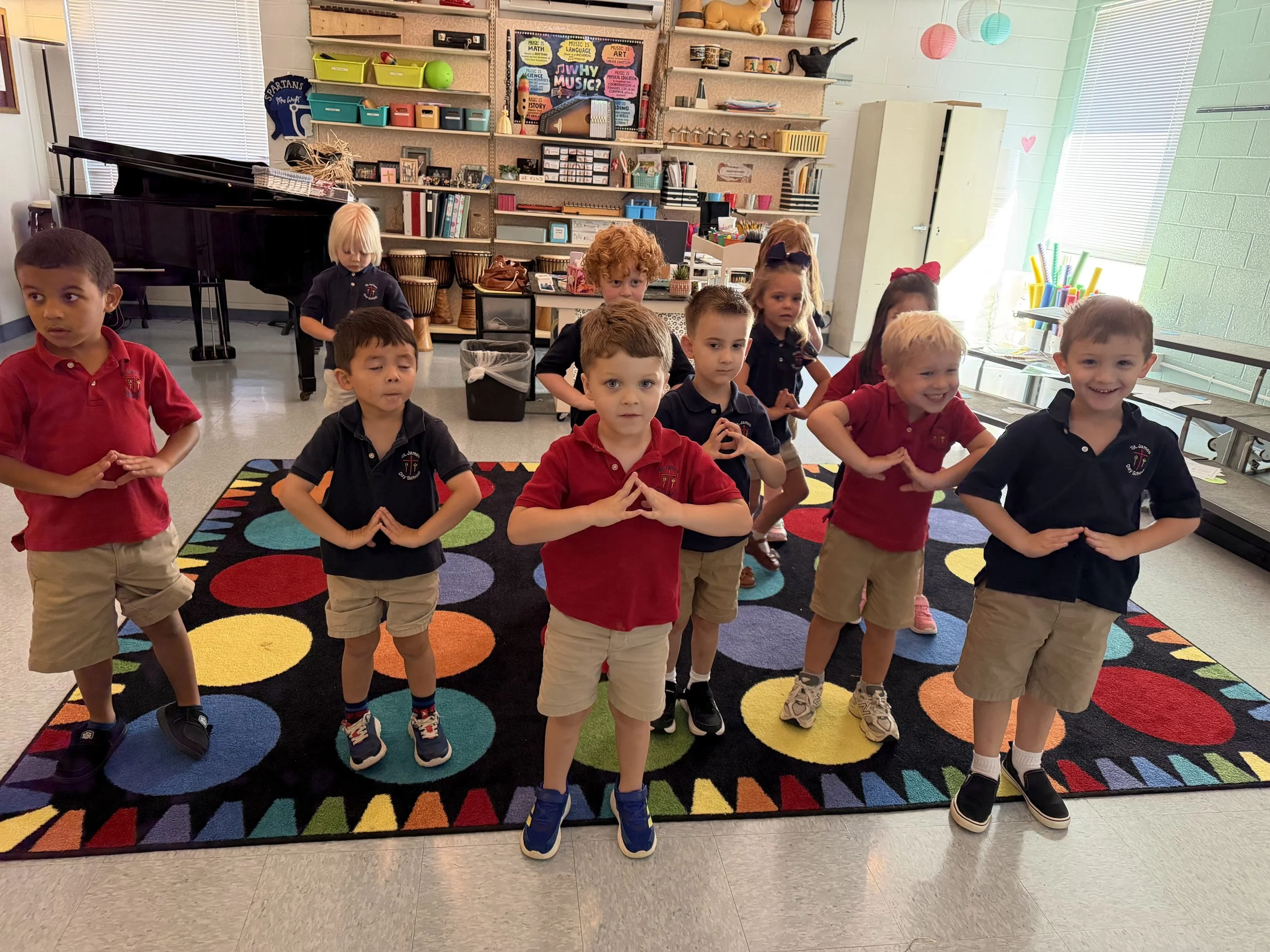
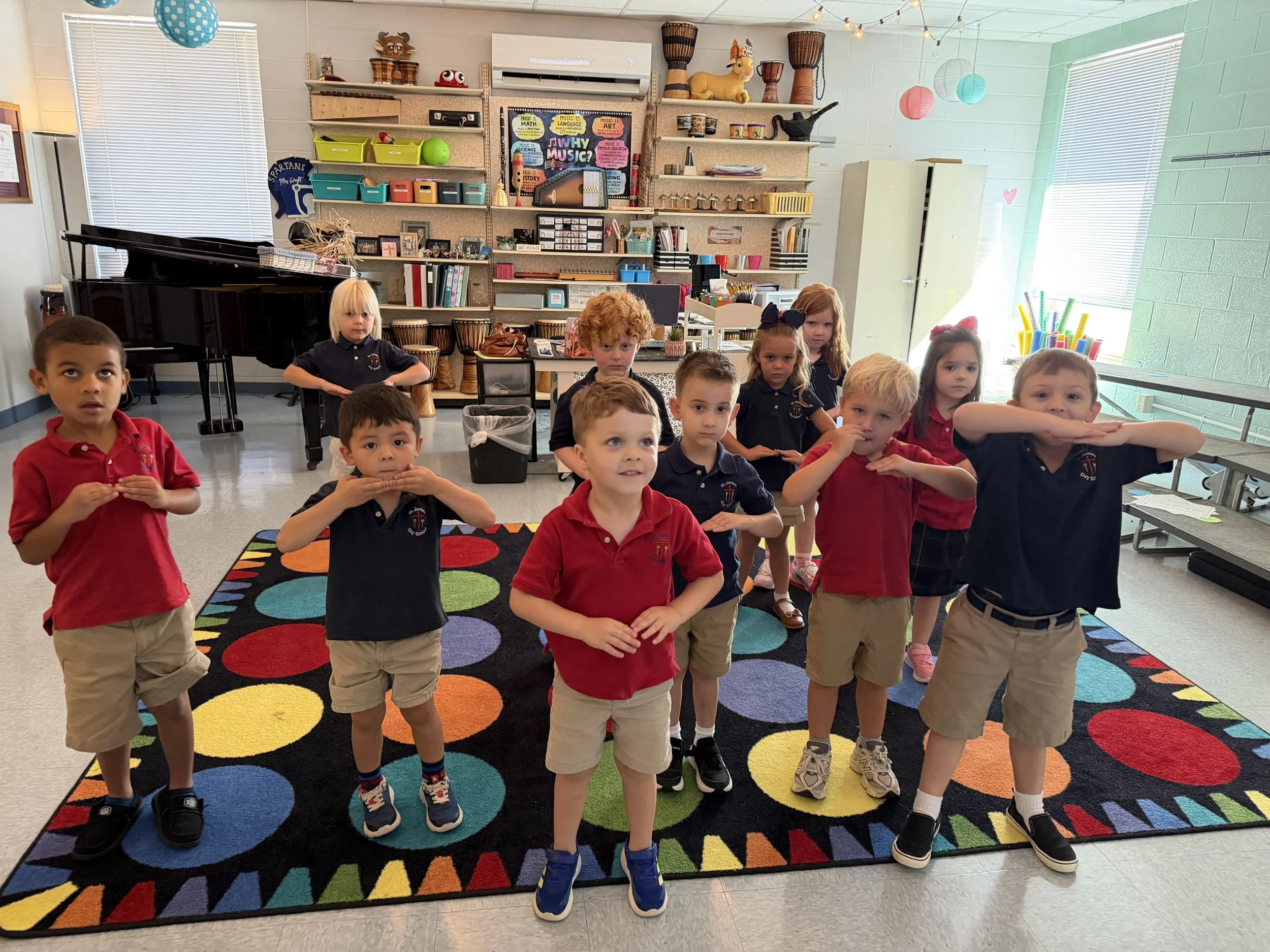
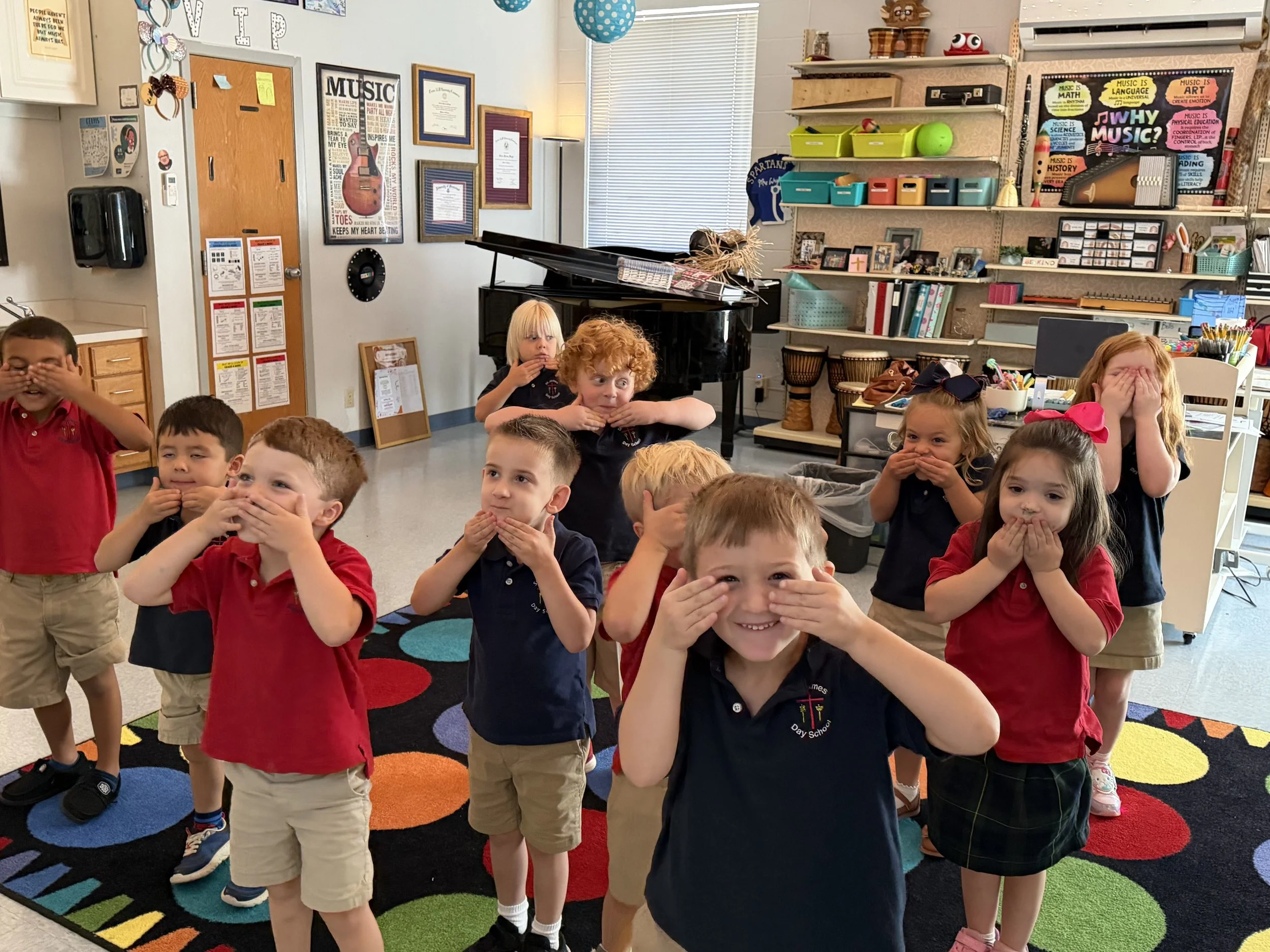
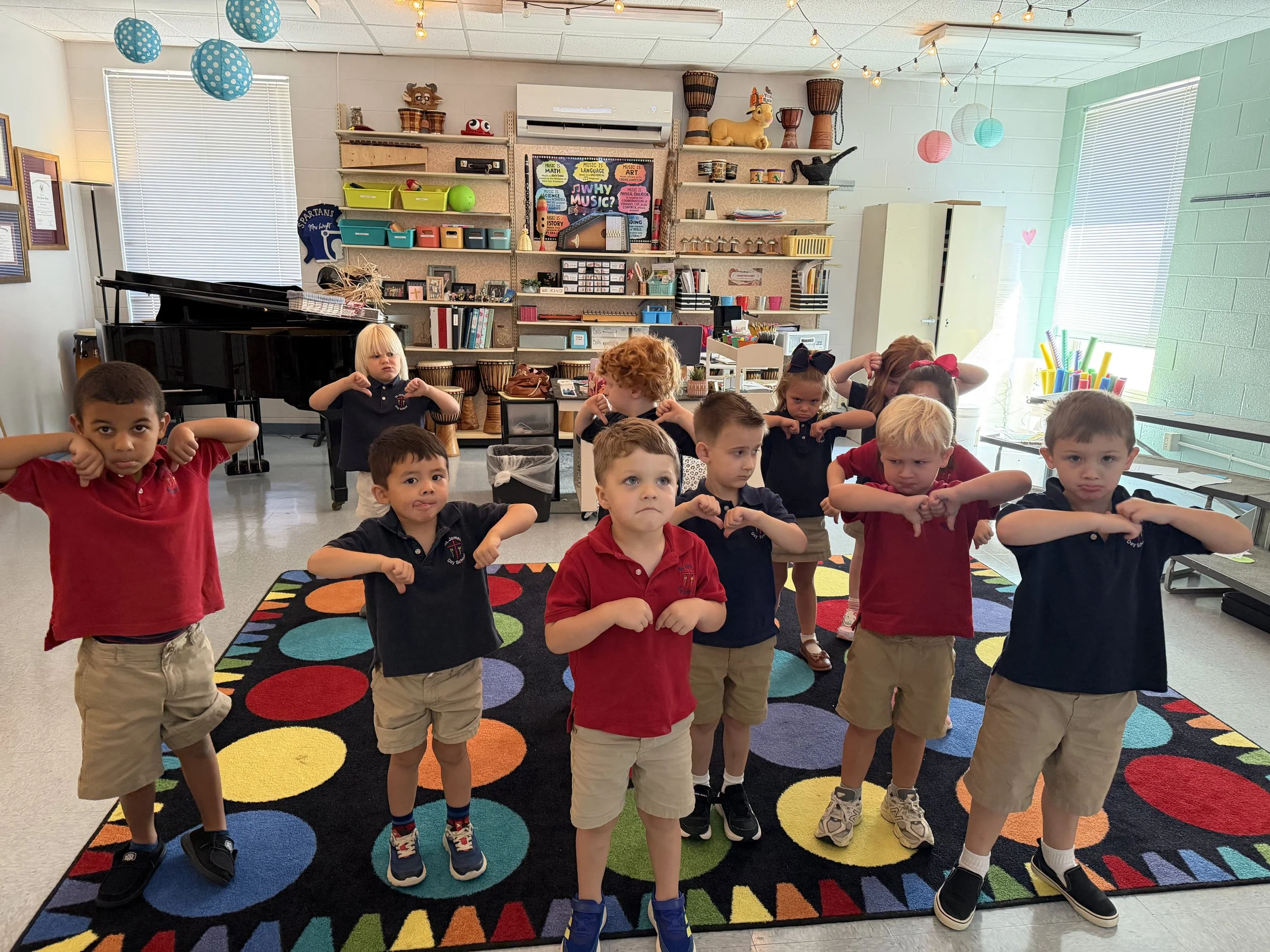
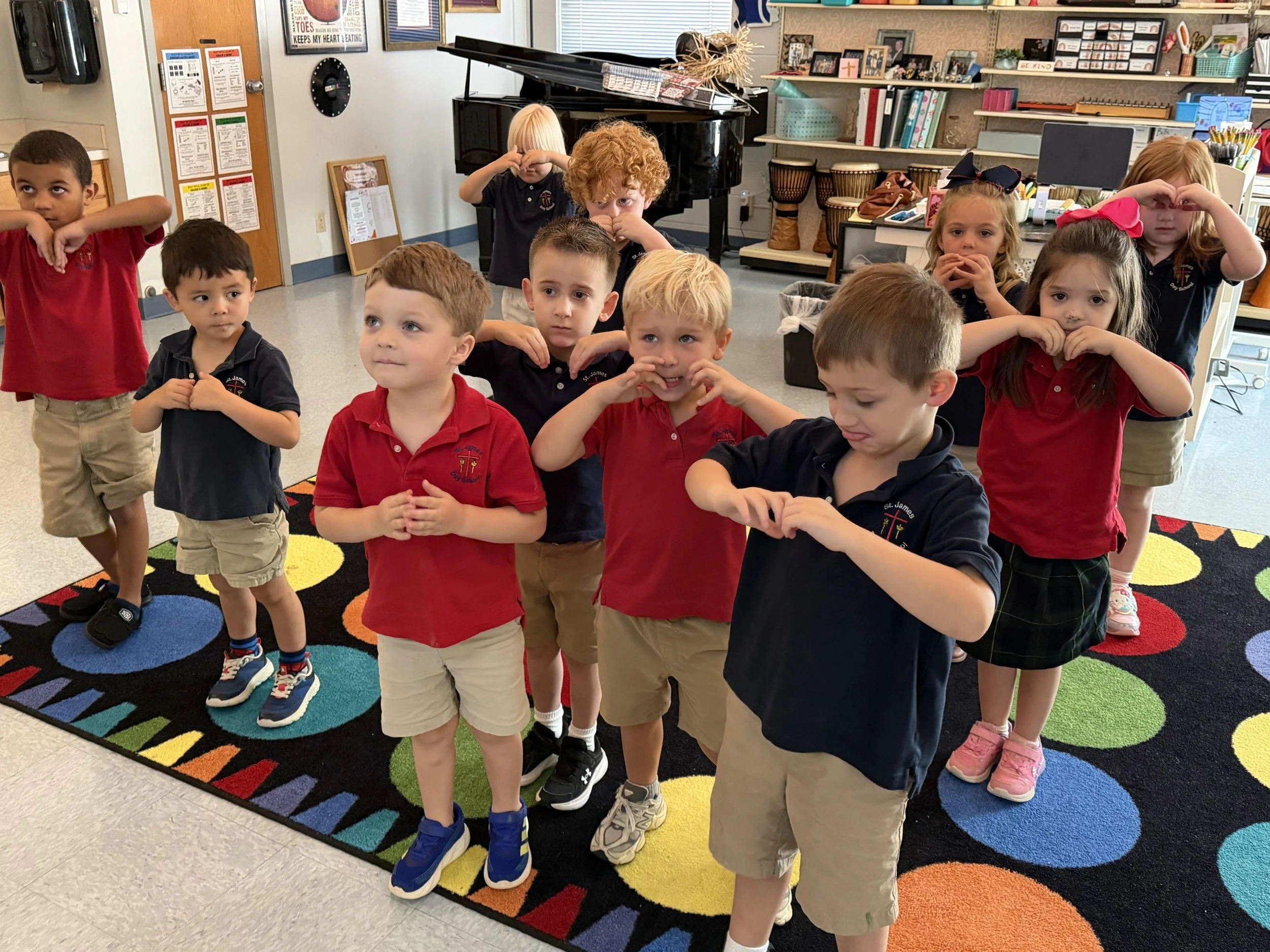
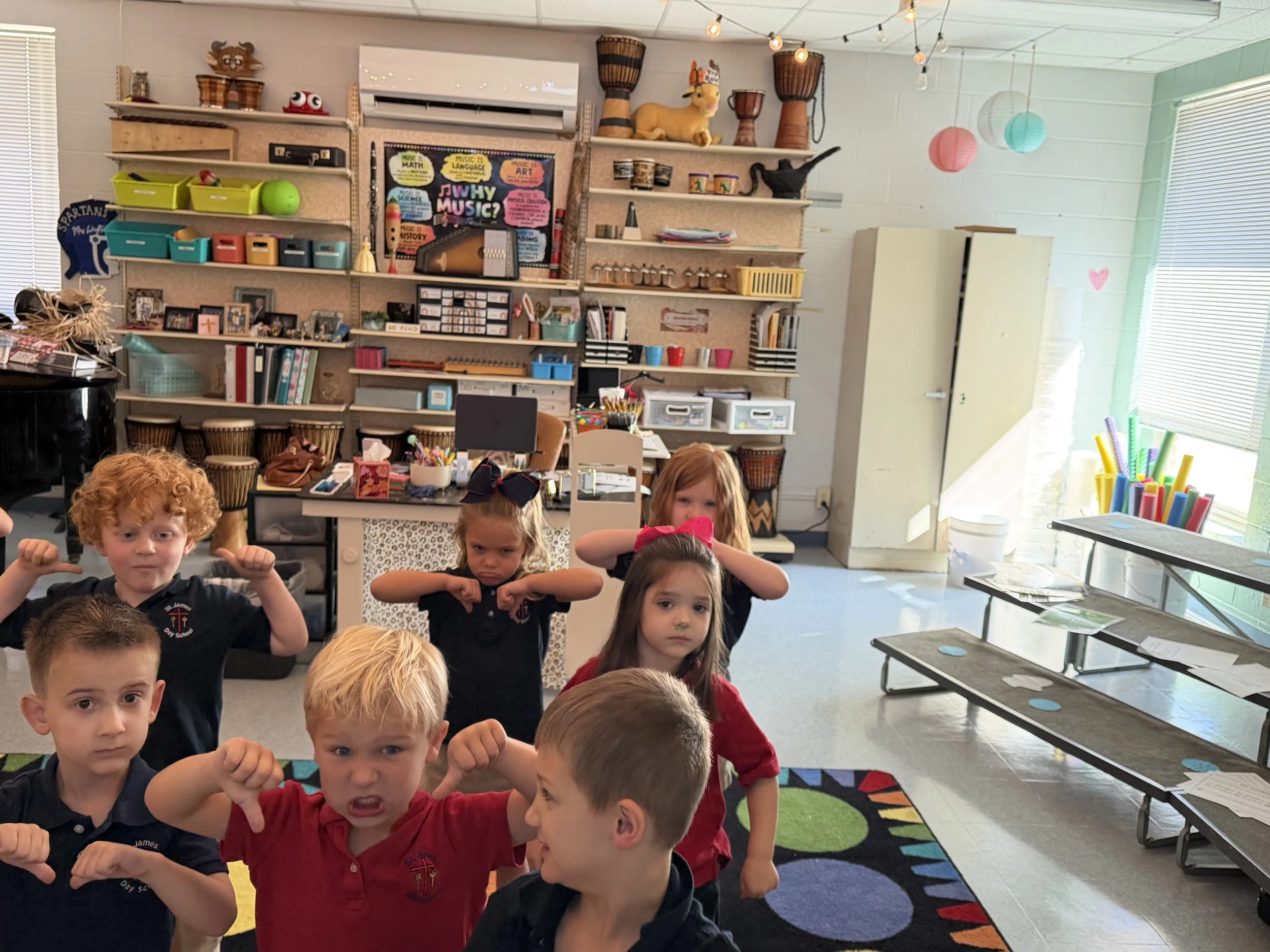
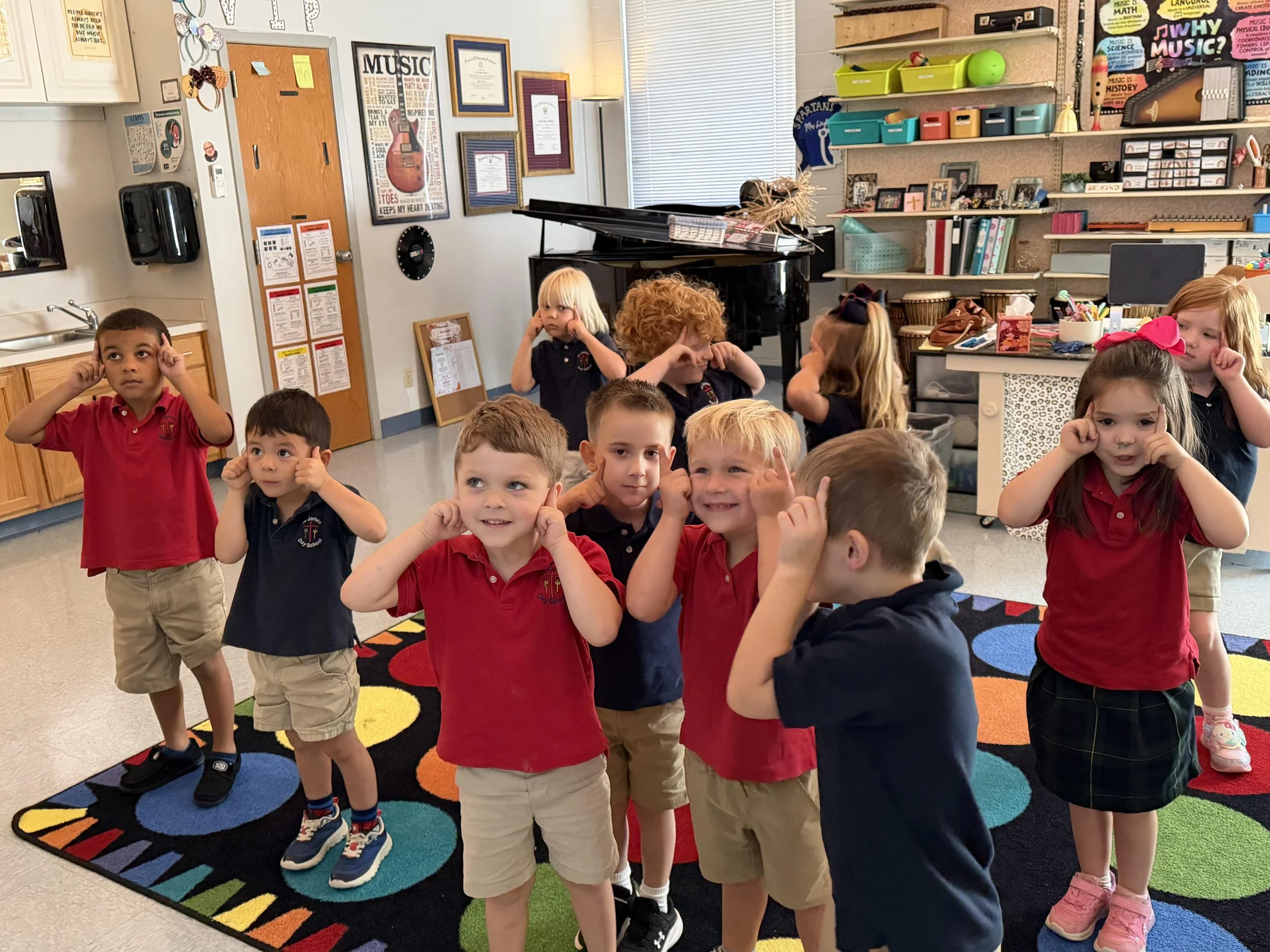
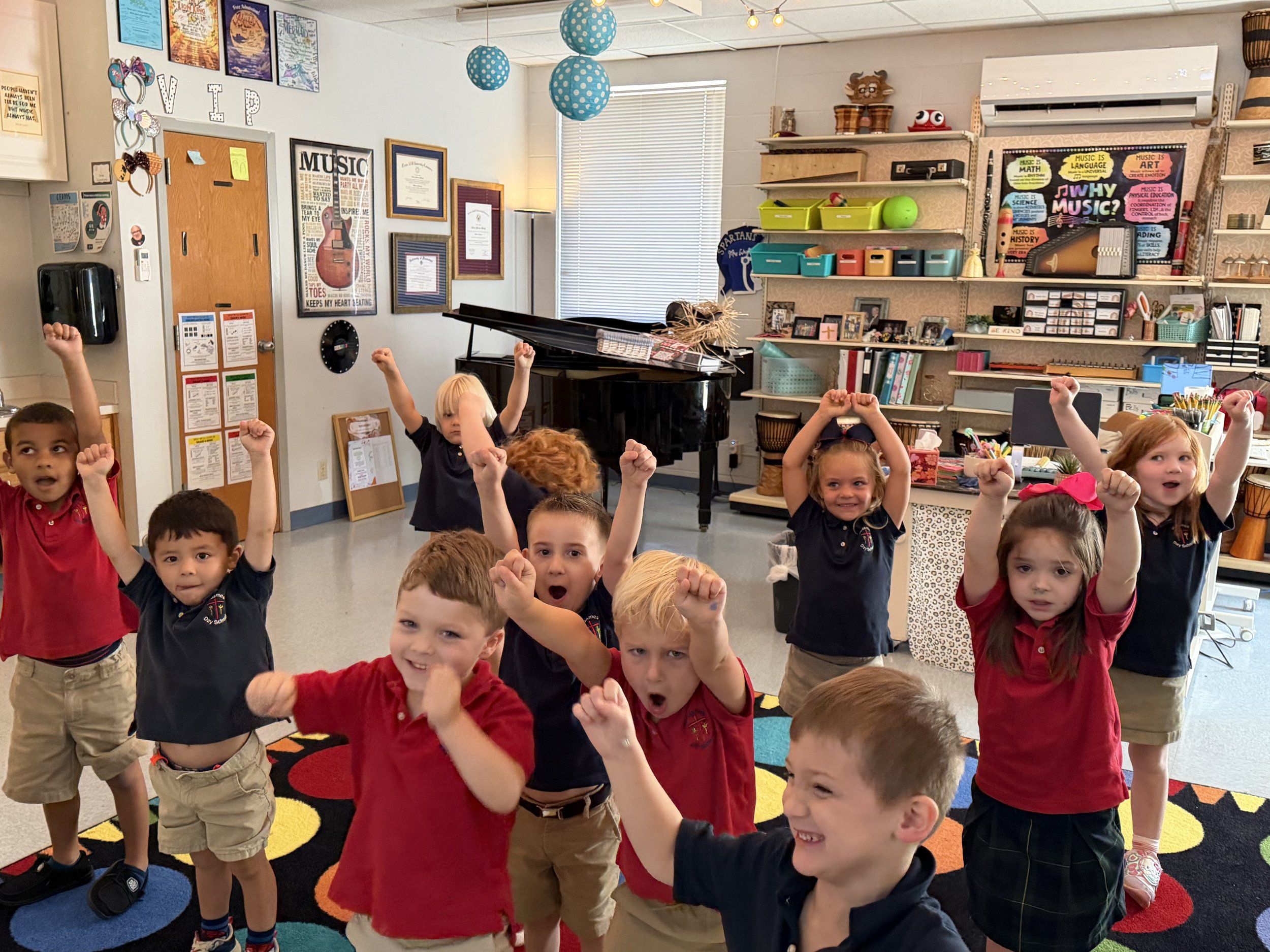
The past couple of weeks our Prek 4 classes have been learning about a fun place called Pitch Hill. It is a hands on storytelling unit that introduces the different notes of Solfege (Do, Re, Mi, etc.) as different characters who live on Pitch Hill. We learned where they live on the hill as well as their hand movements.
While learning about solfège, our students develop important musical skills such as listening, pitch recognition, memory, and vocal development. They learn to identify and sing simple solfège syllables such as Do, Re, and Mi while practicing matching their voices to different pitches. Children also develop sequencing, concentration, coordination, and confidence as they participate in singing games, movements, and hand signs. These activities encourage children to express themselves through music while building a strong foundation for future musical learning.
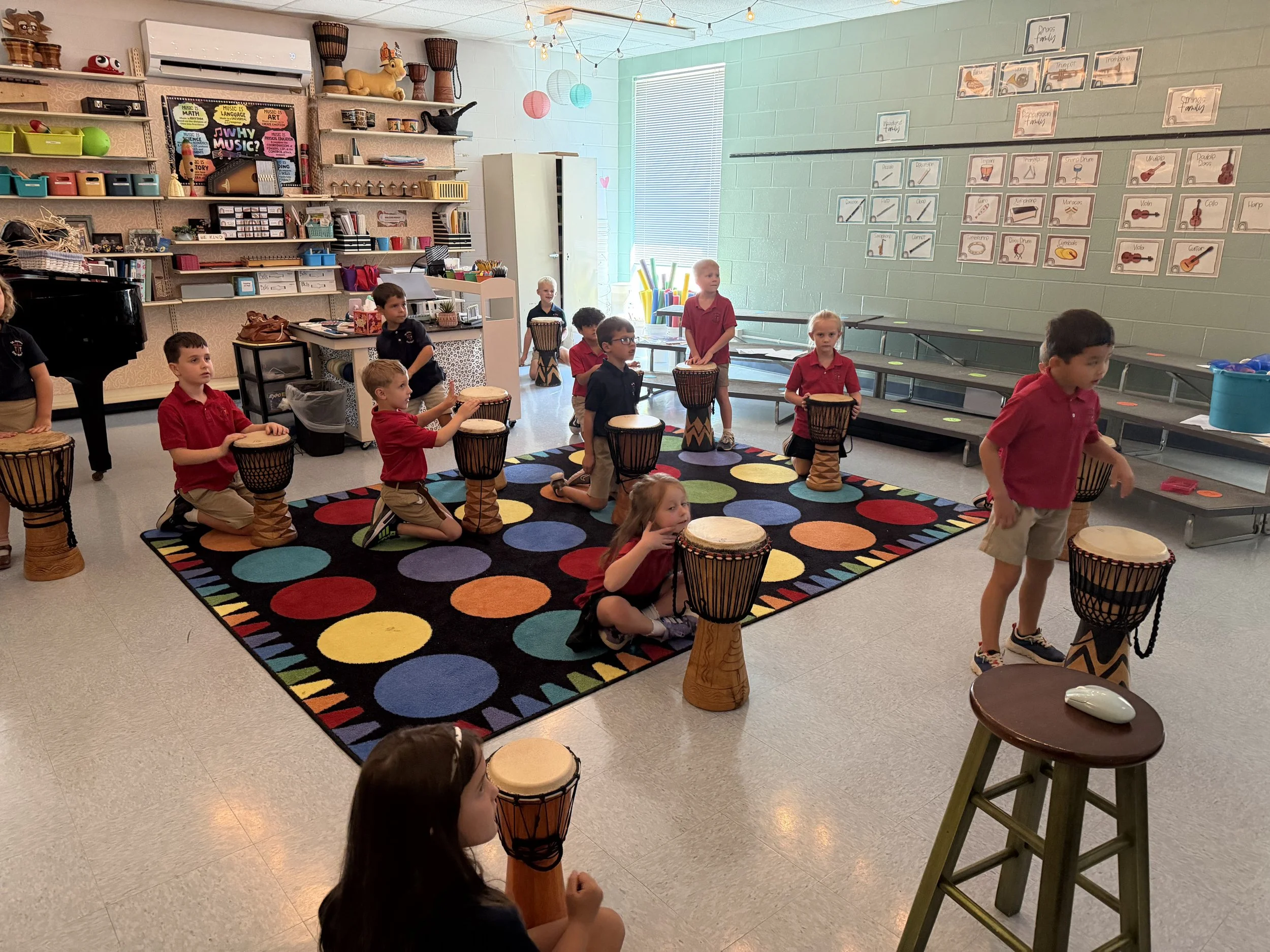
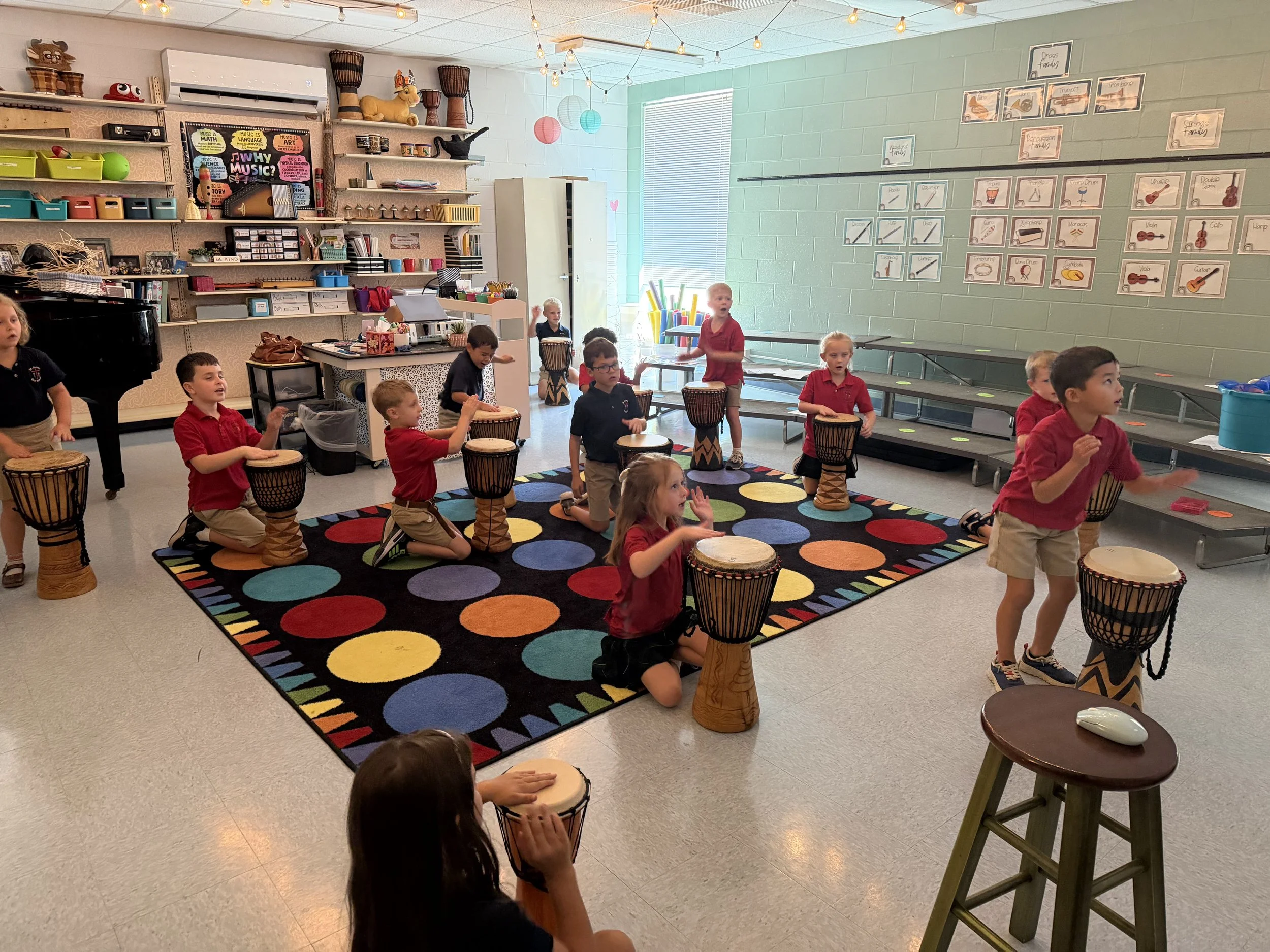
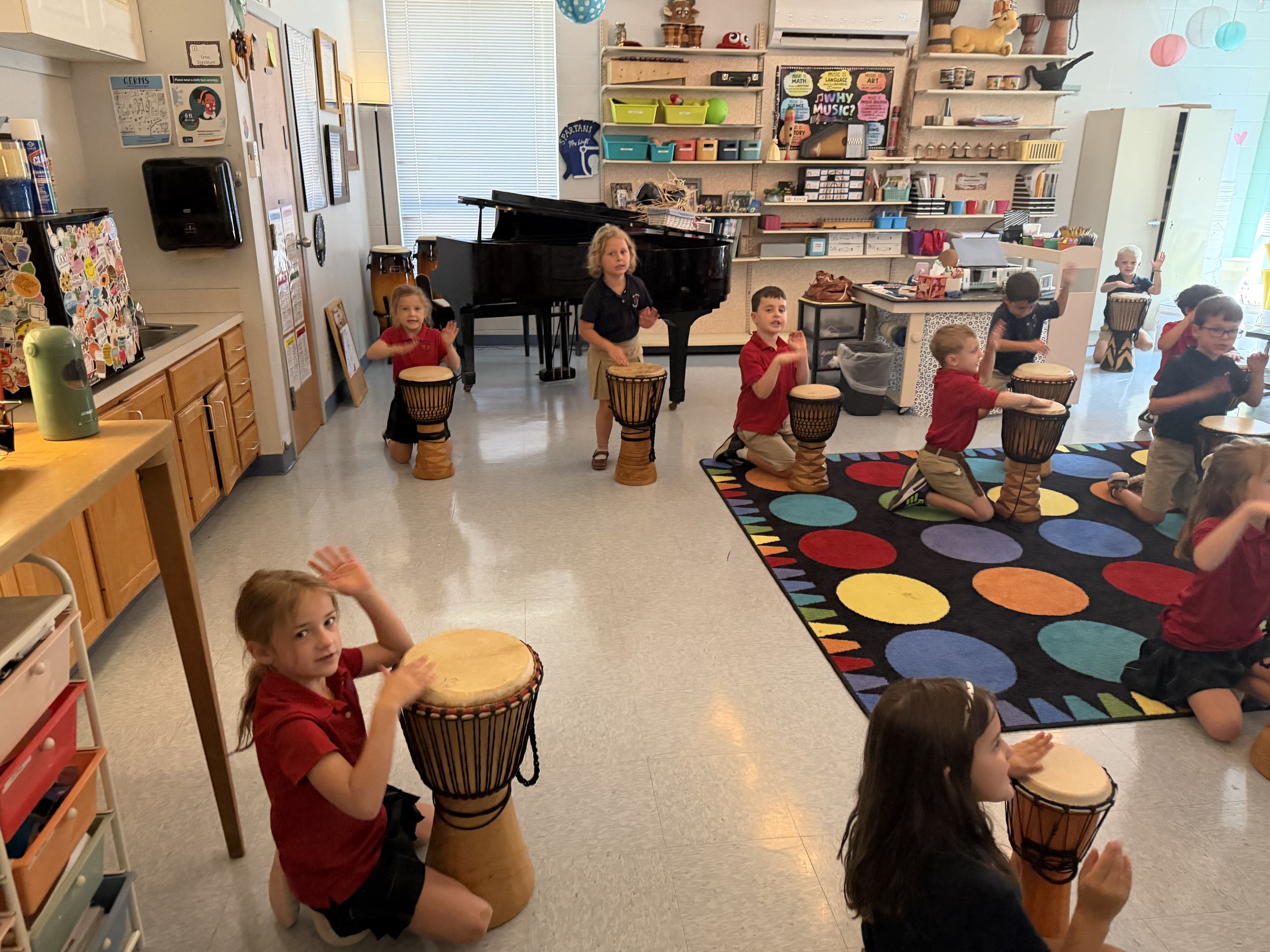
1st grade reviewed reading simple quarter note, quarter rest, and eighth note rhythms by saying, clapping and finally playing them on our djembes.
While reading and playing quarter notes, quarter rests, and eighth-note patterns on the drums, they develop rhythm and steady-beat skills by learning to recognize and perform different rhythmic patterns. They strengthen music reading, listening, concentration, and memory as they follow rhythmic notation and keep track of rests and sounds. Students also develop fine-motor coordination and hand-eye coordination while playing the drums and improve their ability to keep a steady beat, follow directions, and perform rhythms independently or with a group.
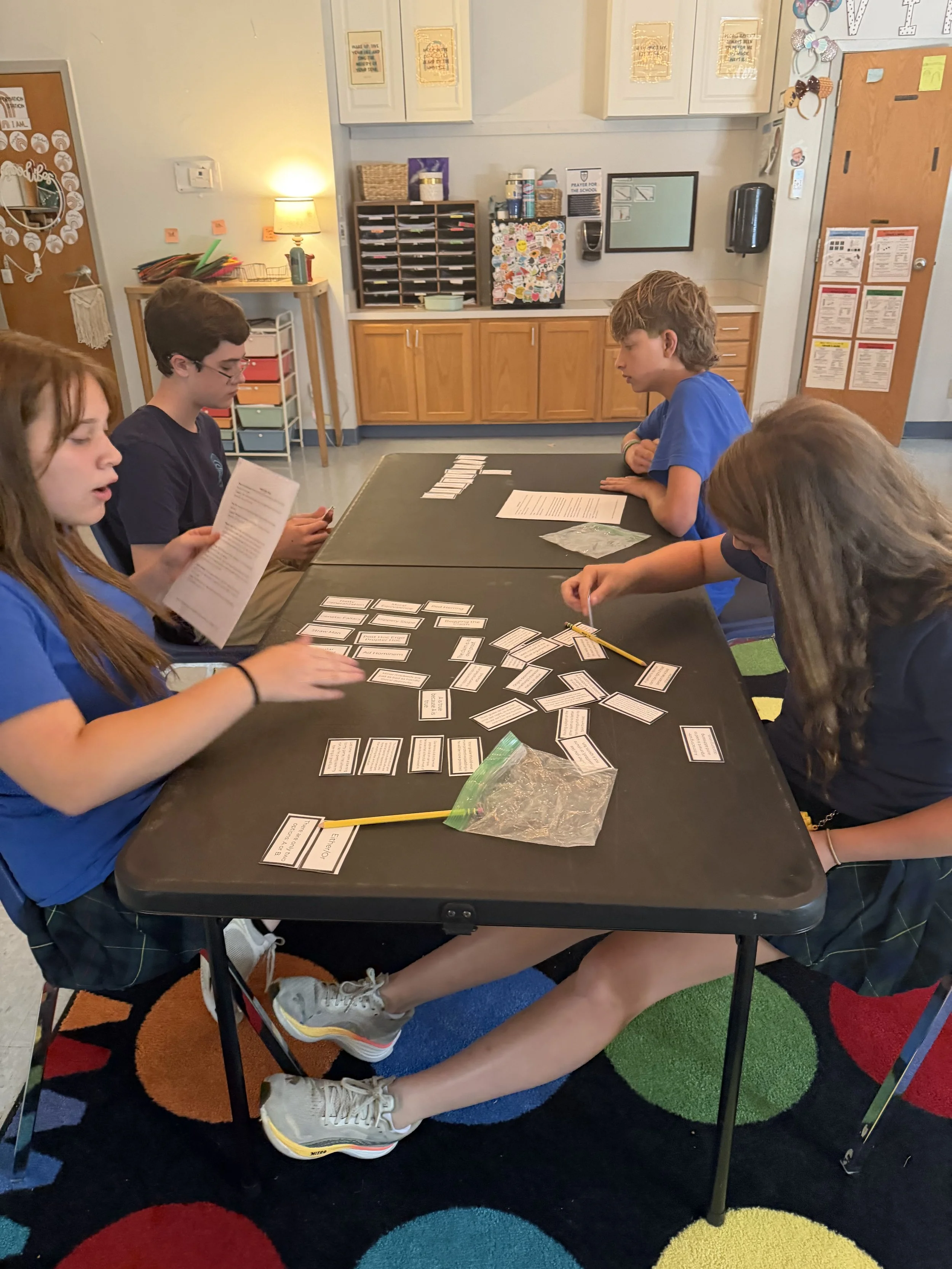
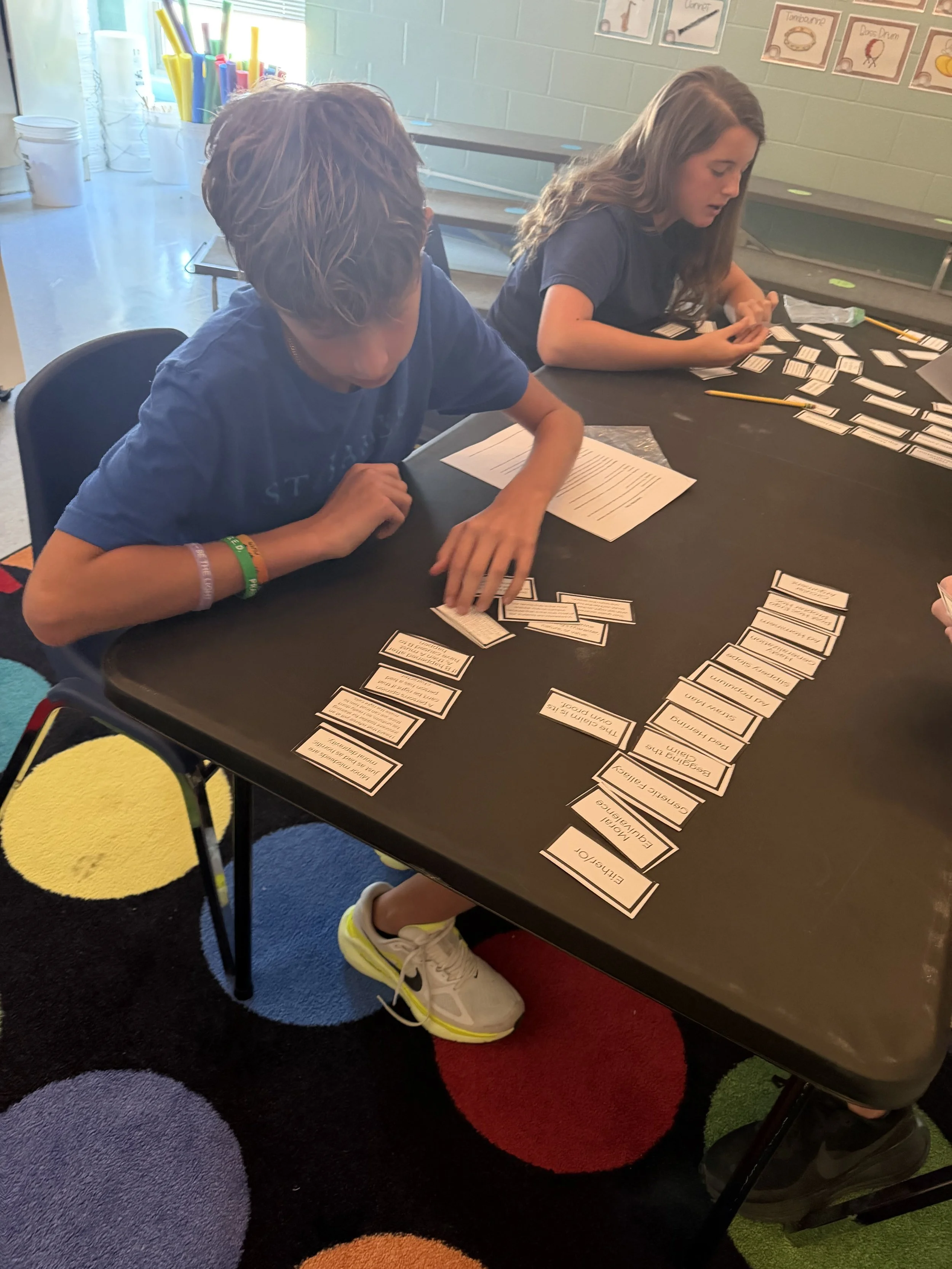
Speech learned all about the many different Logical Fallacies that can occur in speech arguments. It is important for speech students to learn about logical fallacies because it helps them recognize weak or misleading arguments and communicate their ideas more effectively. By understanding common fallacies, students can avoid using faulty reasoning in their own speeches and learn how to support their claims with accurate evidence and logical explanations. This knowledge also helps students critically evaluate the arguments of others, make stronger persuasive speeches, and become more thoughtful and responsible communicators. This will be very helpful when they begin writing their first speeches in a couple of weeks!
We have had a great few weeks! So much fun!