TREES

We are really branching out with the tree unit. The first couple of weeks we discussed animals that live in trees and food that comes from trees. Birds and squirrels were just a few of our favorite animals that live in trees. We learned that lemons, peaches , pecans and coconuts are just some of the foods that come from trees. We had a blast examining, smelling and eating some of these wonderful foods. Trees provide food for animals and people.

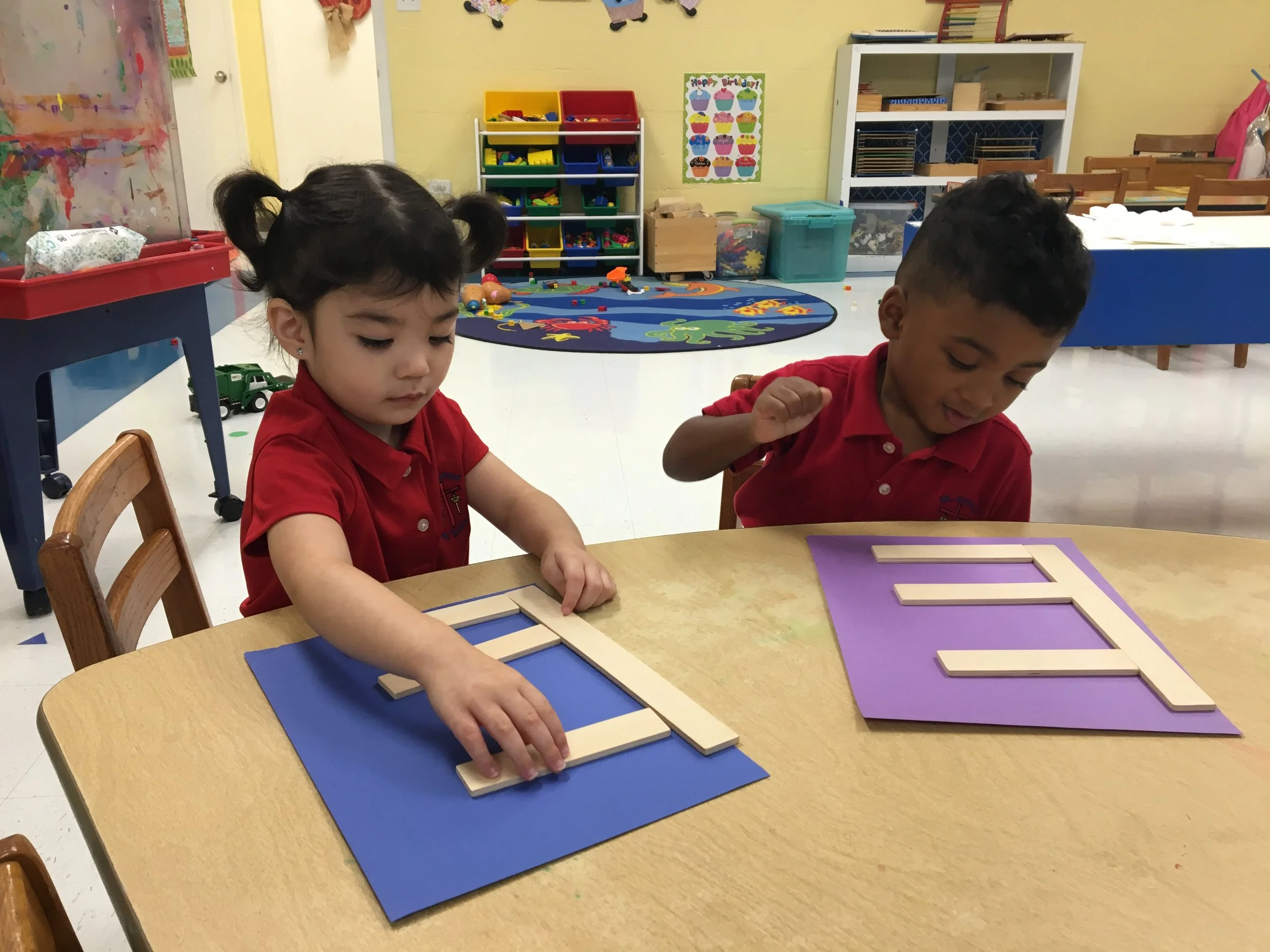
One of our activities had us searching the playground for sticks. We used sticks to form letters. Handwriting Without Tears introduces letters that are formed with straight lines first. Letters made with straight lines are easier for your child to learn to write than curved line letters. Each child used their sticks to form letters E, F, H, I, L, T. As your child puts together a letter from sticks they are using fine motor skills and their ability to remember the letter they are making is enhanced.

One of our favorite books for this unit is Abiyoyo. As I read the story I had the children participate in a interactive read -aloud. This is a literacy event where the class activity engages in listening and talking about the text throughout the duration of the read-aloud. The class is free to express ideas as I read, this read-aloud helps your child with comprehension and promotes conversations.

We loved our living history reenactment of the first Thanksgiving. The primary classes left England in search of religious freedom. We crossed the ocean on the Mayflower. It was a long journey and we were thrilled to finally reach land! When we landed we searched the woods for timber to build shelter. We pretended to cut down trees and plant a garden. It was a blessing when Squanto showed up and told us a better way to plant corn. Your three year old may be too young to fully grasp the meaning of Thanksgiving, but we can educate through dramatic play. During this activity we leaned to work as a group and appreciate other cultures.

After all of our hard work, it was time for a feast. The primary classes came together for a wonderful lunch. Thank you to all of our parents for making this a wonderful Thanksgiving lunch for the children. A special thank you to Bryan and Jennifer Ogburn for the delicious turkey and dressing.

diane johnston
Uniforms and Costumes

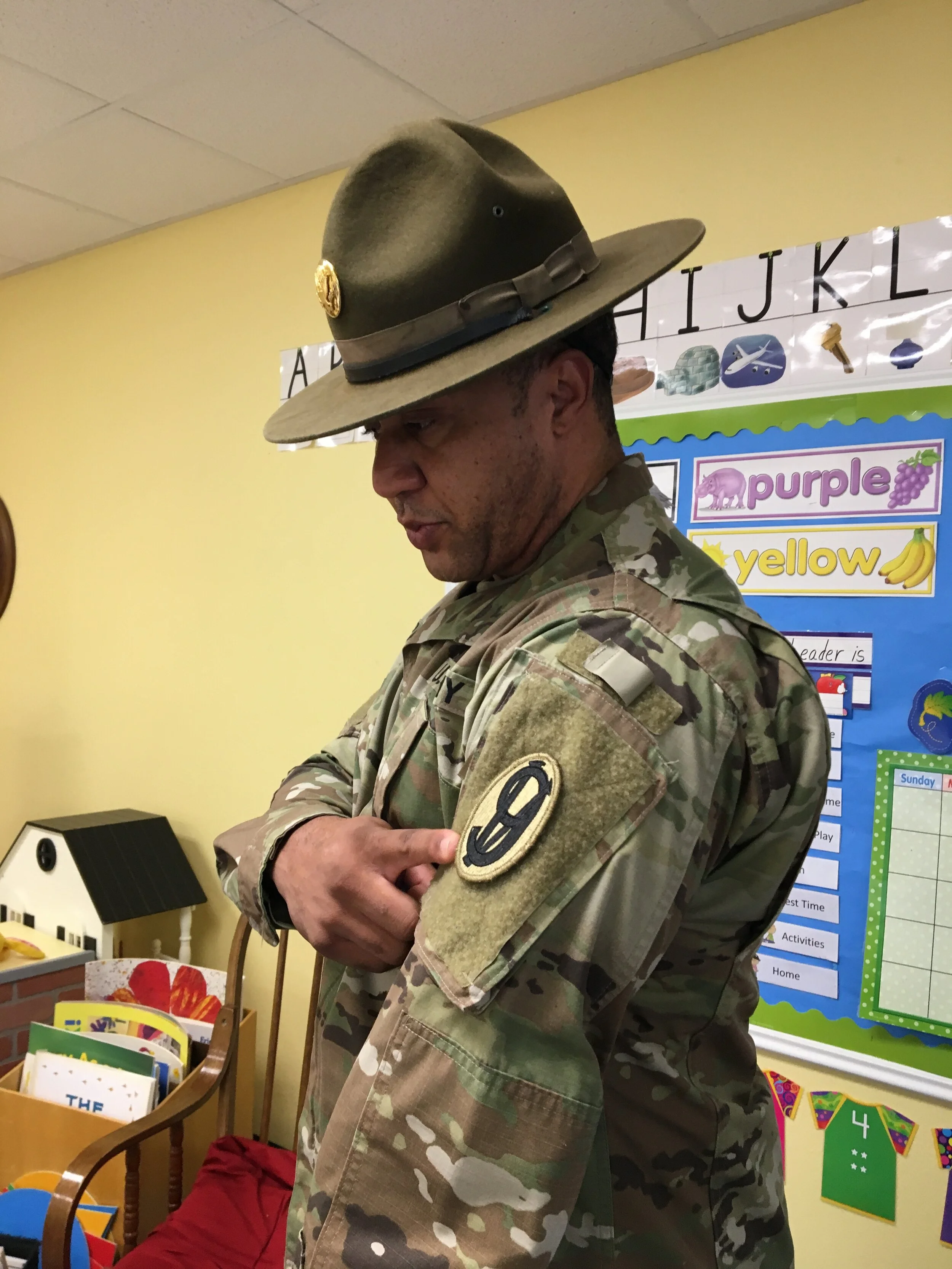
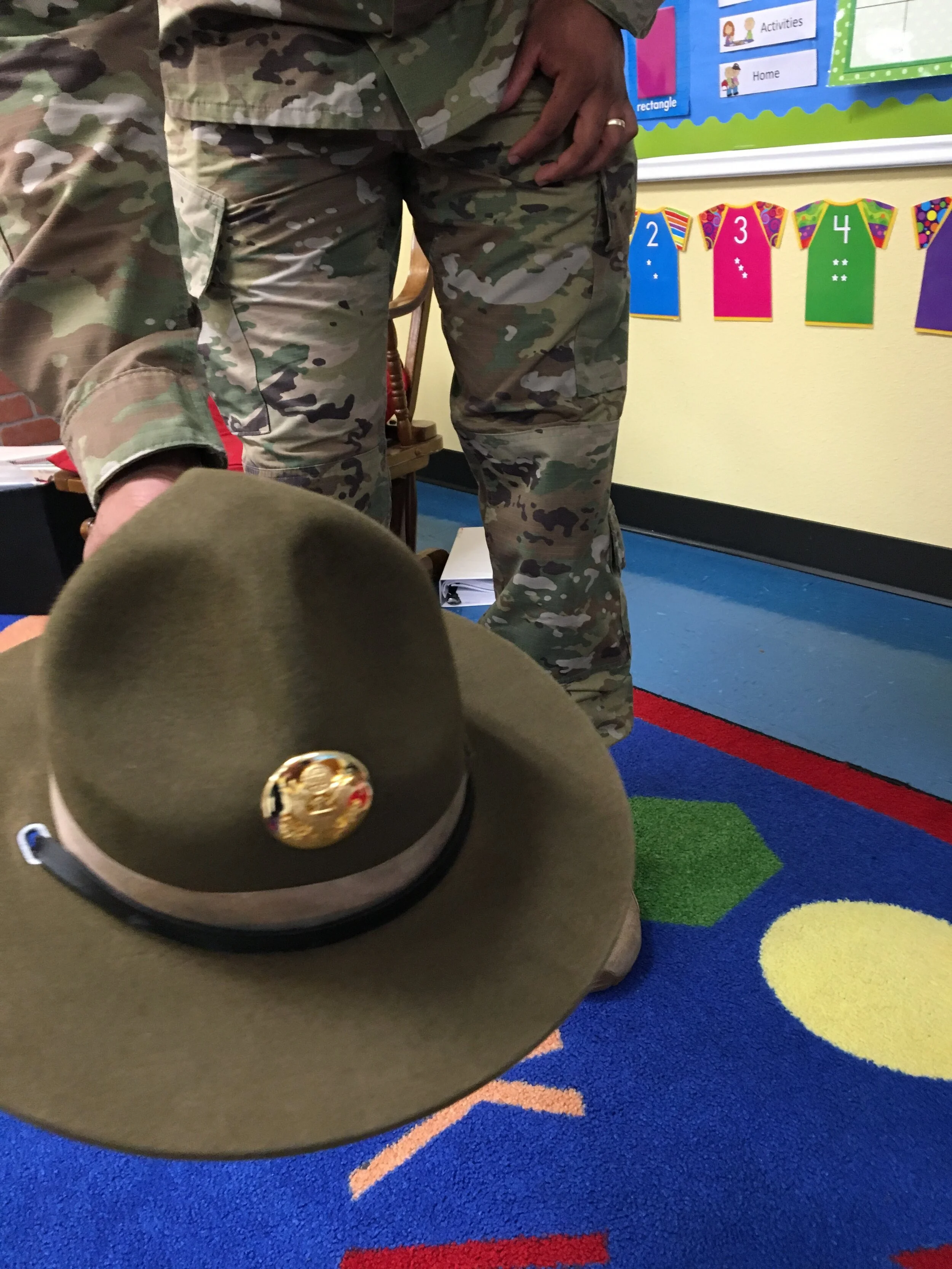
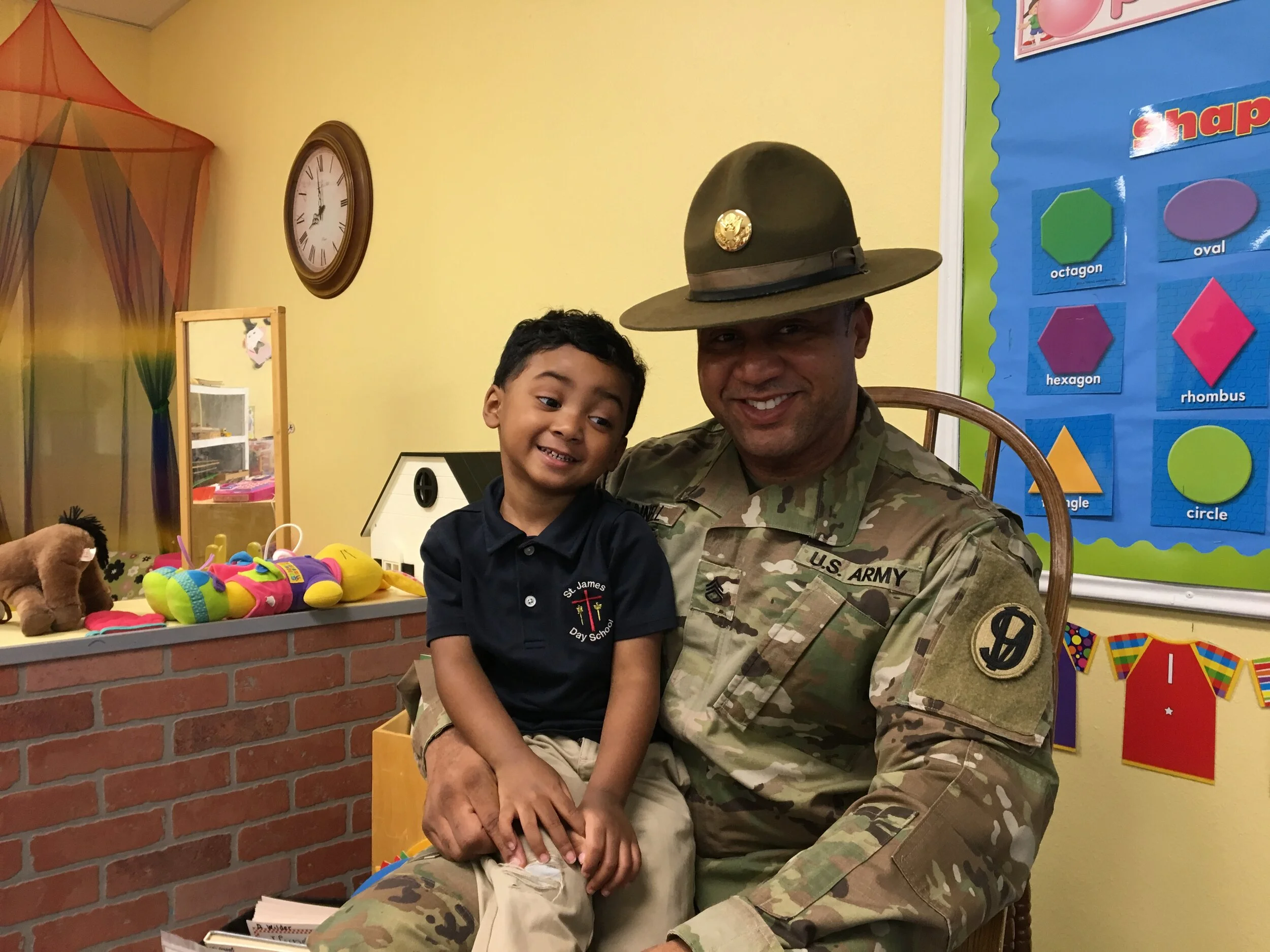
The last week of our clothing study we discussed the clothes that people wear to work. One of our parents wears a special uniform to work. Mr. Pannell is a U.S. Army Drill Sergeant/Combat Medic. He served our country during Operation Iraq Freedom in 2003-2004. He came by our classroom to show the children his camouflage uniform. We learned that people wear camouflage to help them blend in with their surroundings. As he entered the room we could not help but notice that his uniform had patches and letters sewn on the fabric. Letter “U” was discussed this week and we noticed it on Mr. Pannell’s uniform. We learned that it represented the word United. The patch under the American flag represents the 44th Medical Brigade out of Fort Bragg, NC. The patch on his left shoulder represents his drill sergeant unit where he is assigned. He is with the the 95th Division out of Ft. Sill , OK. A special thank you to Mr. Pannell for his service to our country and for giving our class a ‘‘WOW” moment. On Monday the 11th of November we will have a special all school chapel to recognize our veterans for their service.

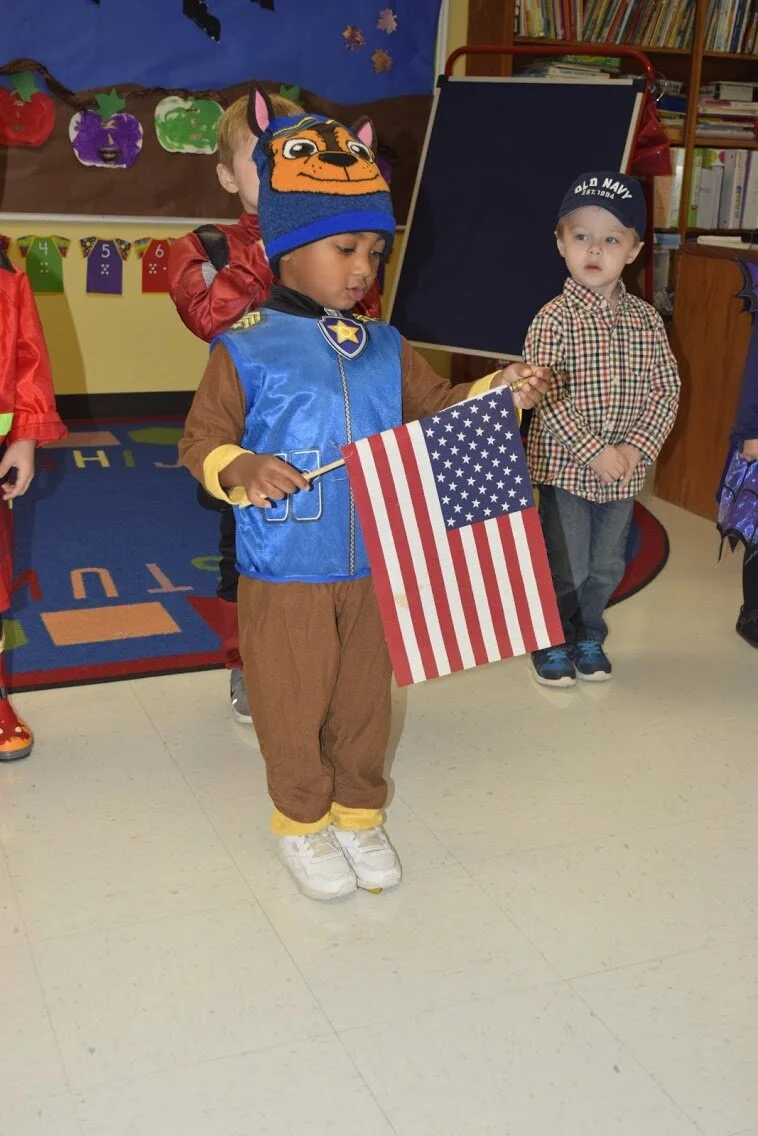
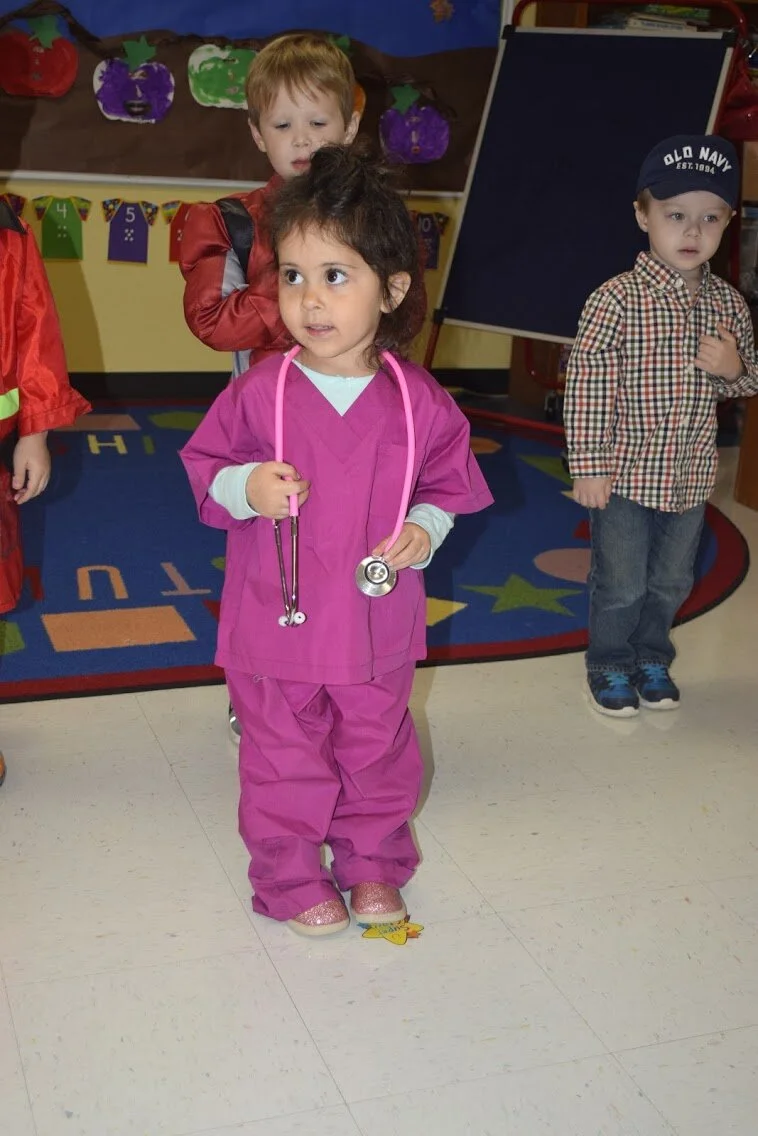
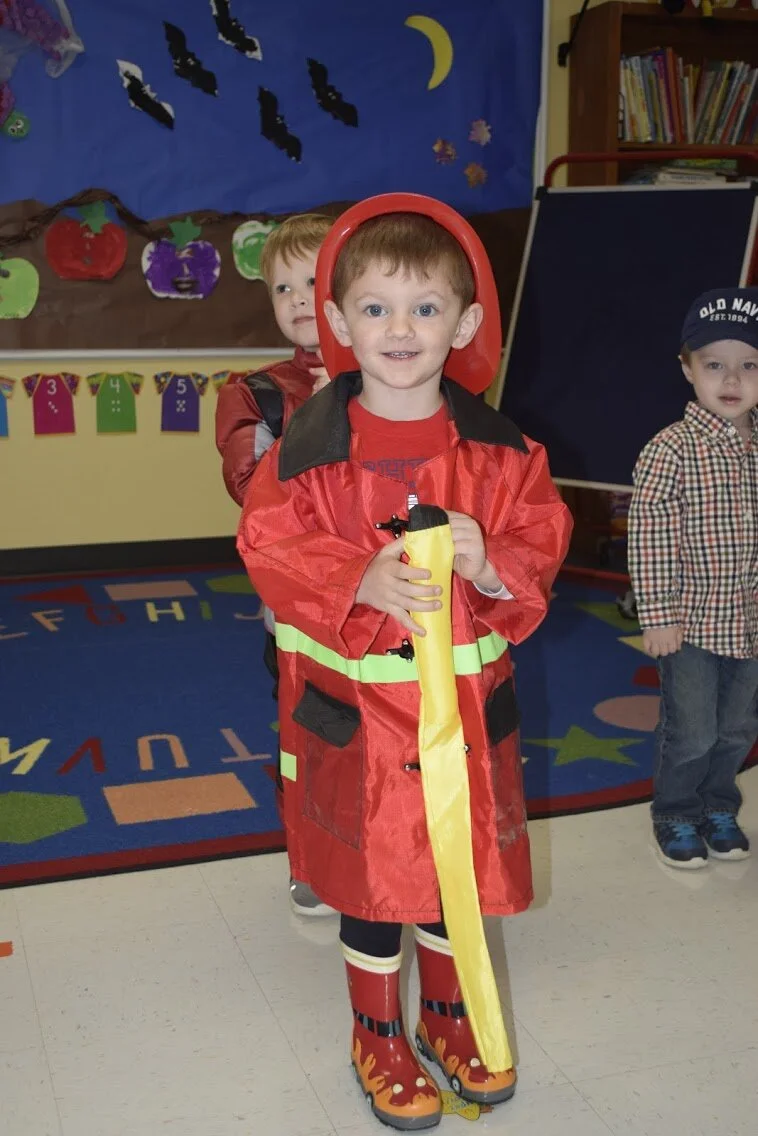
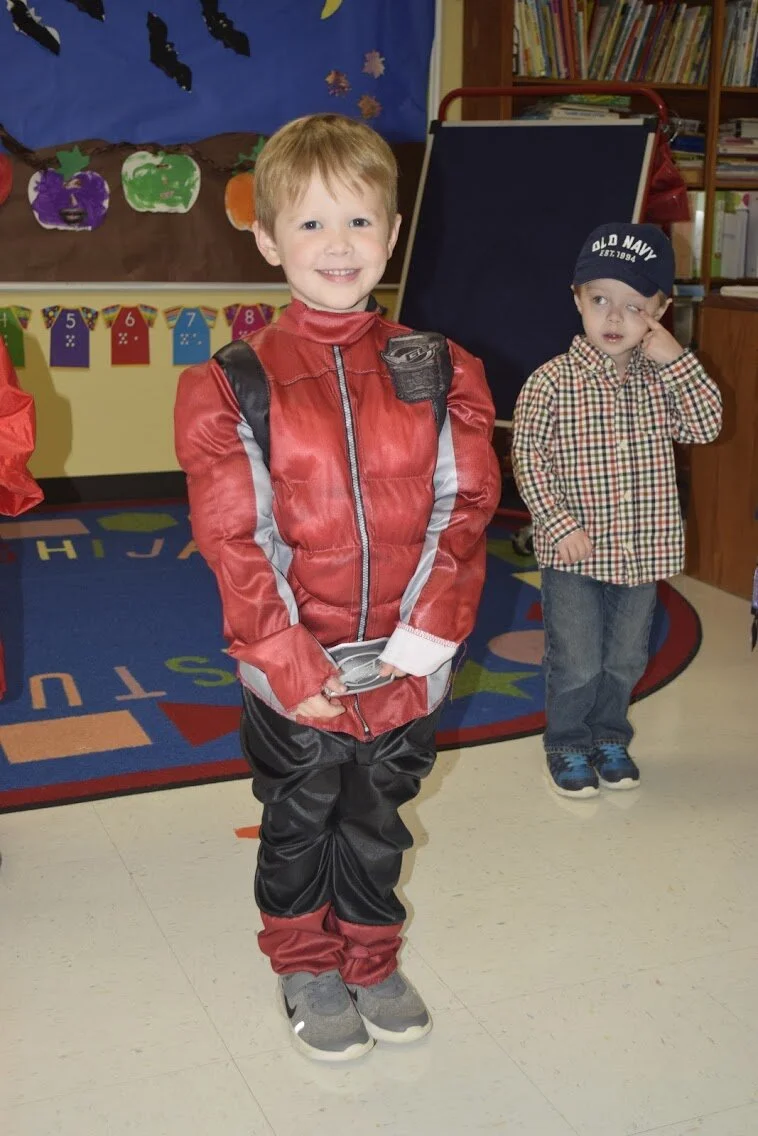
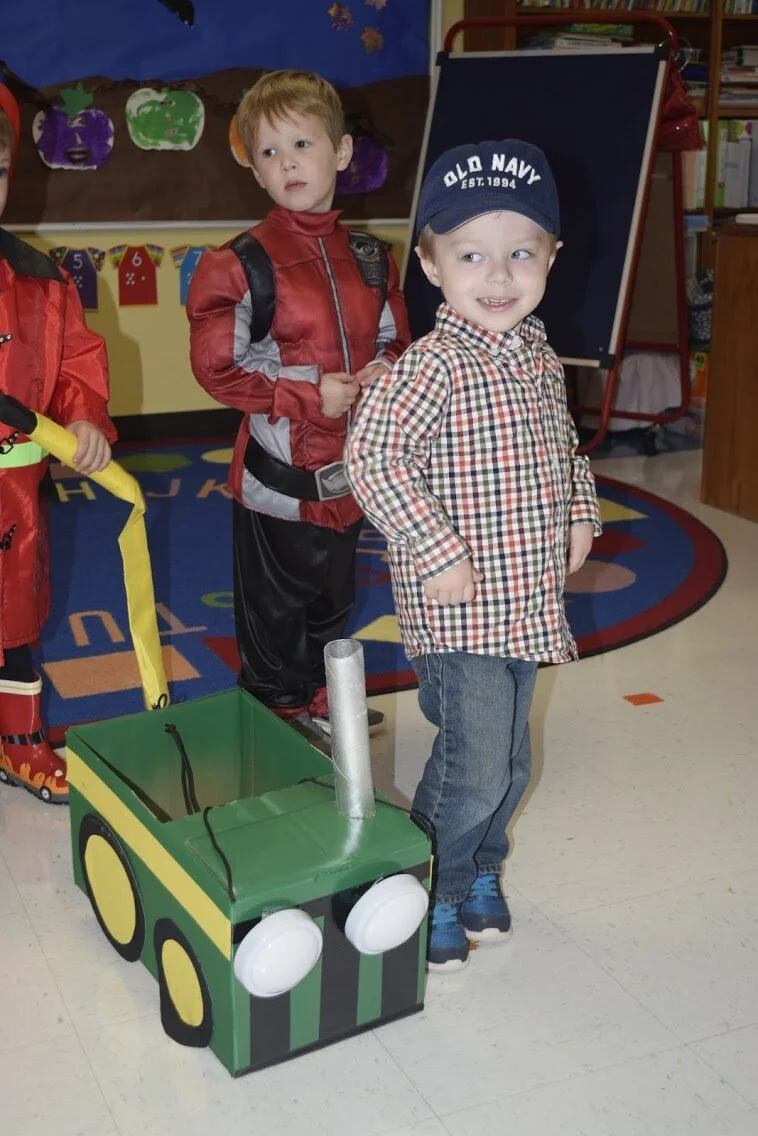
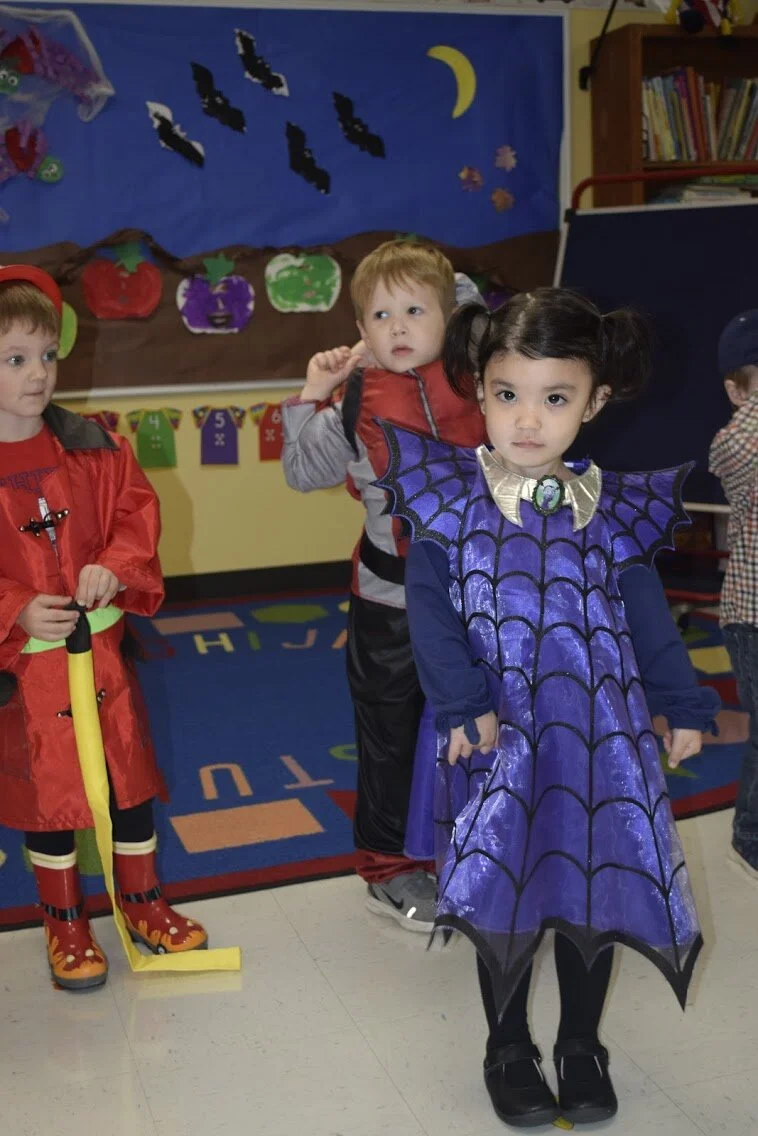
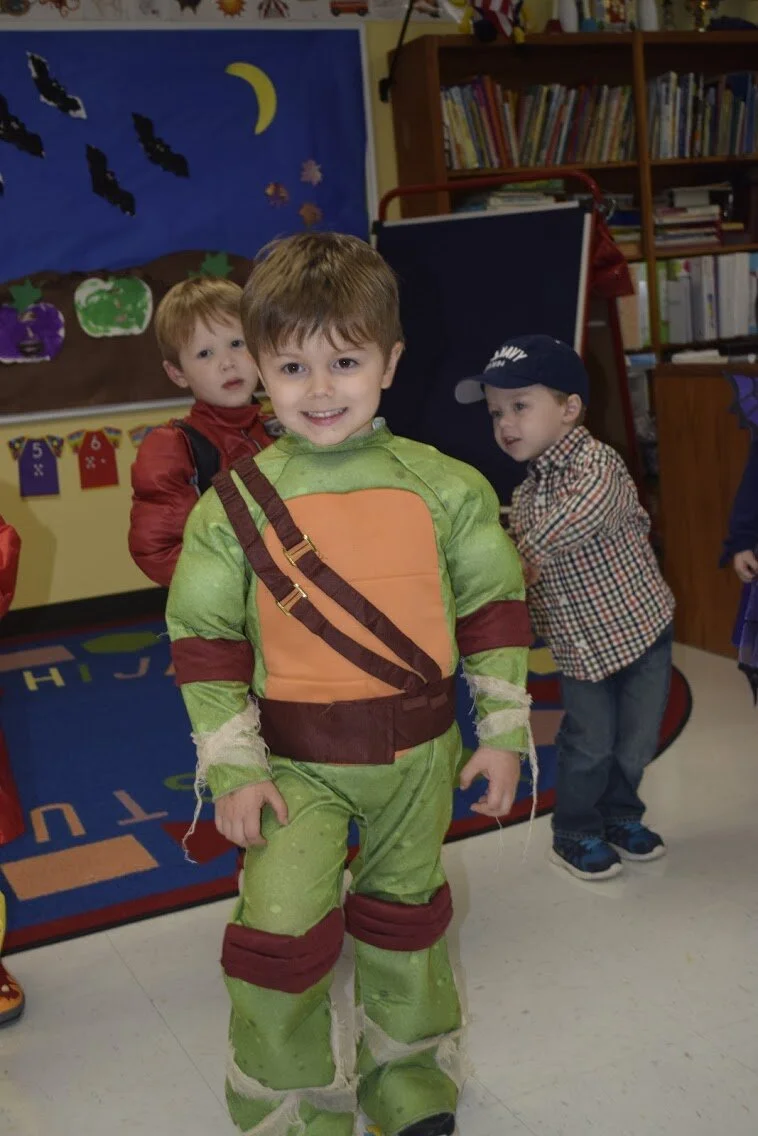
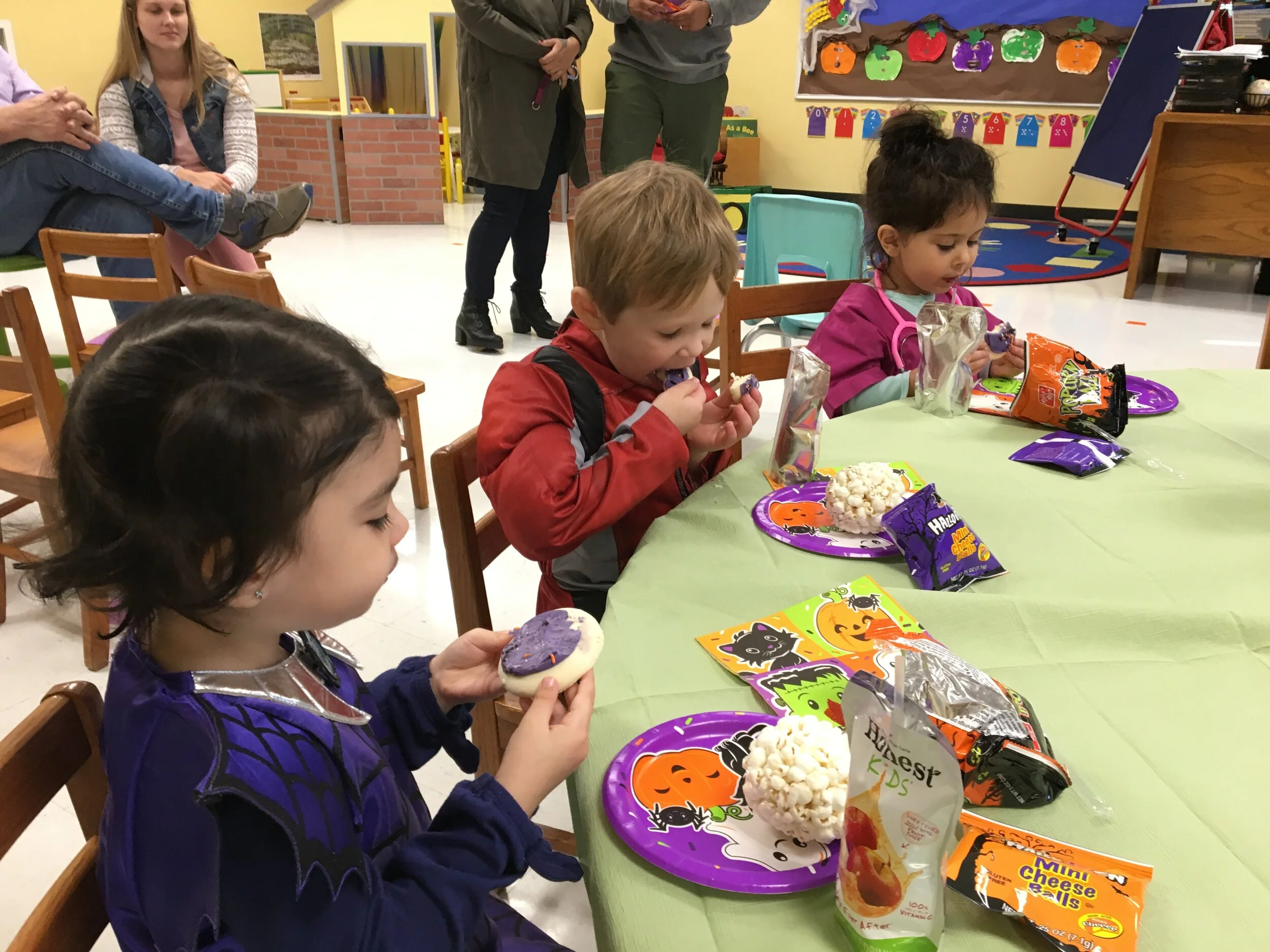
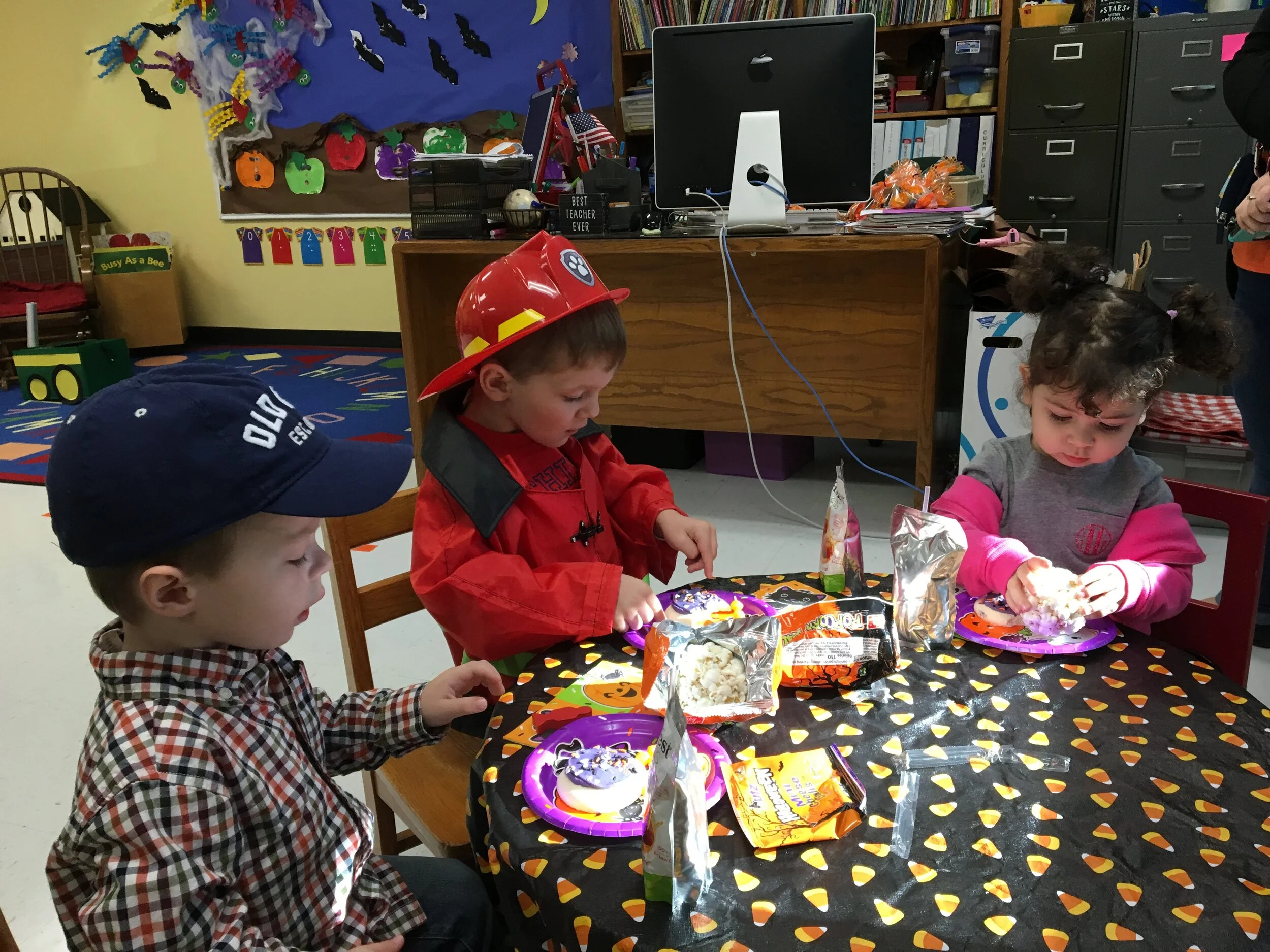
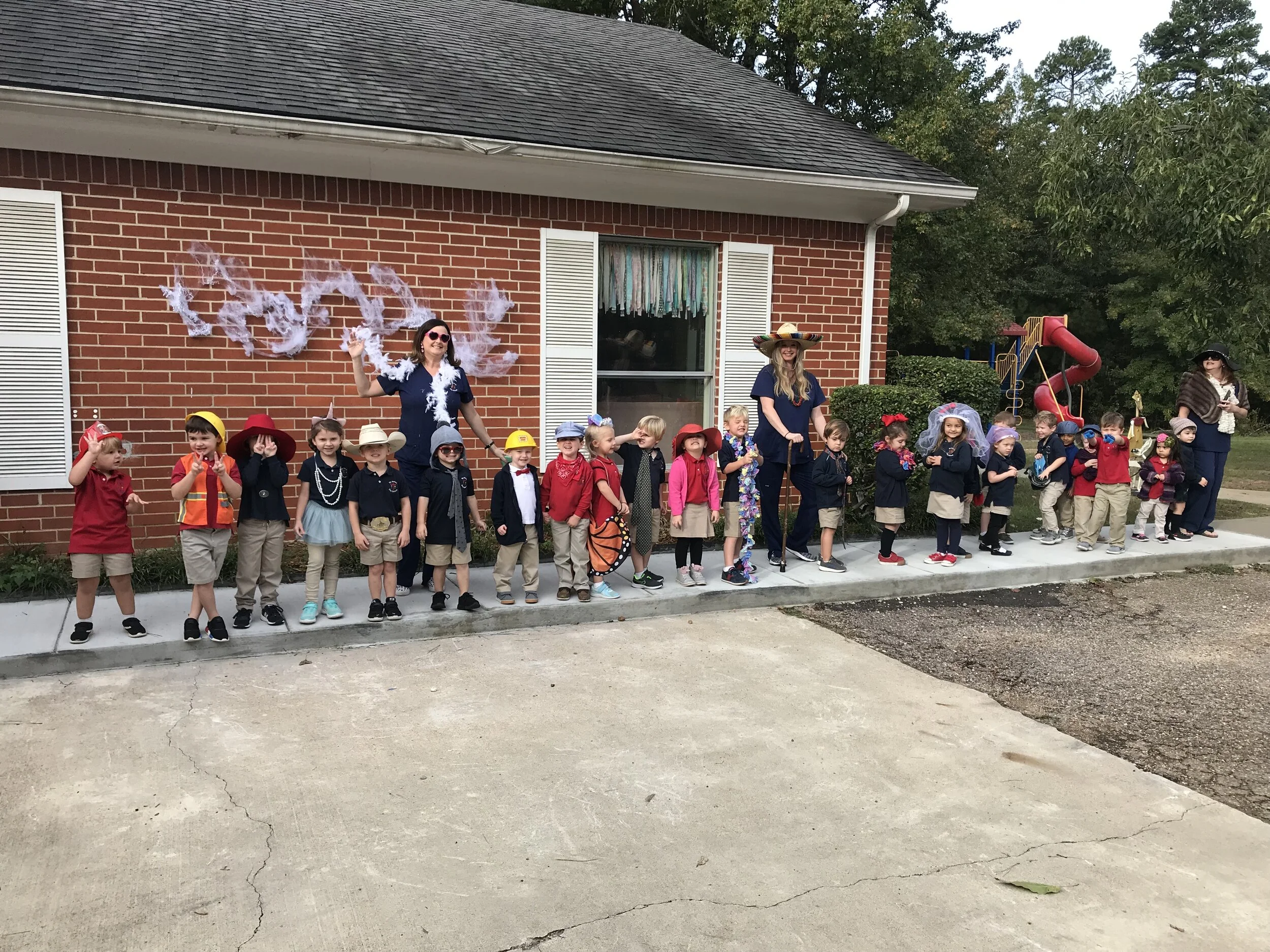
We celebrated the end of the clothing unit with a great Fall Fashion Show! A rainbow of colors filled the classroom as the children walked through the door and proudly took their places in front of the audience. Each child came forward as I described their stunning outfit. After I announced all the children it was time to sing for the parents. The children loved singing and reciting finger plays. Music has the ability to strengthen the connection between the body and the brain. When children dance and sing they develop better motor skills. Exposing children to songs helps them learn the sounds and meaning of words. Memory skills are enhanced as they learn their songs and finger plays. Children develop their musical skills through imitating and memorizing rhythms and tones of songs. One thing I love about St. James is the fact that even the youngest students are able to participate in a music class every Tuesday with Mrs. Tipton. After we preformed it was time to eat and party. We had a blast at the Halloween Party! A special thank you to all of the parents for helping make this a special day for the children.

diane johnston
OCTOBER

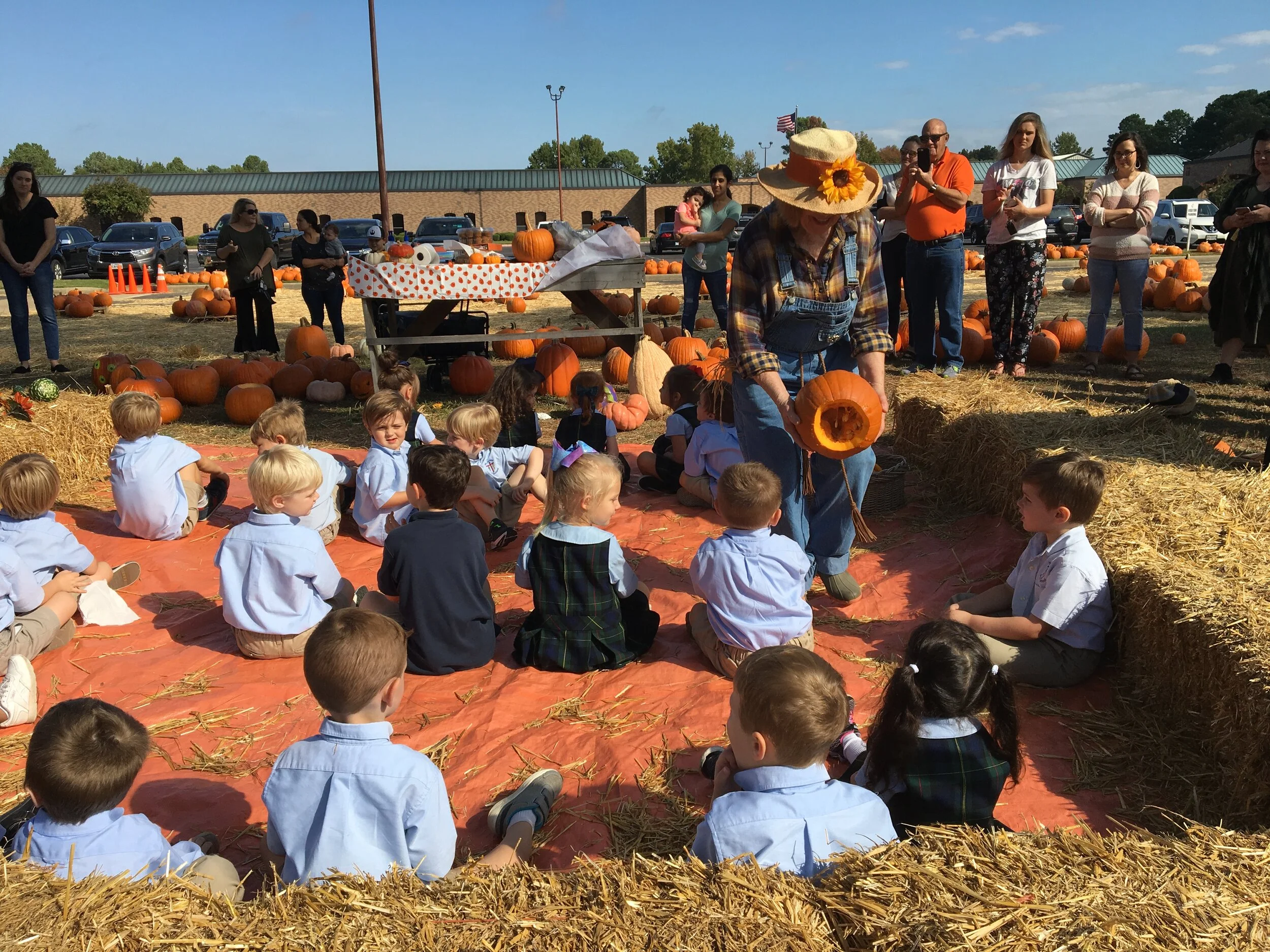
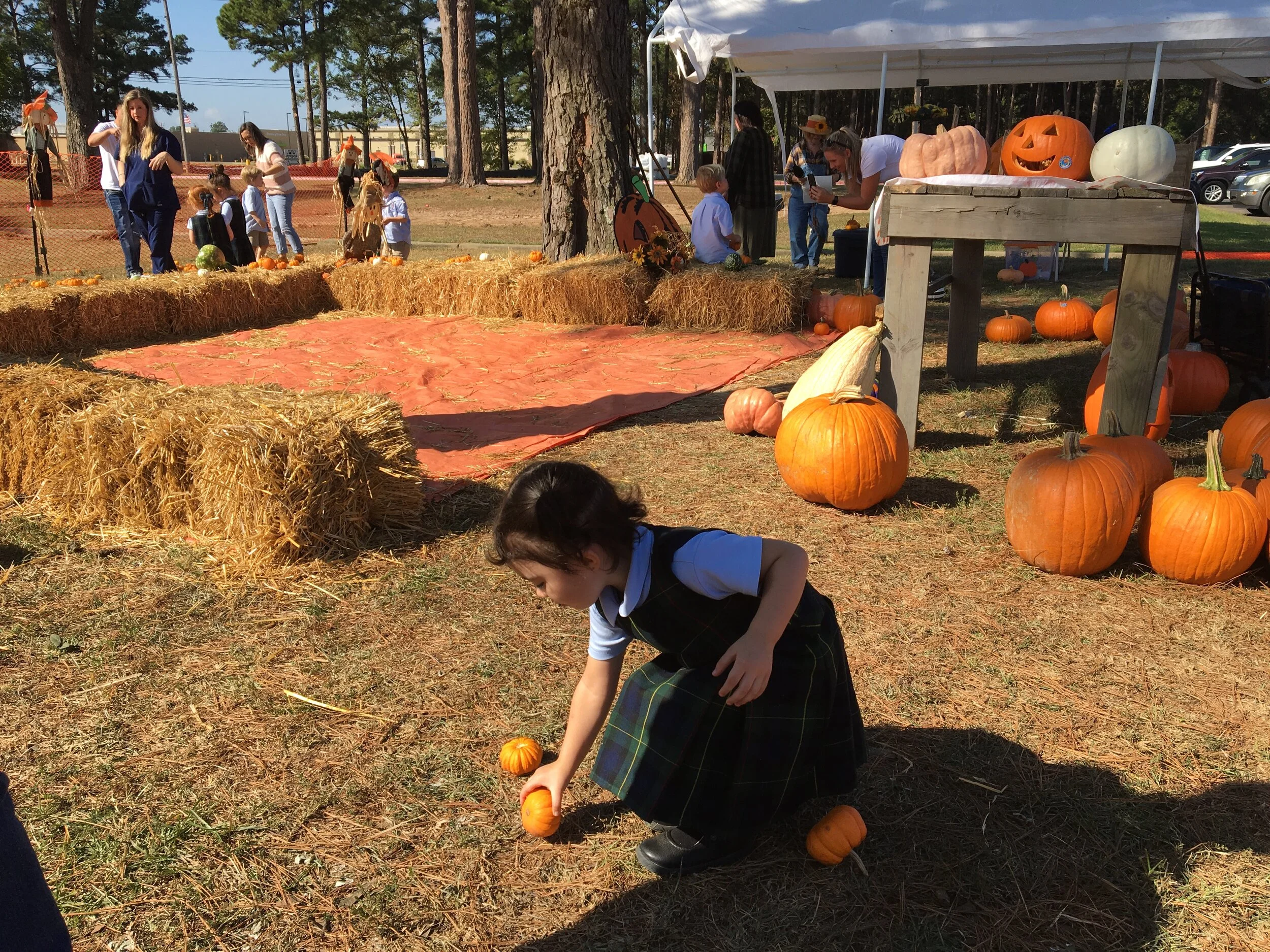
The month of October is full of activity! The class had a ball as we traveled to the pumpkin patch. Williams Memorial Methodist Church was the place to be for fun and education. The students were able to search the pumpkin patch for snow white pumpkins and bright orange pumpkins. We enjoyed a sensory activity as the children felt pumpkins that were smooth or bumpy. The scarecrow told us a wonderful story about pumpkins and we enjoyed a chocolate chip pumpkin muffin. We loved our field trip!

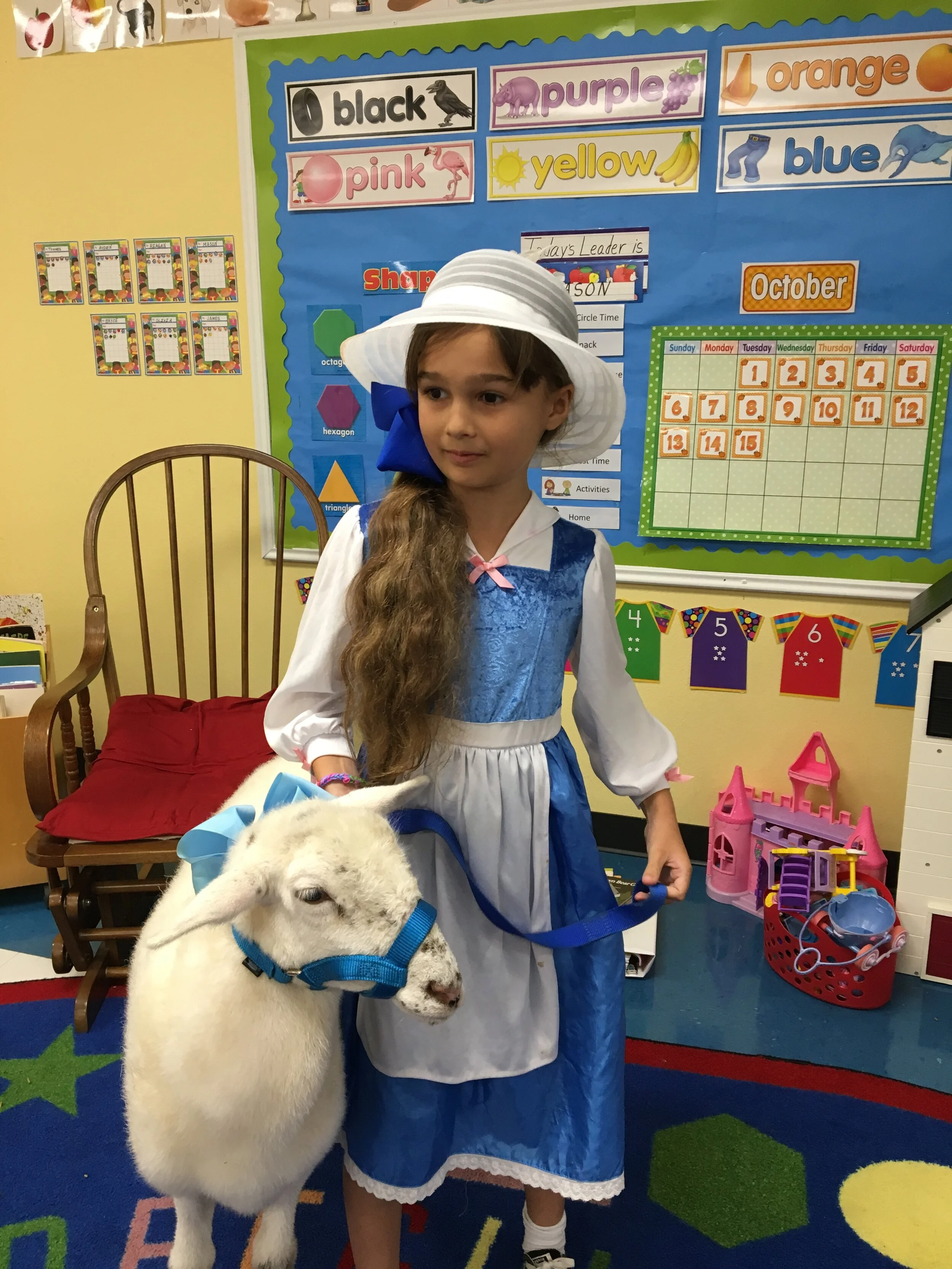
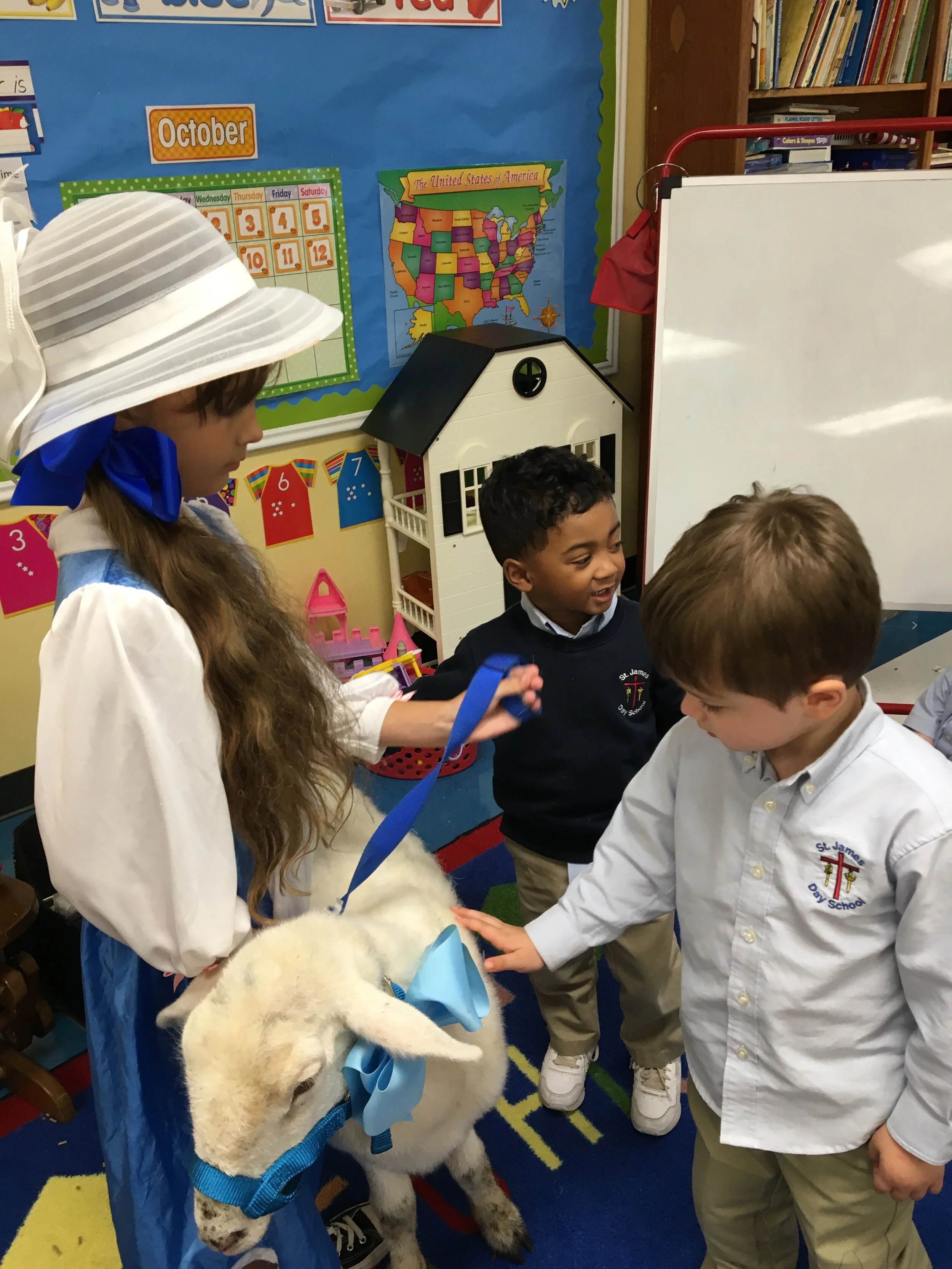
We love to have visitors in the classroom. One special visitor stopped by when she heard we were learning about cloth, and clothing. We were thrilled to have Mary and her lamb visit our class. Mary told us that a lamb can be sheared when they are one year old. As lambs and sheep are sheared we can use the wool to make clothes. Everyone had a chance to pet Mary’s lamb and we noticed that her fleece was as white as snow.
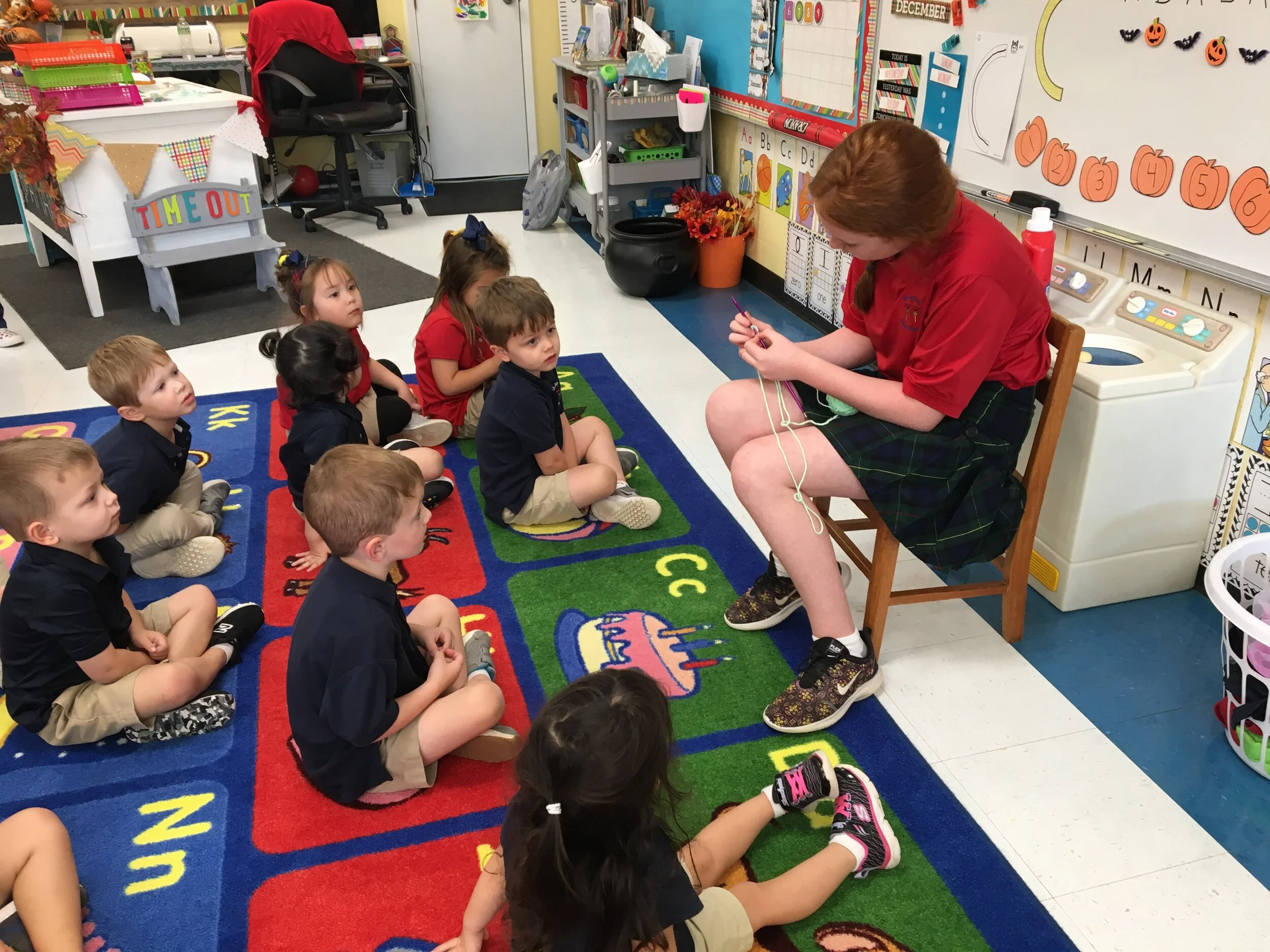
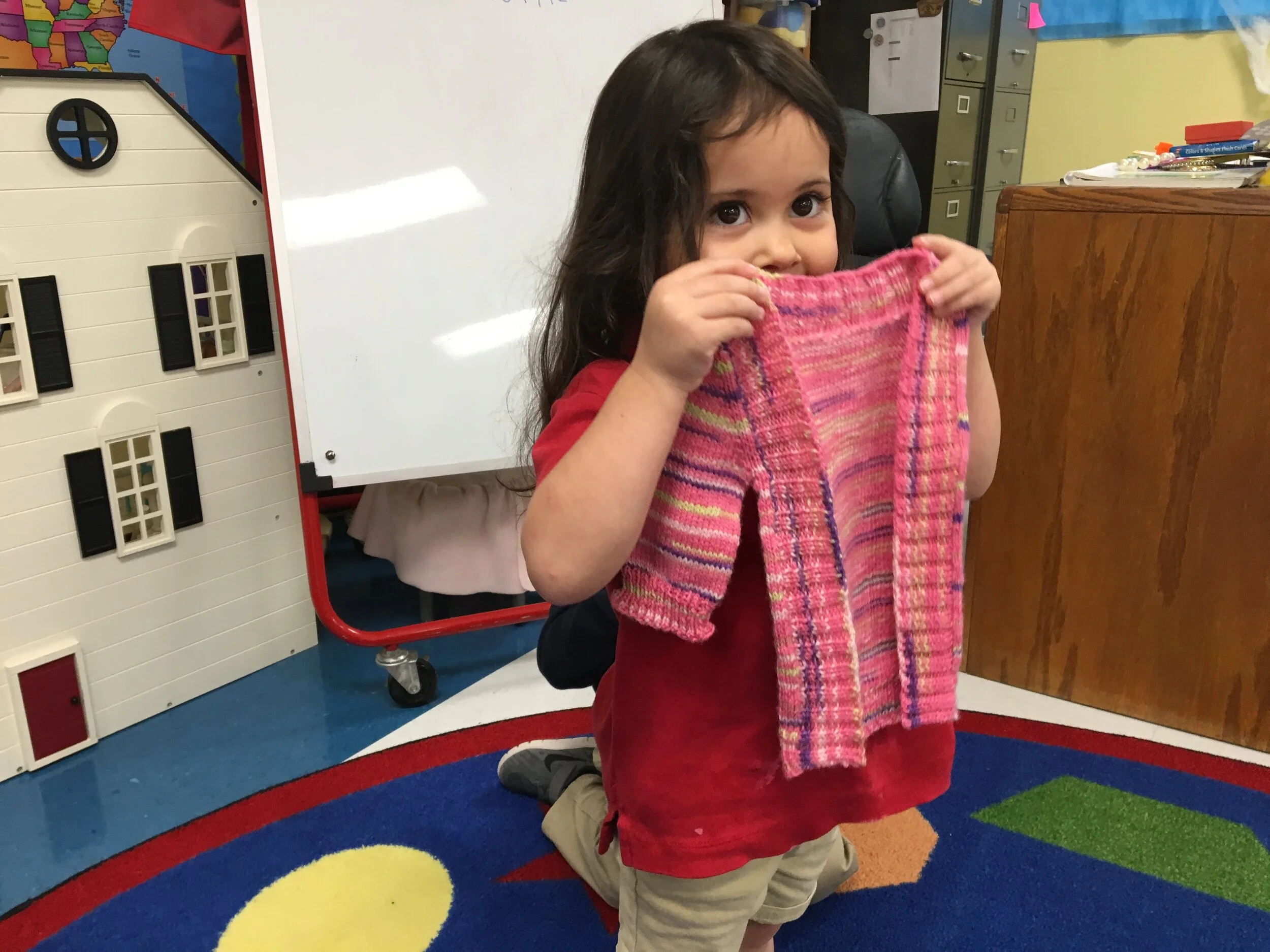
The past few weeks we have explored how clothes were made , and we learned where our clothes come from. Mrs. Kandice is our three day a week primary teacher and she invited her daughter to teach the class about knitting. We were thrilled to watch our special visiter as she knitted for us. The class watched carefully as our guest used a pair of long knitting needles to form loops from one needle to another. A special thank you to Mrs. Kandice and her daughter.
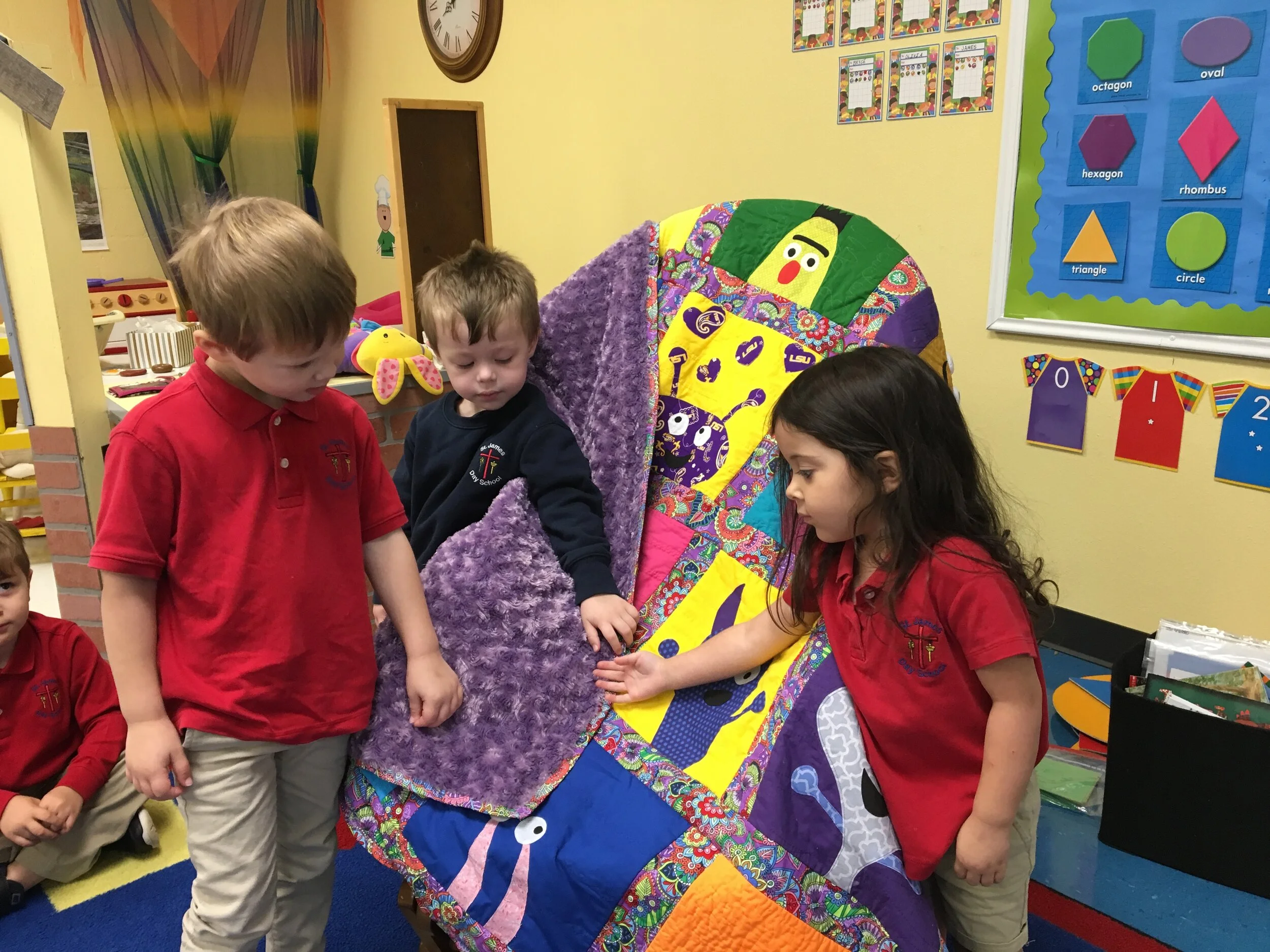
One of our students brought clothing that was crocheted, and blankets that were sewn. The class loved looking at the bright, beautiful colors and feeling the texture of the garments. During these activities your child learned that clothing can be bought from a store or made by a family member.

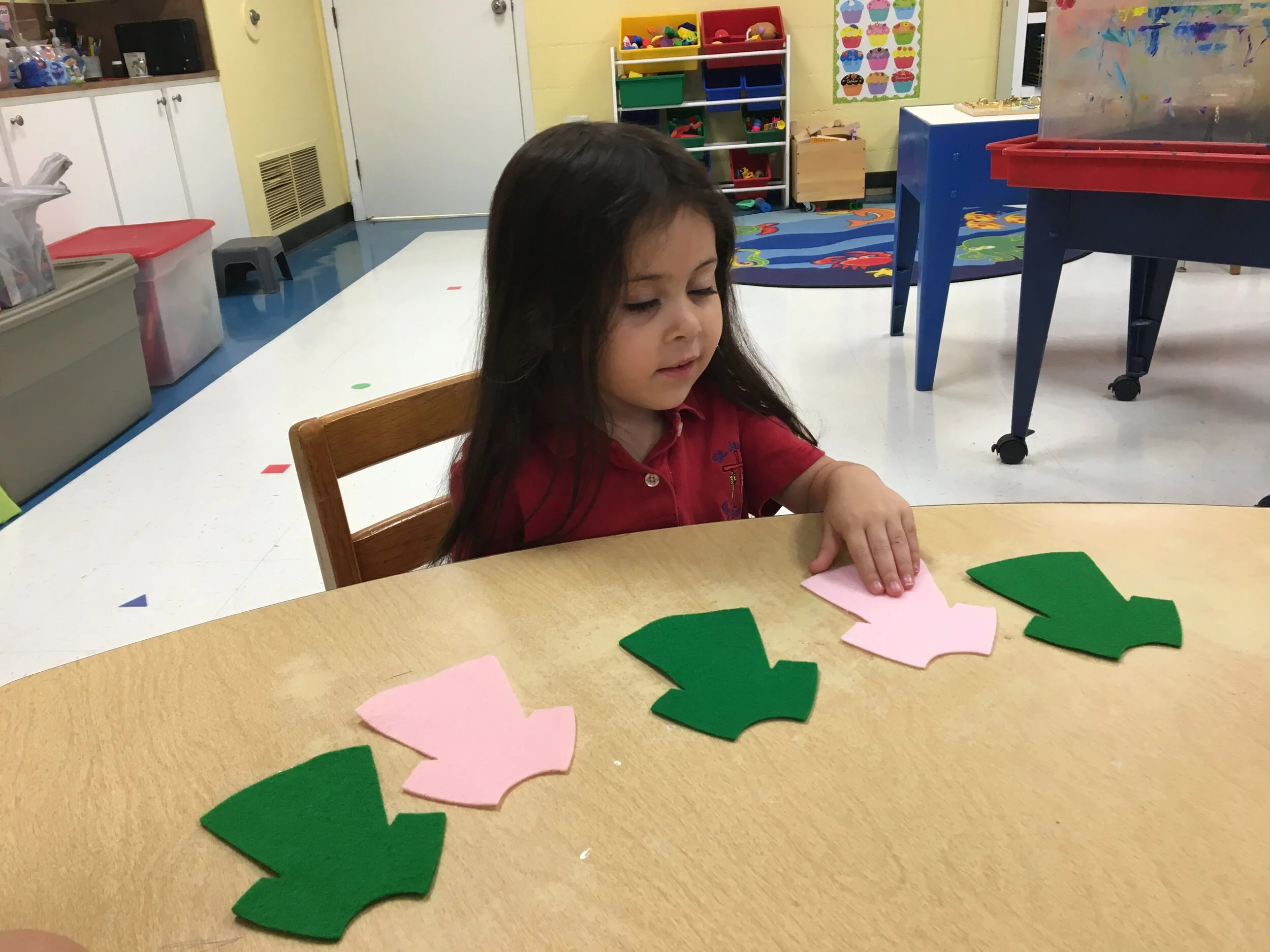
During one of our math lessons we made AB patterns with colors. Patterns help your child to make predictions based on observations. I used two different colors of shirts for this lesson. Everyone was involved when we made a boy, girl pattern.

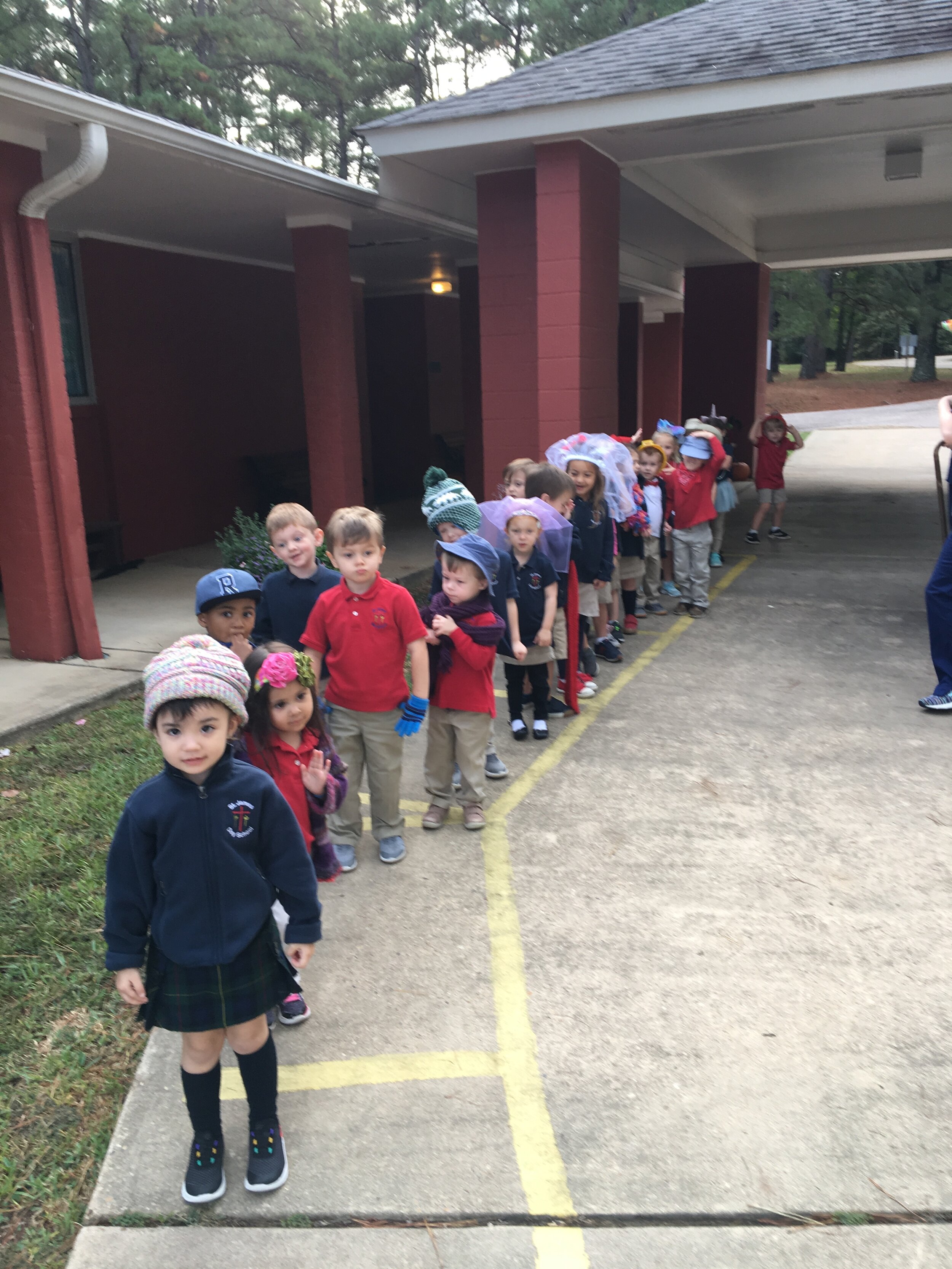
All the children love a parade, especially the Accessory Parade! Big hats, beautiful scarves, and sparkling jewelry were the talk of the campus as we marched around the school. Accessories help us to stay warm during cold weather and help us to look our best. Our next topic will be about clothing that people wear to work.

diane johnston
Did someone call 911?

The visit from the fire truck was a blast! We learned to call 911 if we have a emergency and to stop, drop and roll if our clothes catch on fire. Each child had a turn behind the wheel of the firetruck. We discussed the color of the truck and the number on the truck. We noticed that the firemen wear special clothes to protect them as they fight fires. Our fire truck visit fit right in with the start of our clothing unit.

The first week of our clothing unit we discussed the features of our clothes. The children were glad to show the clothes they brought from home. We talked about small, medium and large sizes. The class looked for the letters S, M , and L in the items they brought to school. During circle time the class enjoyed sorting items by size. As children sort items they begin to understand that things can be alike or different. When your child sorted items by size they learned that items can belong and be organized into certain groups. Getting practice with sorting at a early age is important for numerical concepts and grouping numbers into sets when they get older.

How can we take care of our clothes? One thing we all agreed on is that our clothes need to be washed. I filled the sensory bin with water and detergent. I added different sizes of clothes and we had a blast washing our items! Everyone loved hanging the clothes out to dry! Using the clothespins was a great way to get in a little fine motor practice.

I brought out the large mixing bowl and we made our own play-doh. We discussed ingredients and used measuring cups and spoons. Each child loved pouring and stirring the flour and water mixture. Don’t forget the salt! We only needed a teaspoon and a half for our wonderful mixture. After we made play doh we practiced making balls that were small , medium and large. Play doh is a wonderful way to strengthen the muscles in our hands.

Music class with Mrs. Tipton is one of the highlights of our week! We love hearing the piano and we can’t wait for our turn to hold a instrument. This week after we played our instruments we listened to Mrs. Tipton play the piano. We learned about the words major and minor in music class. The main difference between major and minor chords is how they sound. Major chords have a happier sound , while minor chords sound sad.

Our community service project was a huge success and we were thrilled to give twenty-one boxes of food to Harvest Texarkana. All of our St. James students worked together to complete our goal. We were thrilled to welcome a new student to our class. James started this week and he is making friends fast!

The next few weeks we will be discussing how people make clothes and how cloth is made.


diane johnston
Big line , Little line

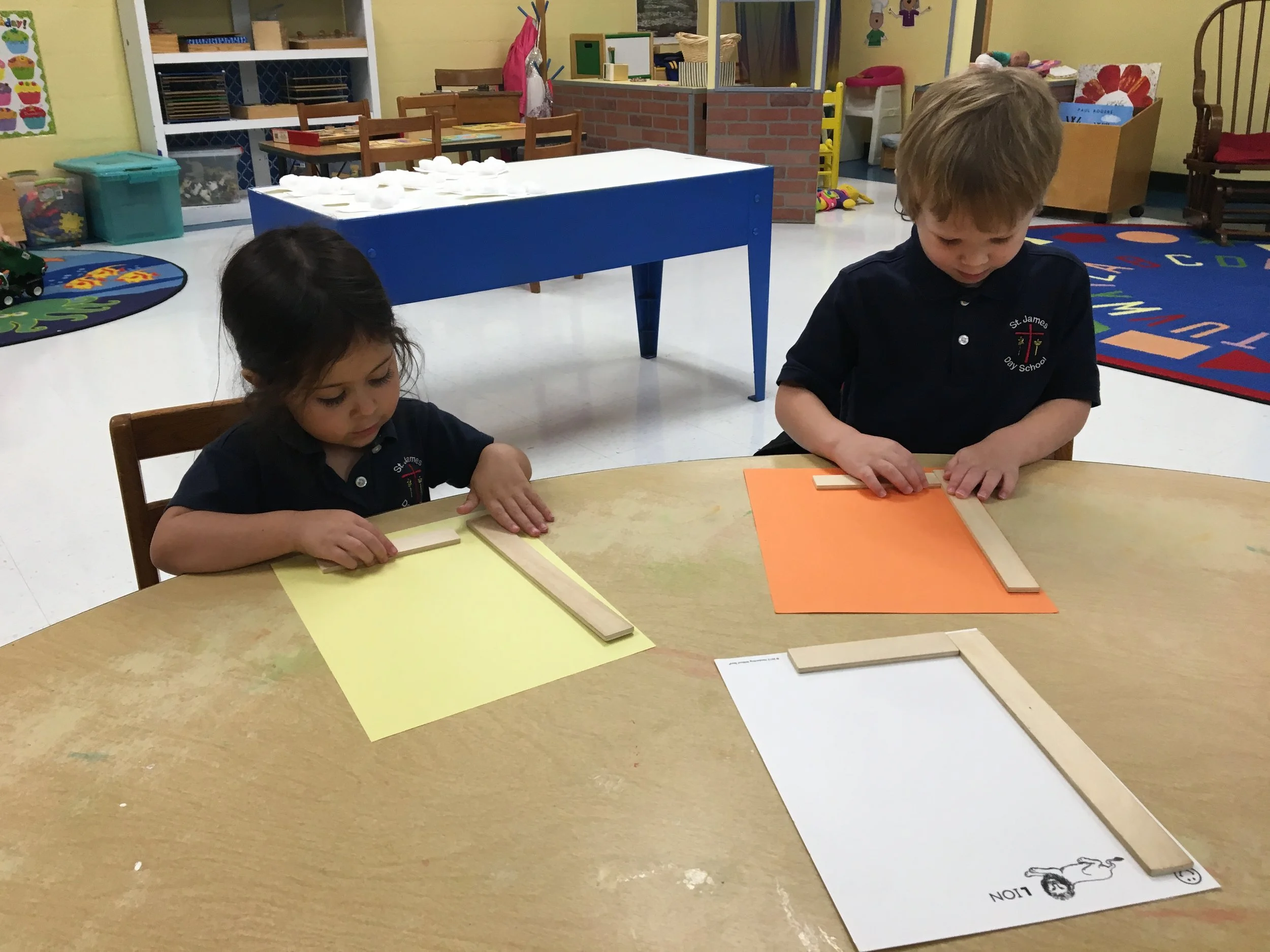
The class had a blast as they used wooden lines to form letters. Our Handwriting Without Tears Curriculum has given each child a head start with letter formation. As the class used big and little lines they learned about size, shape and position concepts. Each child was amazed as they used the lines to form letter L, and letter E.

We loved making Mat Man this week! The class watched me put Man Man together and then each child had a turn to build him. As your child builds Mat Man they are learning to listen to oral directions to complete a task. When children know how to build Mat Man, they can easily approach drawing in the same way.

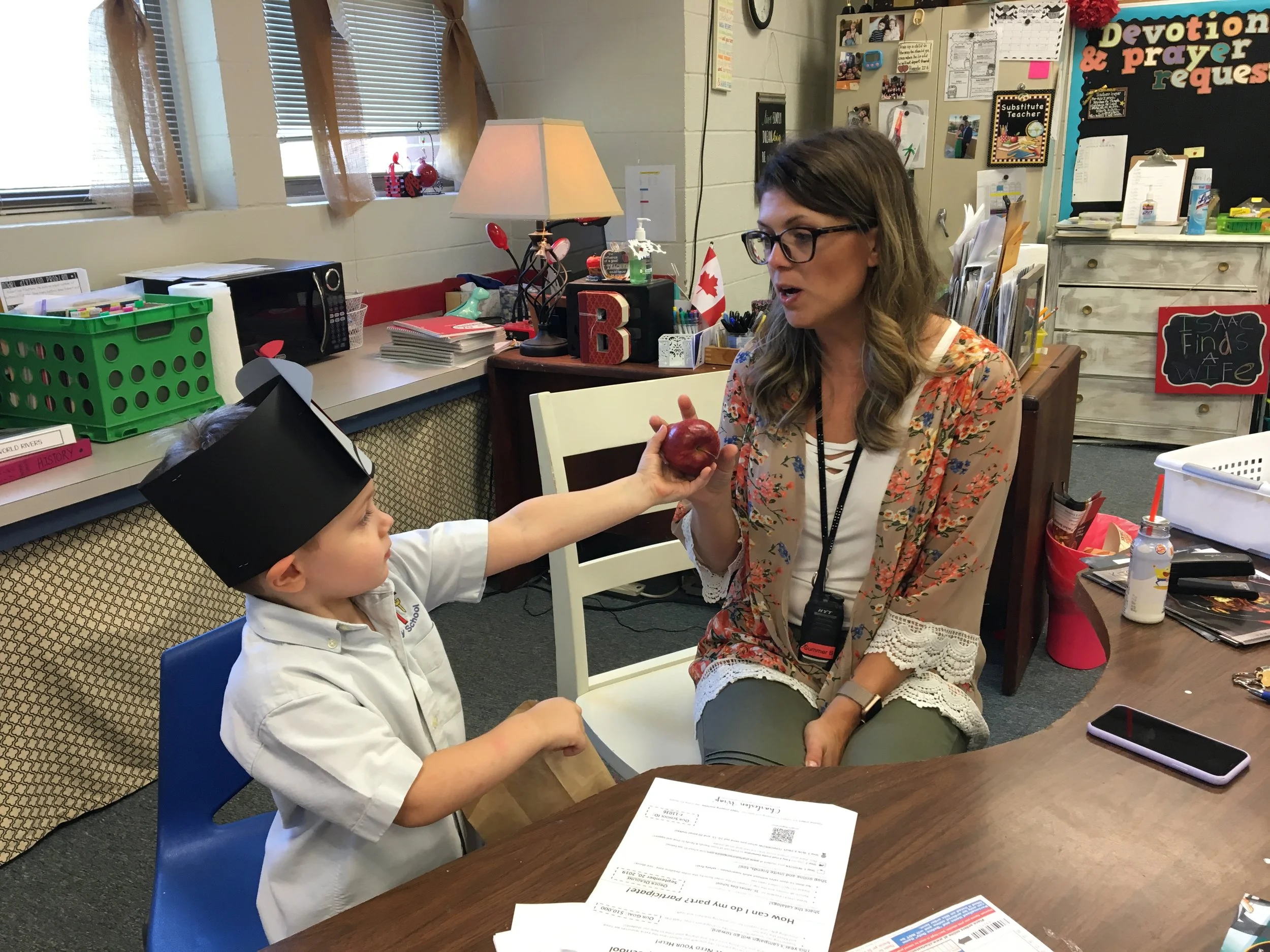
An apple a day keeps the doctor away! I could not let September pass by without discussing Johnny Appleseed. I used Johnny Appleseed as a social studies activity. I read a book about him and we watched a video about life in the late 1700’s in America. The class painted apples, ate applesauce and drank apple juice. After all this excitement it was time to put our skills to work . We decorated paper bags and passed out apples to other teachers on our campus. This activity helped your child understand that everyone needs healthy food and we learned about people that work at our school. Our community service project is in high gear as we gather food for the Texarkana Harvest Food Bank. A special thank you to all our families for each donation.

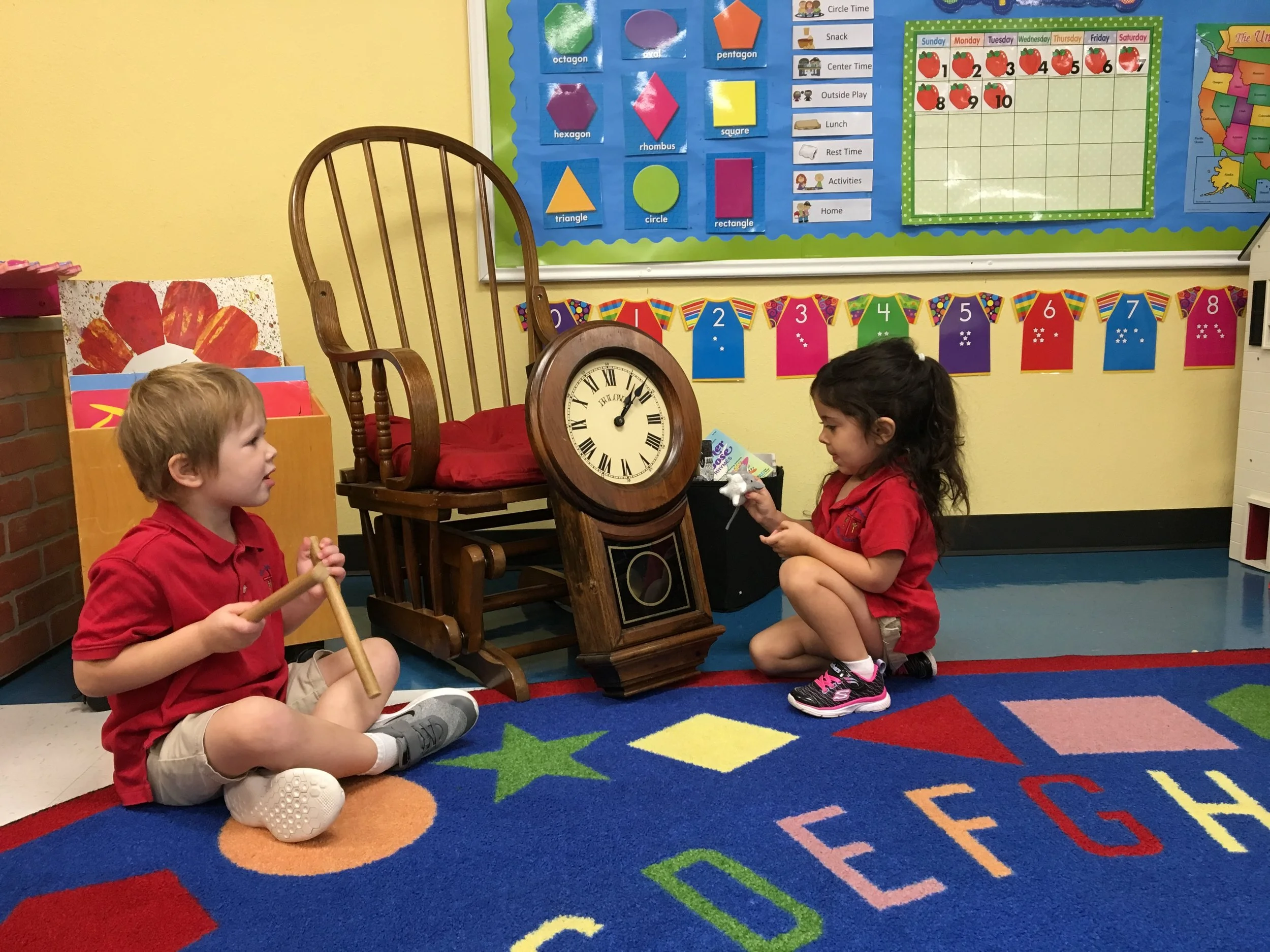
During our unit on ,’’ When do things happen at school? ‘‘ I brought a clock to class. Children do not fully grasp the concept of time until about age six or seven. In the preschool world children understand time as chunks of our day. They understand that we eat lunch after P. E. and that we have a snack after our nap time. Everyone loves to hear me say ,”it’s time for outside play!” The class has learned to listen for a signal , such as a bell or drum to announce that it’s time for a different activity. I used the nursery rhyme, Hickory Dickory Dock to reinforce our discussion of time. Everyone loved using a toy mouse with our clock to learn about spatial concepts such as up, down, over, on and off.

diane johnston