Lighting Up Learning with Circuits
By Lori Altenbaumer, 7th/8th Math & Science
Our 8th grade Integrated Physics and Chemistry (IPC) students recently brought their classroom learning to life as they explored the world of electricity through a hands-on circuit-building lab!
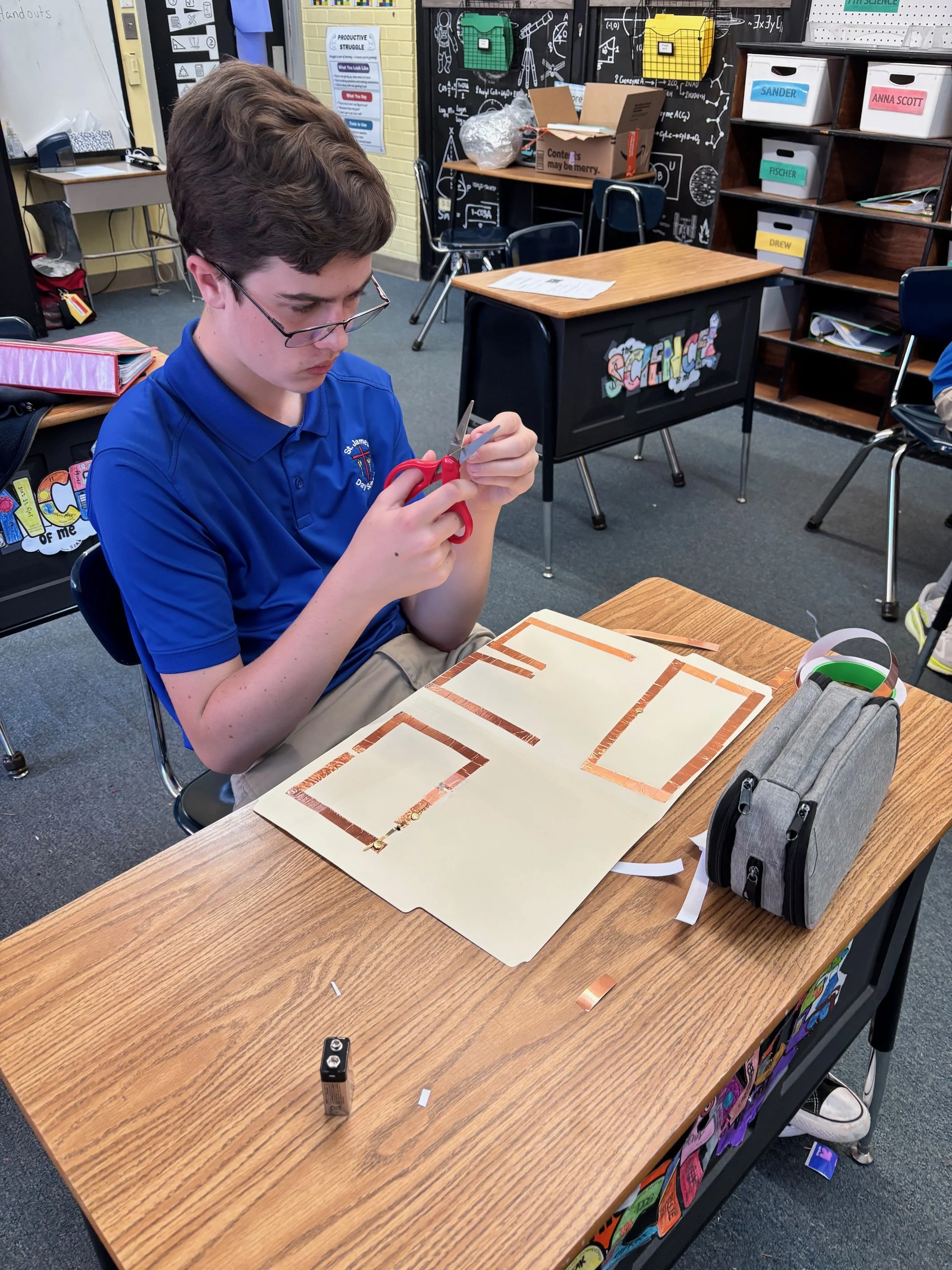
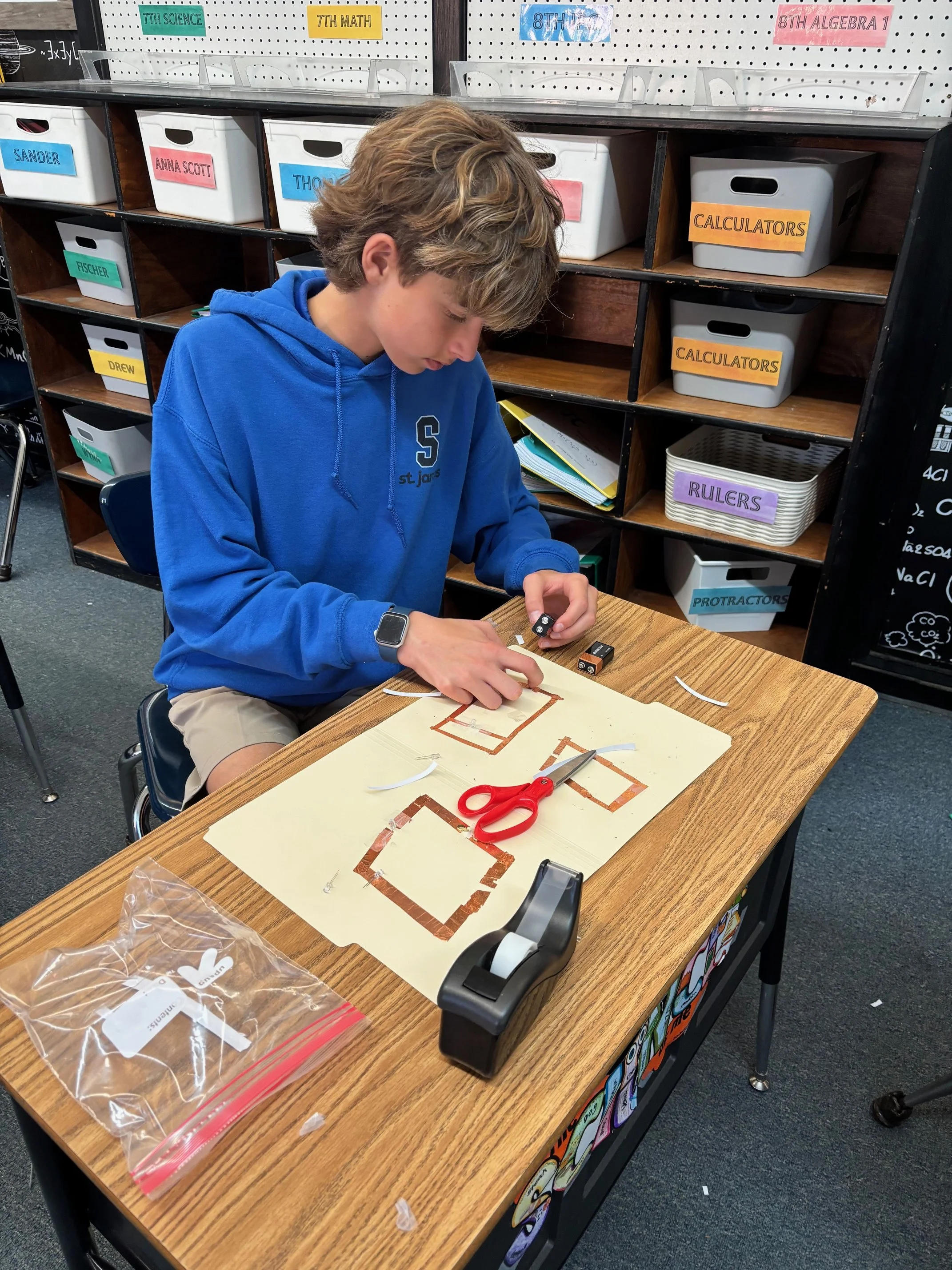
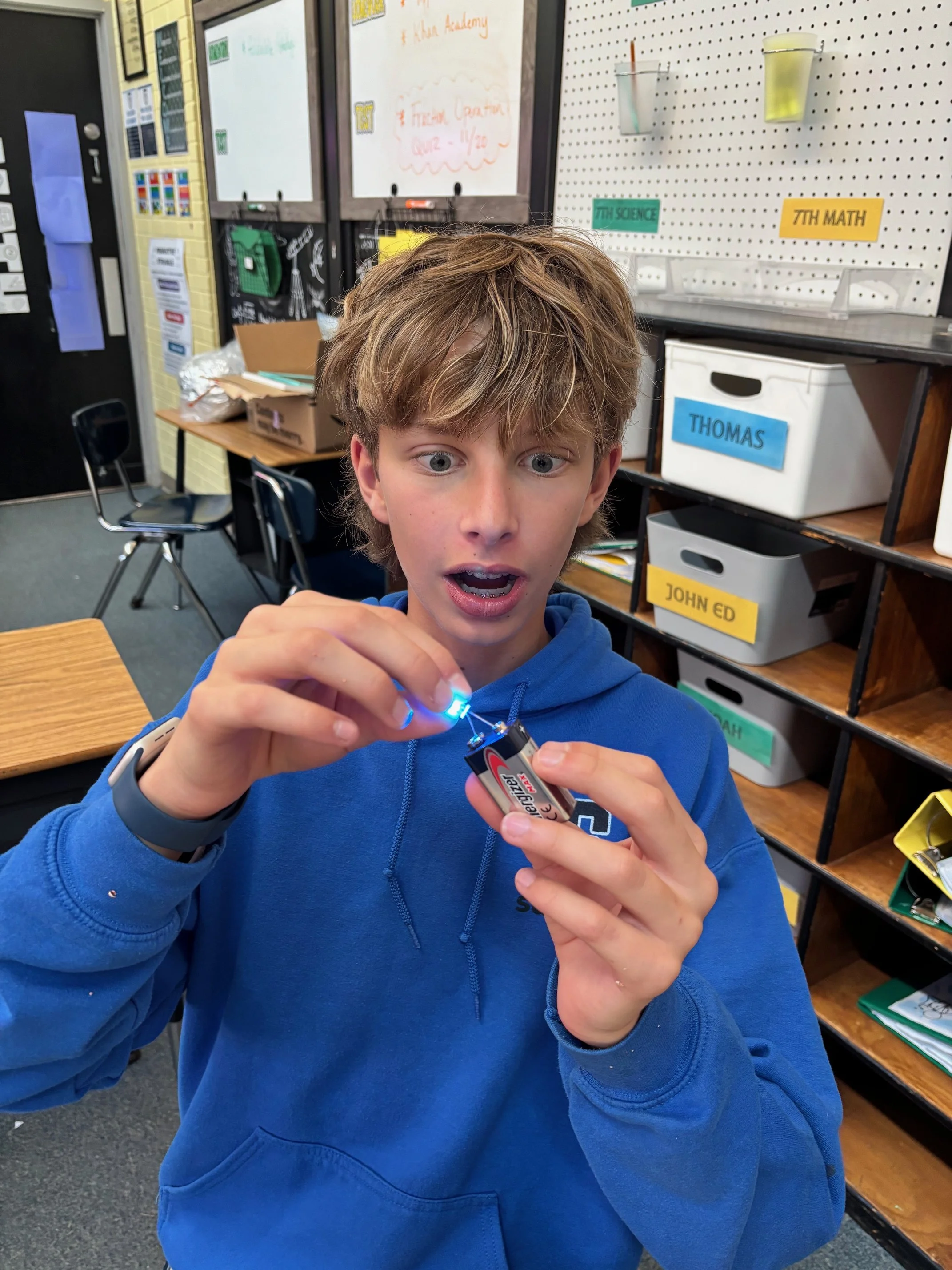
After learning about electric charge, current, and the differences between series and parallel circuits, students were challenged to construct their own working electrical circuits using some surprisingly simple materials: folders, aluminum foil, copper tape, brass fasteners, LED lights, and batteries.
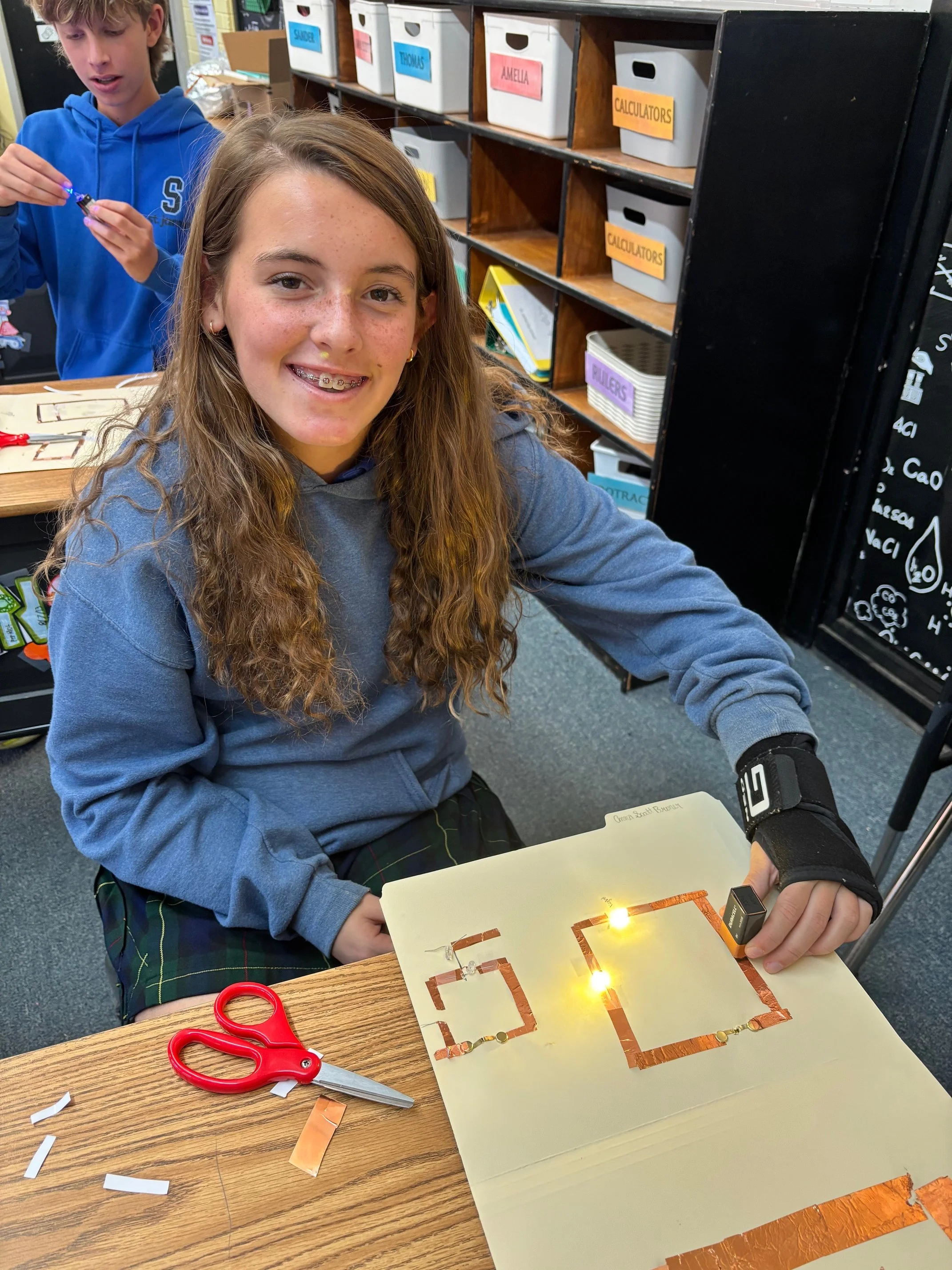
Students began by constructing a series circuit, using strips of either aluminum foil or copper tape as conductors and brass fasteners to create a functioning switch. They applied their understanding of open and closed circuits to successfully create a single pathway through which electric current could flow and illuminate a light bulb.
Next, students put their knowledge to work by constructing a parallel circuit, which required them to design multiple pathways for electric current to flow. Building both types of circuits allowed students to see firsthand the differences in their physical arrangements and connect those observations to the concepts we had discussed in class.
Students were also challenged to think beyond their initial designs by predicting what would happen if certain components of their circuits were changed. How would adding more light bulbs affect their brightness? What would happen if the battery voltage changed? Could one light bulb be turned off while another remained illuminated? Using their understanding of electricity and circuit design, students were able to make scientific predictions and explain the reasoning behind them.
The beauty of this lab was seeing students take concepts and diagrams from their science notebooks and turn them into something tangible and functional. It provided an opportunity to practice critical thinking, problem-solving, and the practical application of scientific knowledge while making connections to the electrical systems we rely on every day.
From paper and pencil to real life conductors and glowing light bulbs, our 8th grade Spartans are discovering that physics is so much more than just a subject in the classroom—it is all around us!
We love seeing those light bulb moments in science, especially when they are quite literally lighting up the classroom!