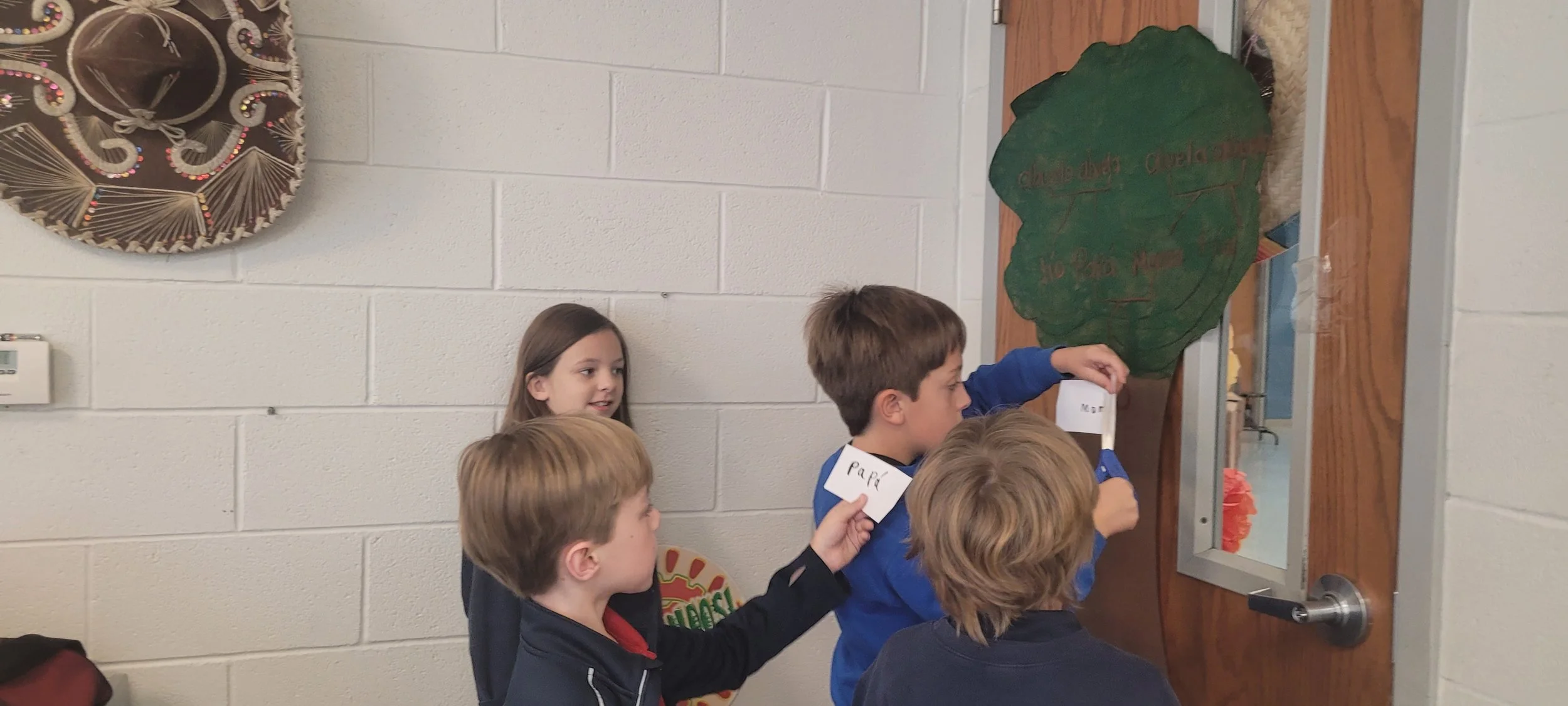
Over the last few weeks, the students have learned to pronounce family names in Spanish. They then had fun using these names to build a family tree. After coloring the family tree, they wrote a few sentences in Spanish to explain the relationships depicted in the tree.


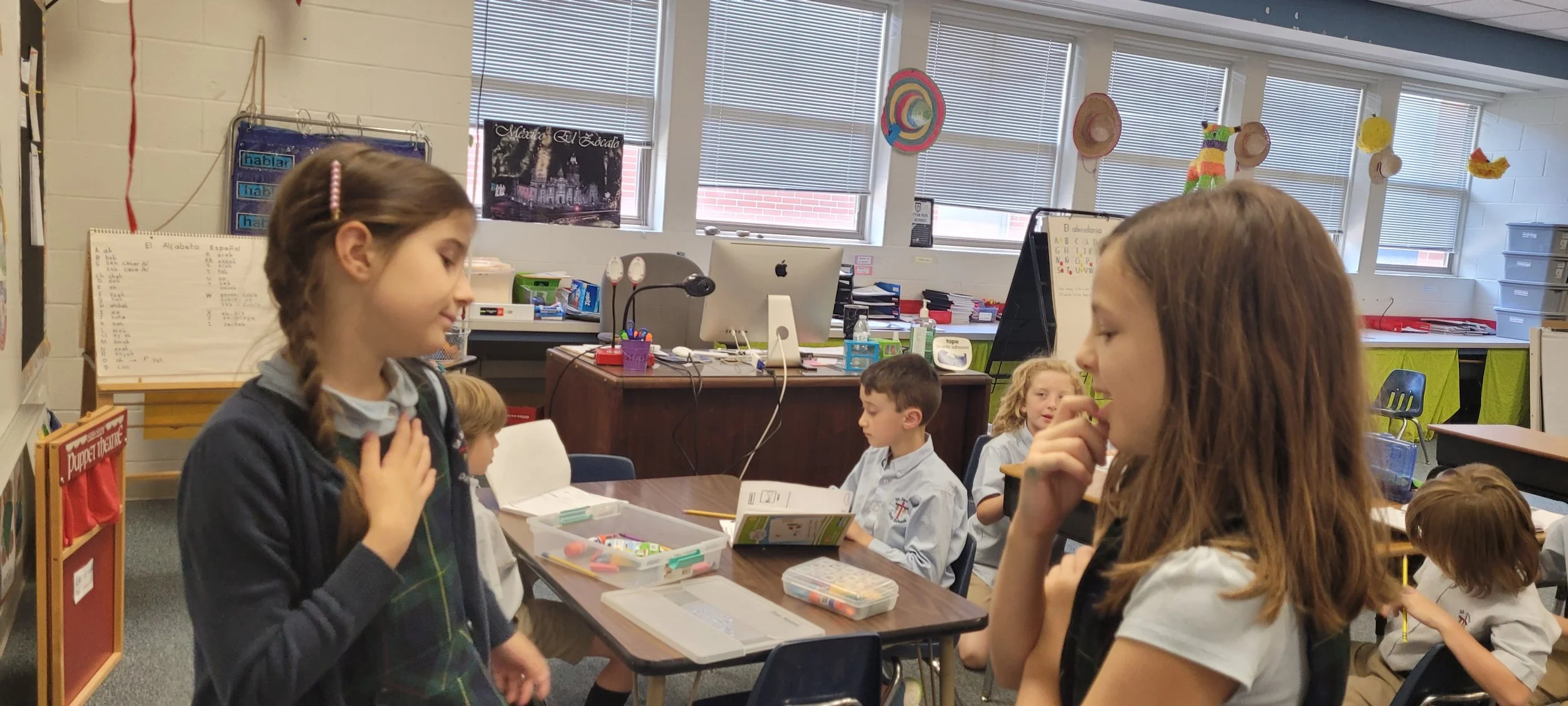


Our students are having fun learning how to write the numbers in Spanish. They are also completing activities to learn the Spanish words for different shapes and colors.


Aprendiendo a escribir los números del cero al treinta. Learning how to write the numbers from zero to thirty.


Aprendiendo a escribir el número veintidós--Learning how to write the number twenty two.
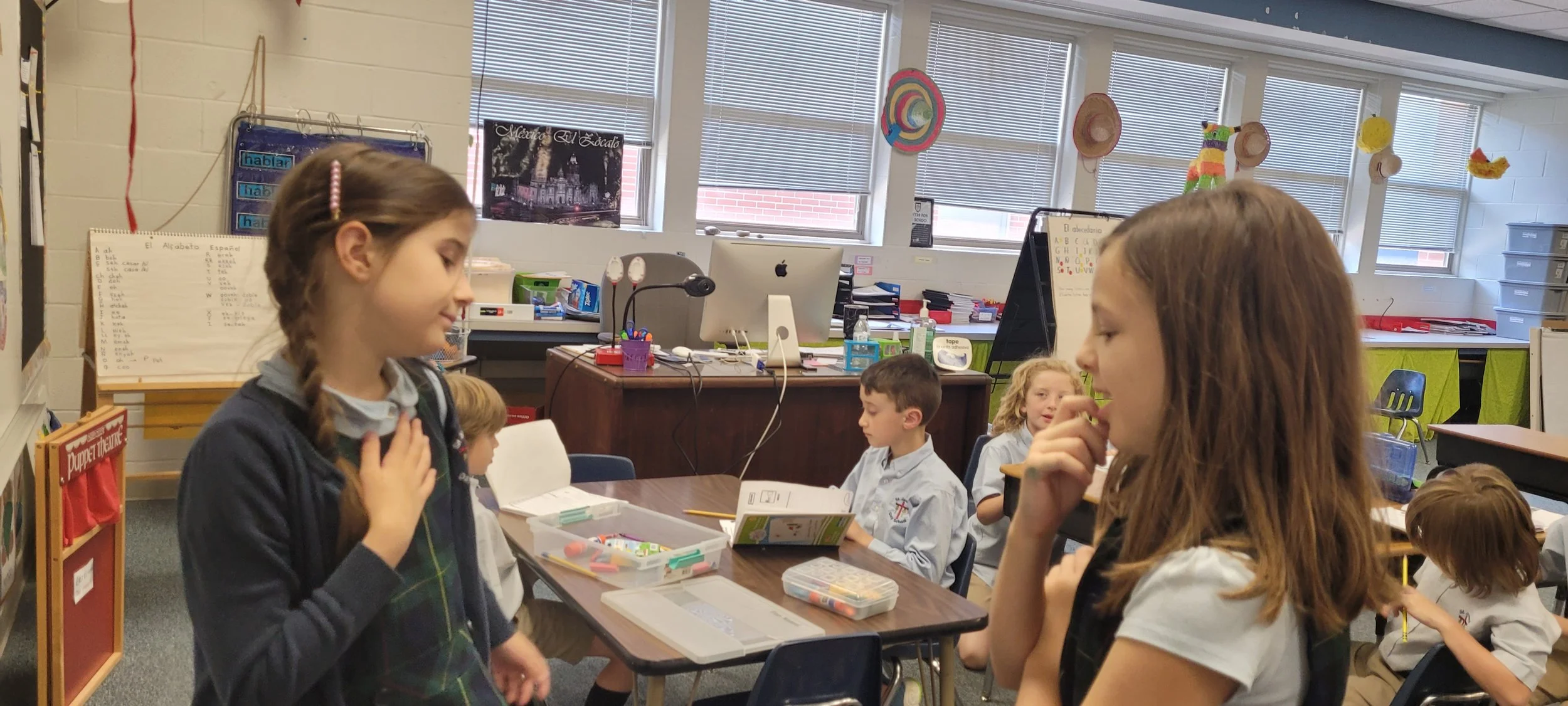
Practicando una conversación–Practicing a conversation

Practicando una conversación–Practicing a conversation

Practicando una conversación–Practicing a conversation

Leyendo--Reading.

Escribiendo--Writing.

El óvalo

El triángulo

Divirtiéndose con los globos de colores– having fun with the balloons.

Brincando los globos— Jumping the balloons!

Divirtiéndose con los globos de colores– having fun with the colorful balloons

Aprendiendo sobre las formas geométricas---Learning about the geometric shapes


El círculo
Learning the alphabet in Spanish is challenging, but for these students, it seems easy. We learned a song about the alphabet. Students wrote new vocabulary words that start with the letter “C,” such as corazón, casa, calcetin, caballo, caracol and conejo. Finally, the students colored and glued the letter C in their notebooks.


Today students learned about the vowel “a” in Spanish. To help understand this vowel, students learned the word for the insect bee in Spanish (abeja). After being introduced to the vowel “a” and the word abeja, students colored a picture of a bee (abeja) and repeated the word to learn how abeja is pronounced. In the process, students learned the sound of the vowel “a” in Spanish and also learned the Spanish word for bee while having fun coloring.


OH,… ALL THE THINGS THE STUDENTS WILL LEARN IN SPANISH THIS YEAR!


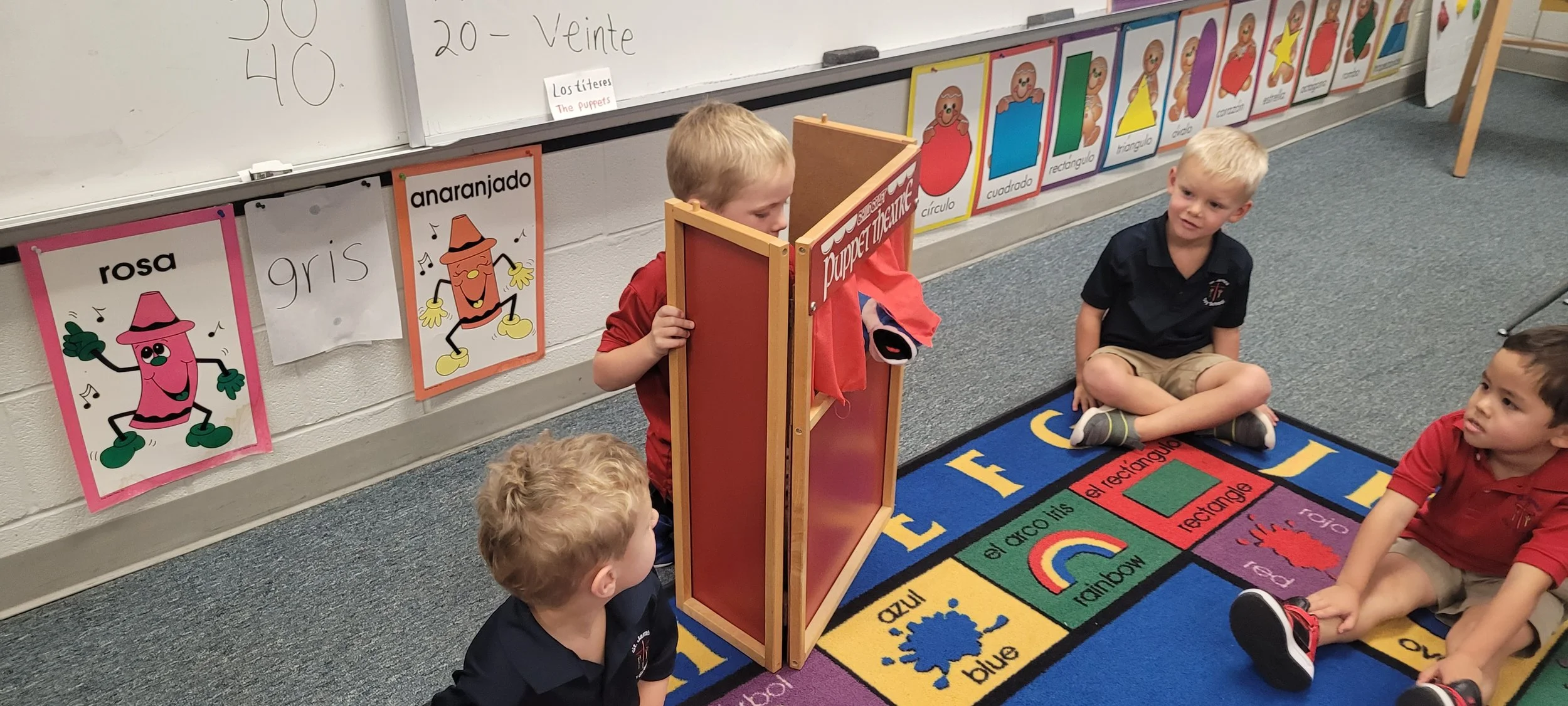


We are about to finish this school year, but before it ends I want to say it has been my pleasure to see your child grow and progress in learning Spanish every week.
This year we learned a lot, but the most important thing that we learned is that learning a second language like Spanish can be rewarding.
Have a great Summer!




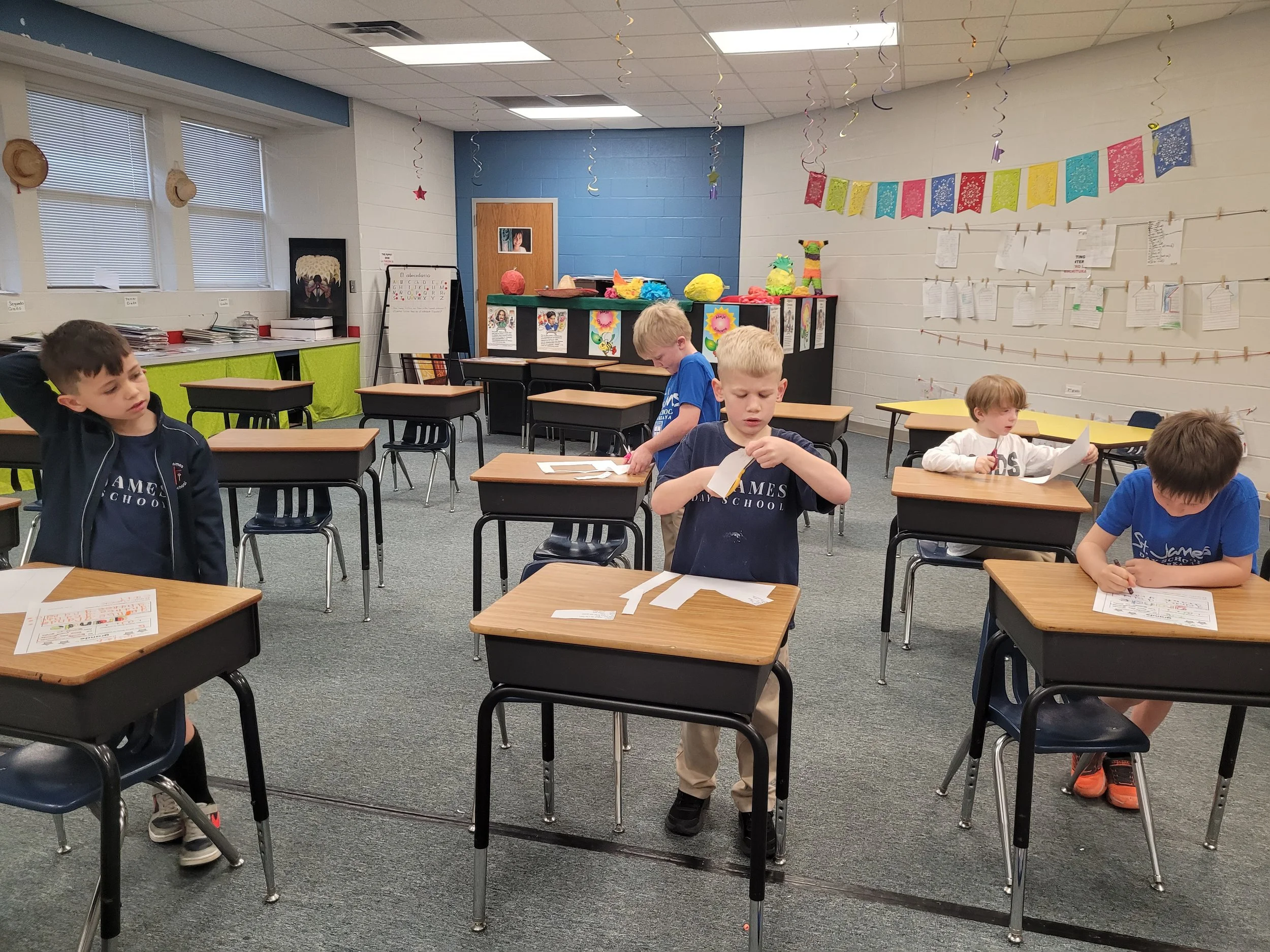


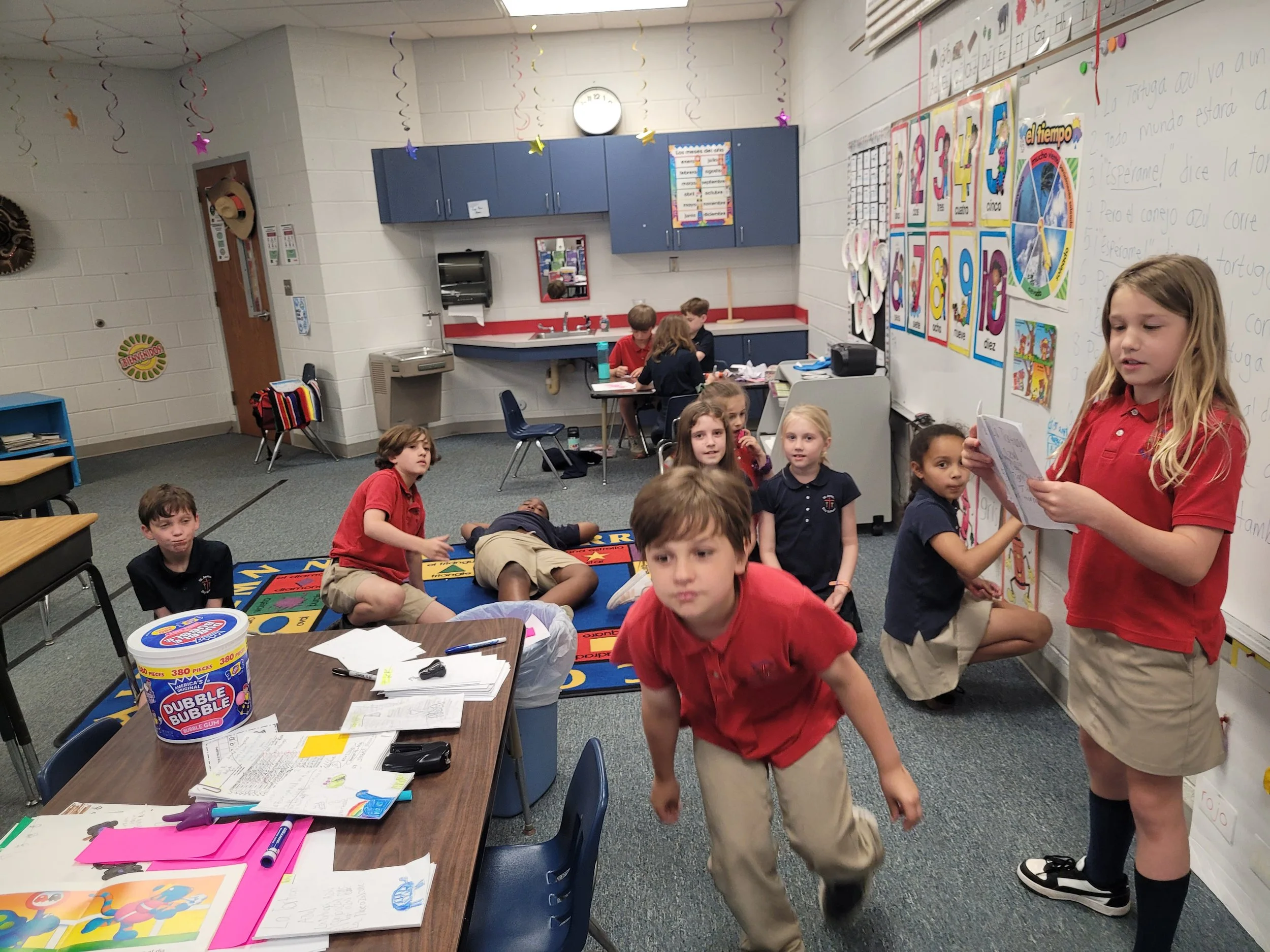


Students are having fun reading short books in Spanish. Reading books helps students recall and comprehend vocabulary, as well as learn new words. Students need to be challenged to read in a different language at this point in the year. Such readings increase the students’ cognitive development and understanding of language.


Students are practicing the lists 1, 2, and 3 of the sight words assigned to them. Students practiced memorizing the sight words in groups of two or three. We then practiced the sight words in the class as a big group. Each student had the opportunity to practice the words aloud. After practicing, they took a spelling test in the class.


The students are reading out loud some of the same sight words that we practiced before. One important word that they learned is the word GRANDE. Then the students practiced and read a sentence using the word GRANDE in it. They did a great job. The sentence the students practiced and read was El gato es grande. Students also learned how many syllables and how many letters are in the word GRANDE.


Students sang a song and played a game to help them remember the numbers in Spanish. The game consisted of connecting the dots to a picture. The students had fun discovering the dot-connected picture of a casa de perro (a doghouse).


In this lesson, students learned how to ask questions related to the days of the week.
The following are questions and answers that students are now familiar with in Spanish. What day is today? Qué día es hoy? What day will be tomorrow? Qué día será manana? What day was yesterday? Qué día fué ayer?
Students, also learned that in Spanish the days of the week and months of the year do not need to be capitalized, and that the days of the week are considered masculine words and have the article “el” or “los” before them.
Very proud of this class!!


Students learned how many Hispanic kids celebrated the Day of the Wise Men (El Dia Los Reyes Magos). Instead of exchanging presents on Christmas Day, in the Hispanic tradition, presents are exchanged on the same day that the Wise Men (Los Reyes Magos) presented gifts to baby Jesus. The Day of the Wise Men is on January 6. St. James students learned that Hispanic children write letters not to Santa Claus but to the Three Wise Men. They then leave the letter inside their shoes. On the morning of January 6, the children wake up early to see what gifts the Wise Men have brought for them. While the children are having fun with their new toys, the parents are preparing the Kings’ Wreath. The Kings’ Wreath is a wreath of sweet bread, called La Rosca. Usually, everyone also drinks a cup of hot chocolate to go along with a piece of La Rosca.


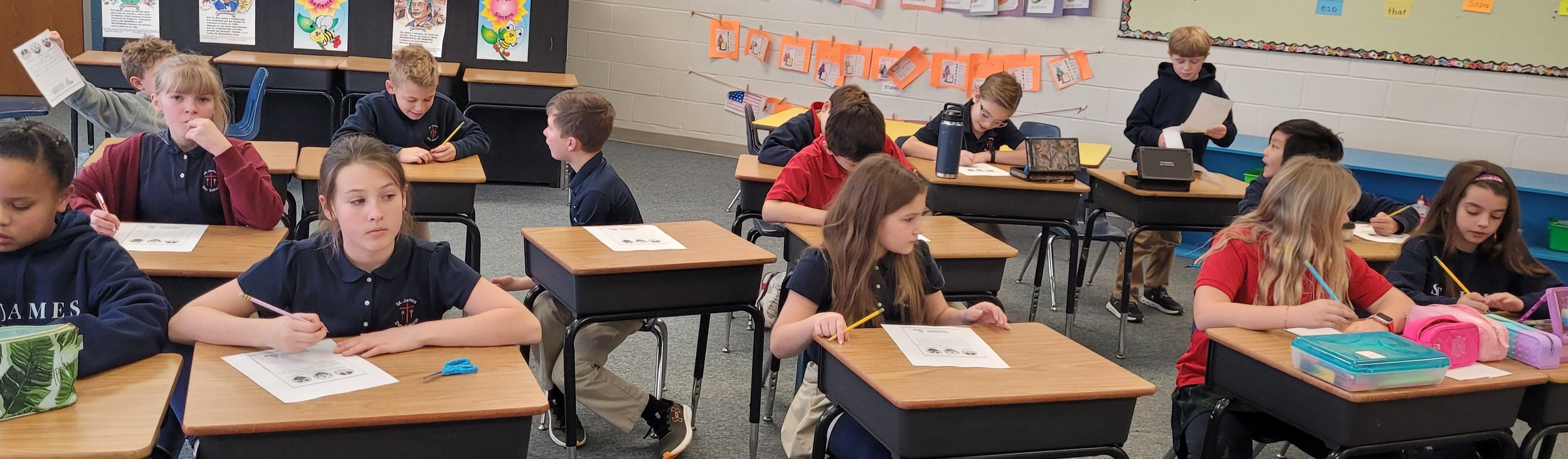


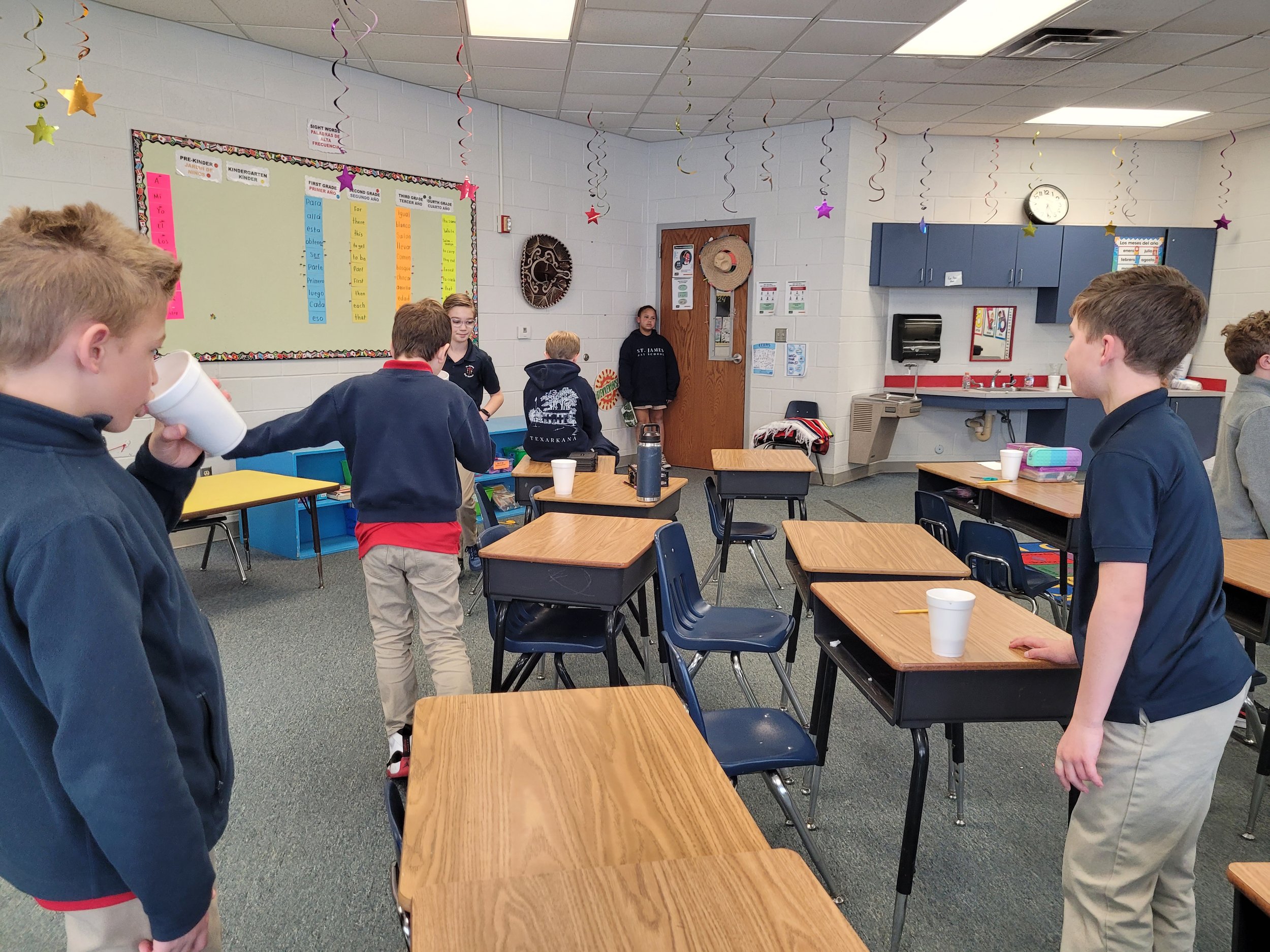
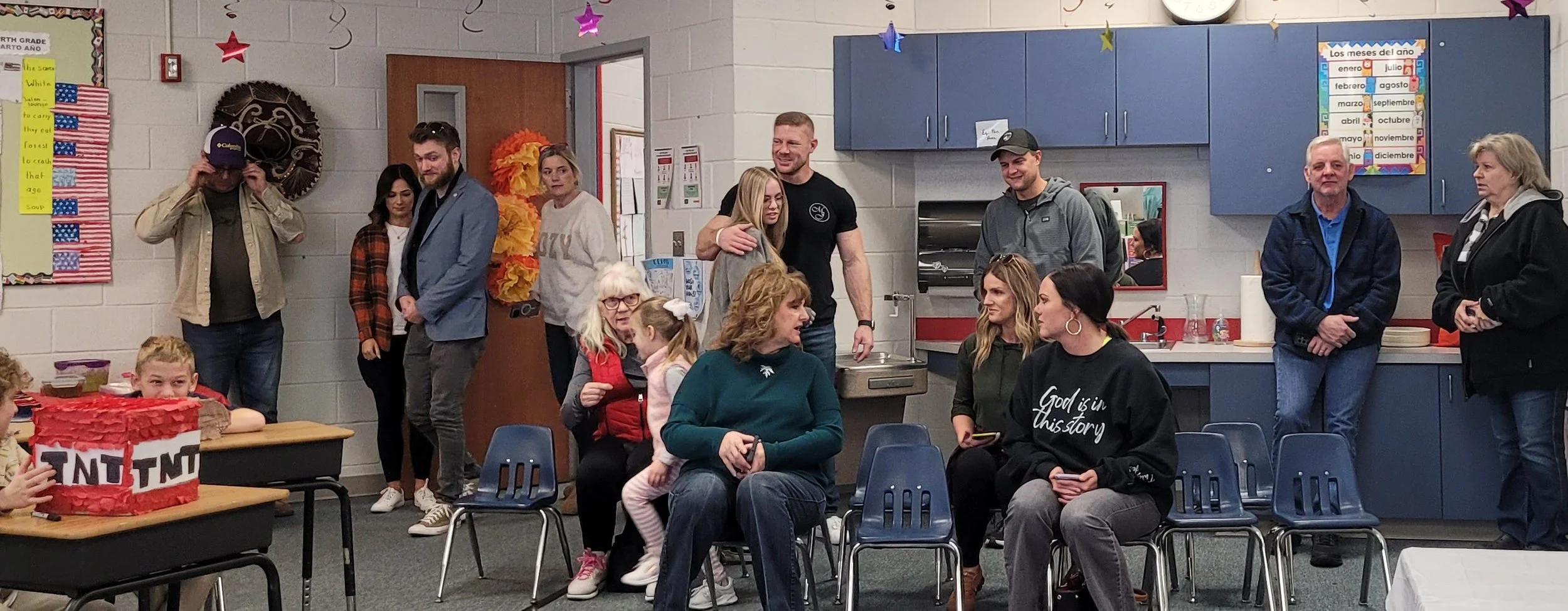
The students in fourth grade worked hard, learned, and had fun making their piñatas and reciting a poem.
They started this project by researching the type of piñata they wanted to make. Then they found three facts about their piñata and learned how to say their materials in Spanish.
During their presentations, students mentioned how they made their piñatas. While doing their piñata projects, students learned new vocabulary and also learned how to work together. In the process, they discovered that learning can be fun.


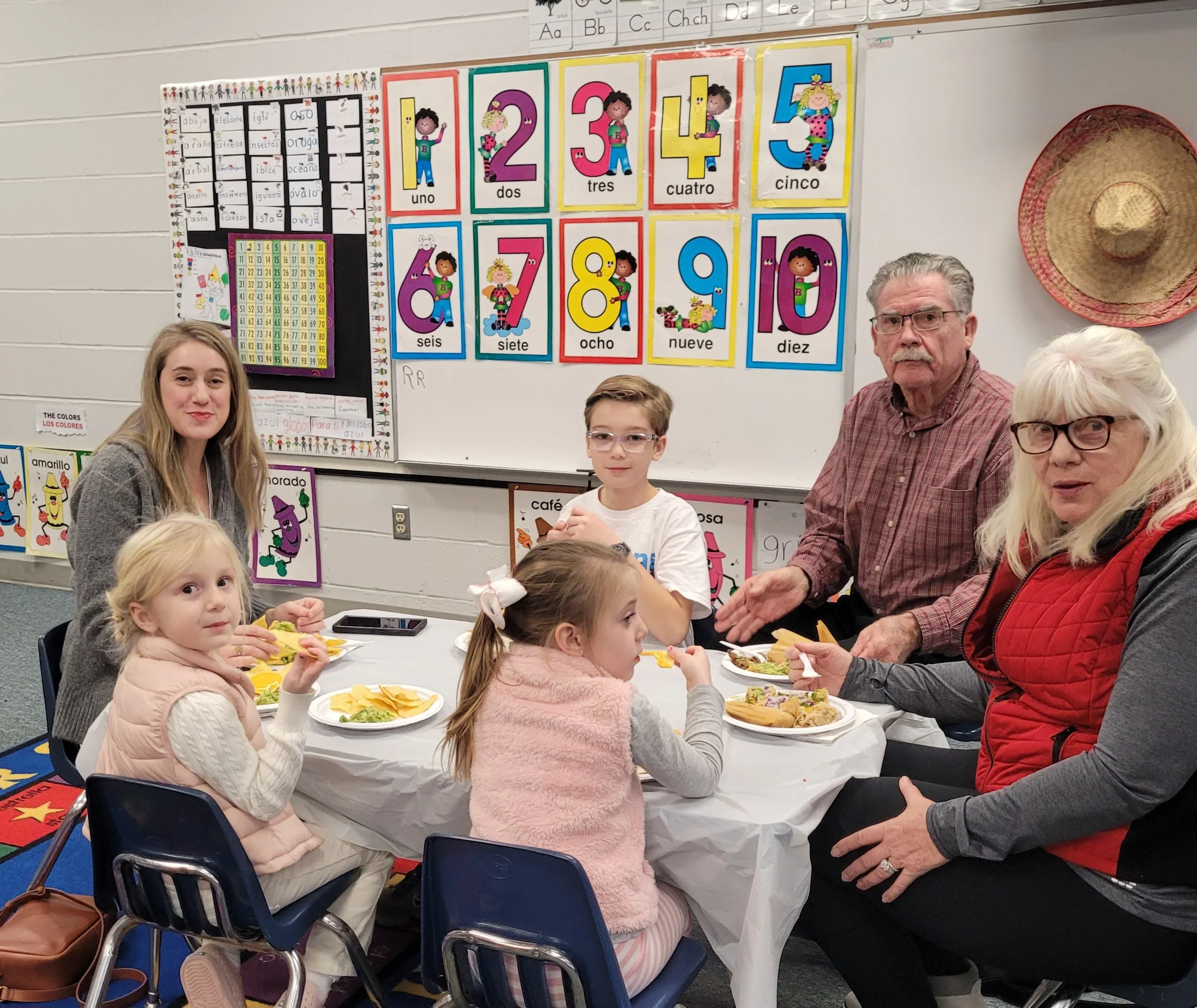




Students are learning to sing the song The Little Chicks.
After learning some parts of the song and watching a video about The Little Chicks, the students did some activities. These activities included coloring, cutting out pictures, and pasting pictures in the correct sequence of the story.


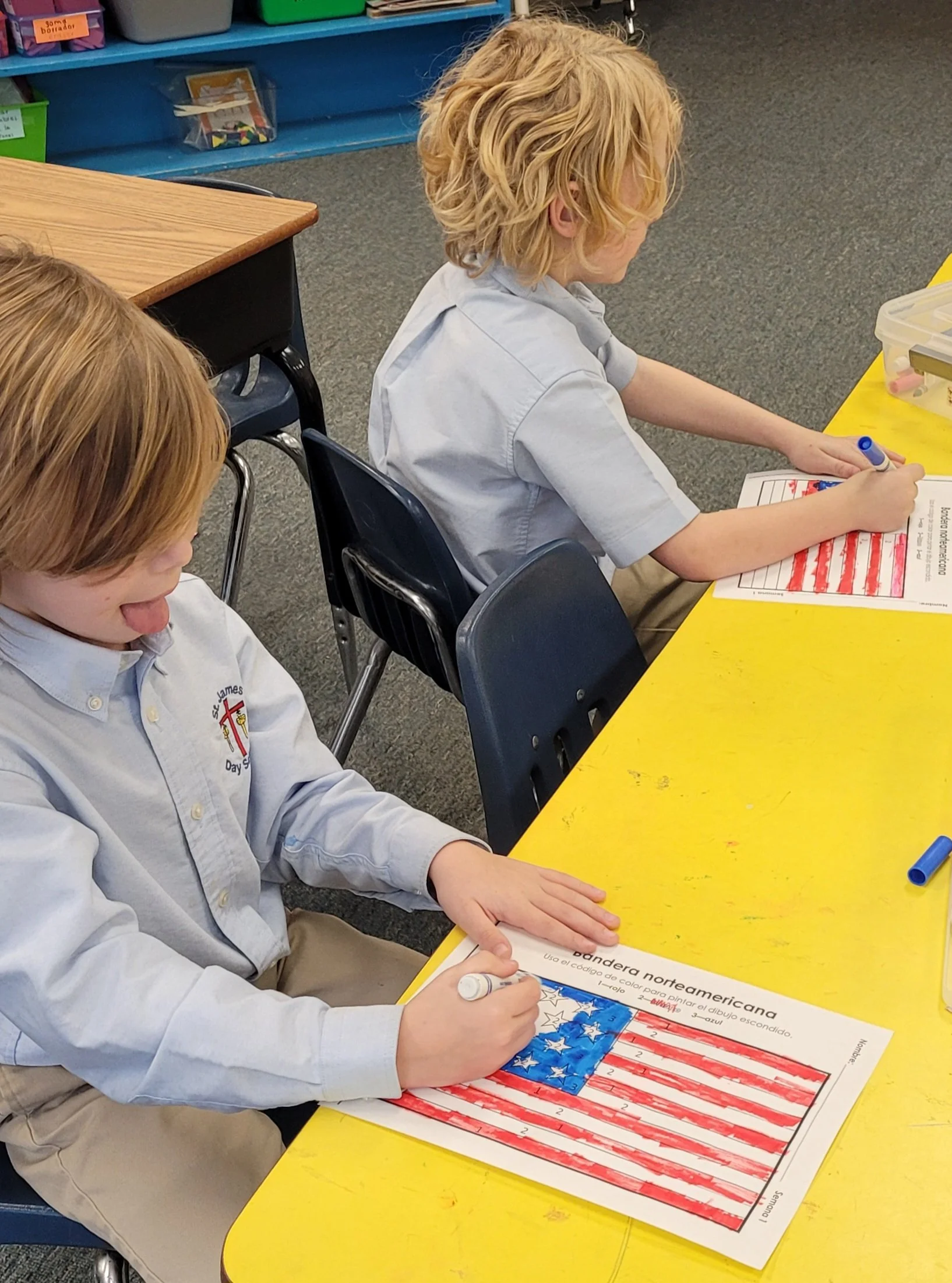
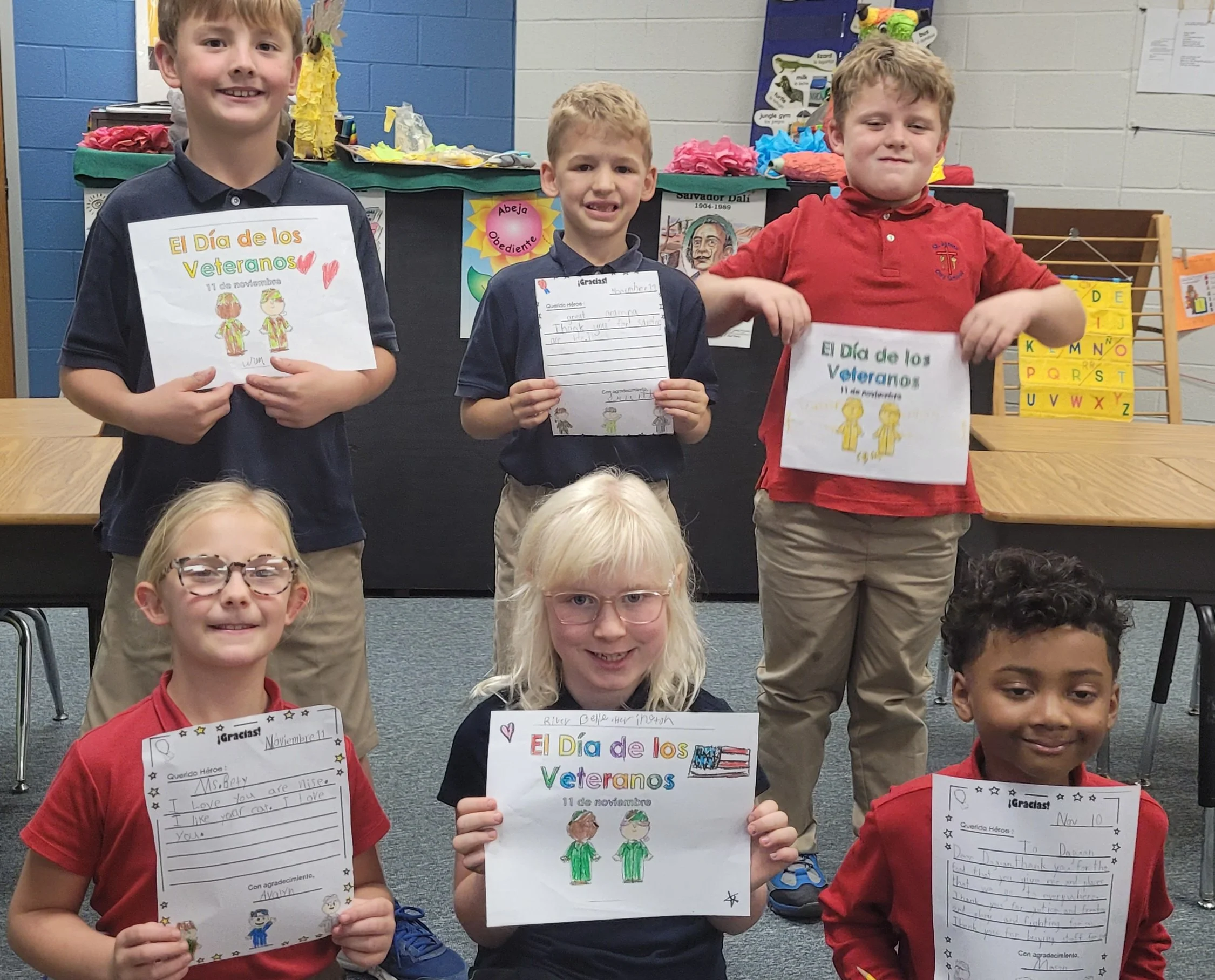
We celebrate and give thanks to those who served this country to keep us free and safe. In honoring veterans for their service, students wrote a short letter thanking a family member, a friend, or a neighbor who served in the military. We also colored the American Flag to honor our heroes!





Some students are in the initial steps of doing their research; other students are already working on making their pinatas. Take a look at the work of these students, and try to guess what the end product is going to be. Have fun guessing!


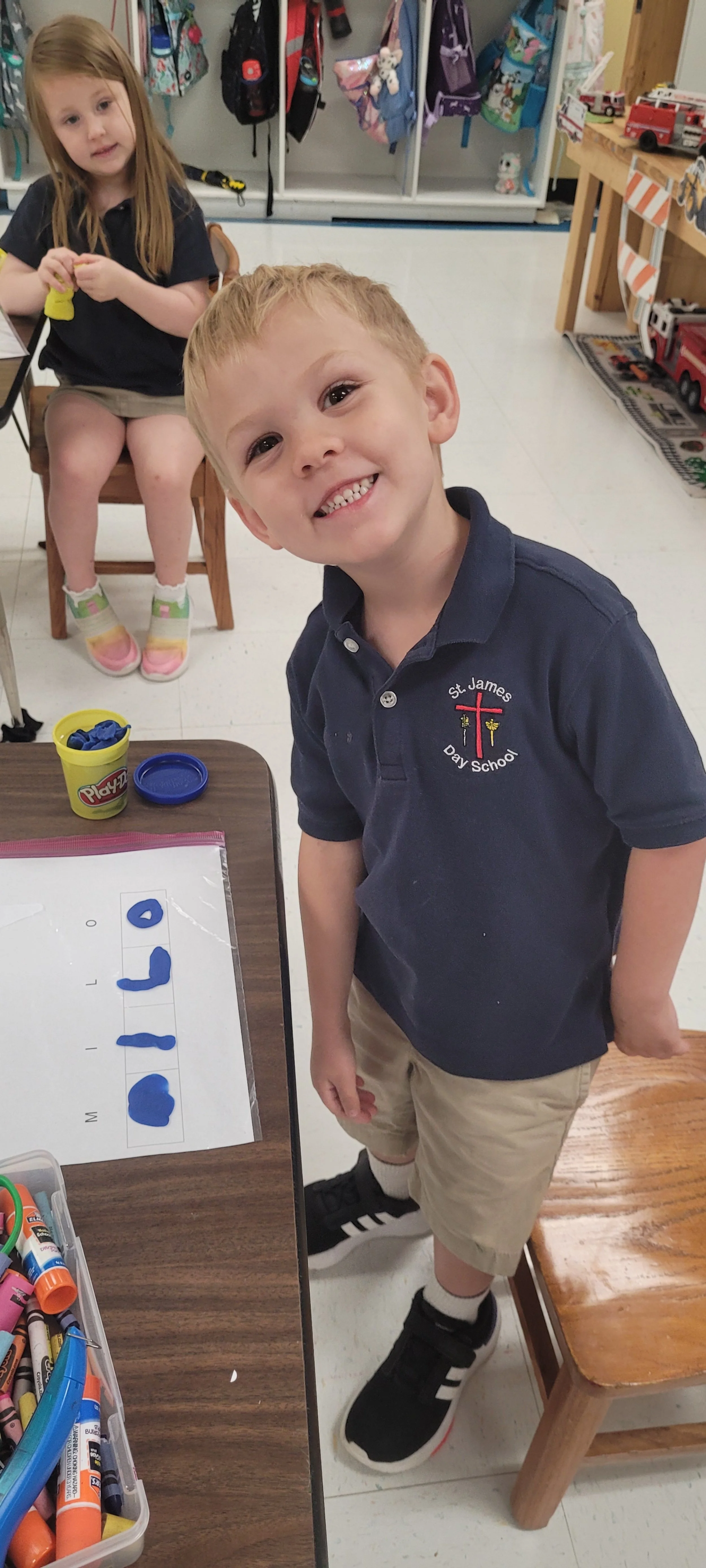
After learning a song in Spanish about colors, students practiced pronouncing the Spanish words for the different colors. Rolling certain Spanish letters with playdough was another way students learned while having fun. They also colored and traced their names which helped them improve their motor skills.




One way to learn Spanish is by singing a song. Students in Spanish classes are singing songs in Spanish and learning what the lyrics means. This helps them learn Spanish words and sentence stracture.


Happy Independence Day, Mexico!
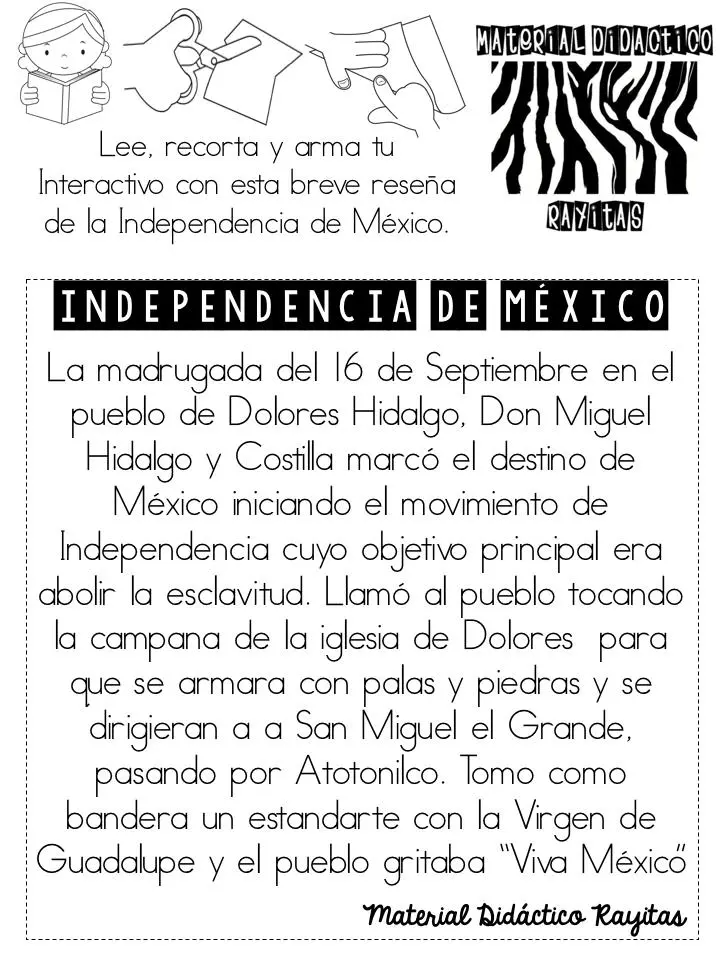
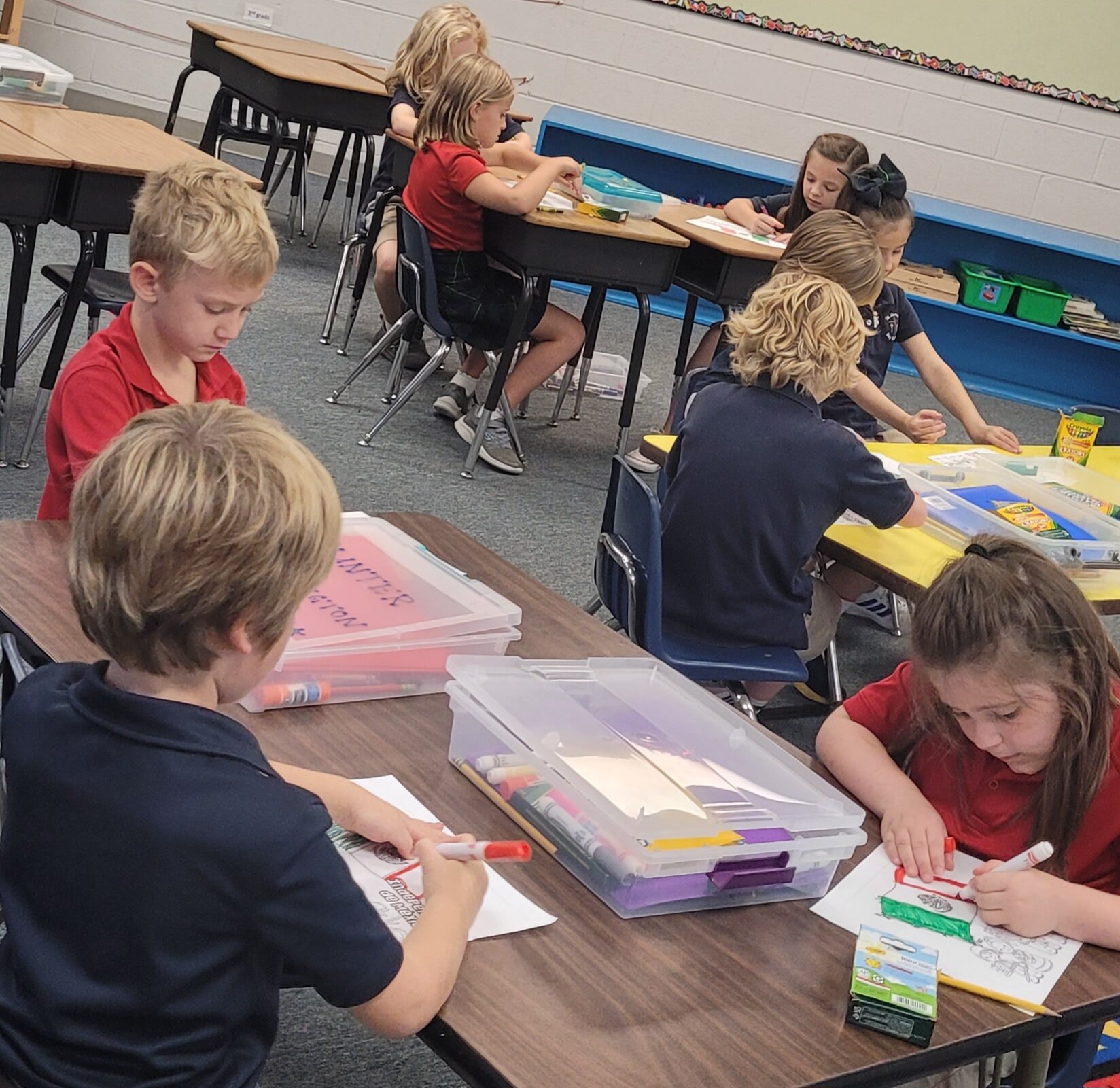
To learn about Mexican culture, students read a short article about Mexico Independence Day. They read what happened at dawn on September 16th, 1810 in the Mexican town of Dolores. They read about the leader of the movement, Don Miguel Hidalgo y Costilla. After reading about Miguel Hidalgo y Costilla, students got together in small groups and answered some questions, such as what did Father Hildago do for the people of Mexico. Other students learned about the Mexican flag and colored it in on a worksheet.





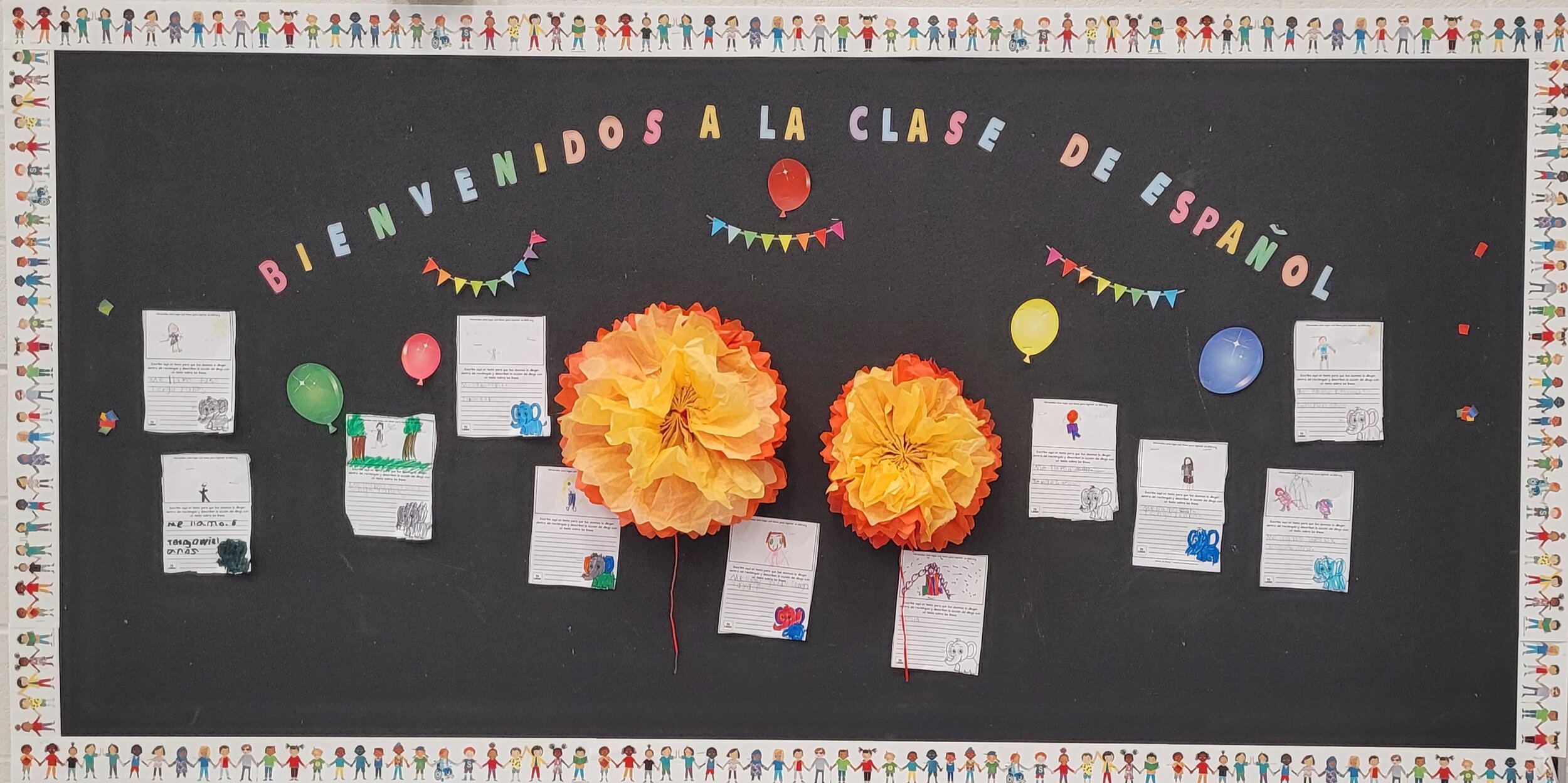
We are off to a great start!
The students at St. James have the opportunity to learn Spanish at a young age.
These couple of weeks the students have learned important information about drills and safety at school. They have also learned how to greet people in Spanish, learn the word for different colors in Spanish, and how to conjugate basic verbs.