Orbeez, Patterns, and Kindness

We have learned all about the letter G this week.  We added the words green, go, gopher and goat to our word wall.  We are also on the number 11.  The children had to trace and then write the number 11.  They had to trace the word eleven and then write it themselves.  They went on a number hunt, and had to circle every number 11 they found.  They cut out 11 pennies and pasted them into a piggybank, and drew 11 windows on a building. 

I added orbeez beads to the sensory table, and this has been the most popular center.   They will stay in the table until Christmas break.   

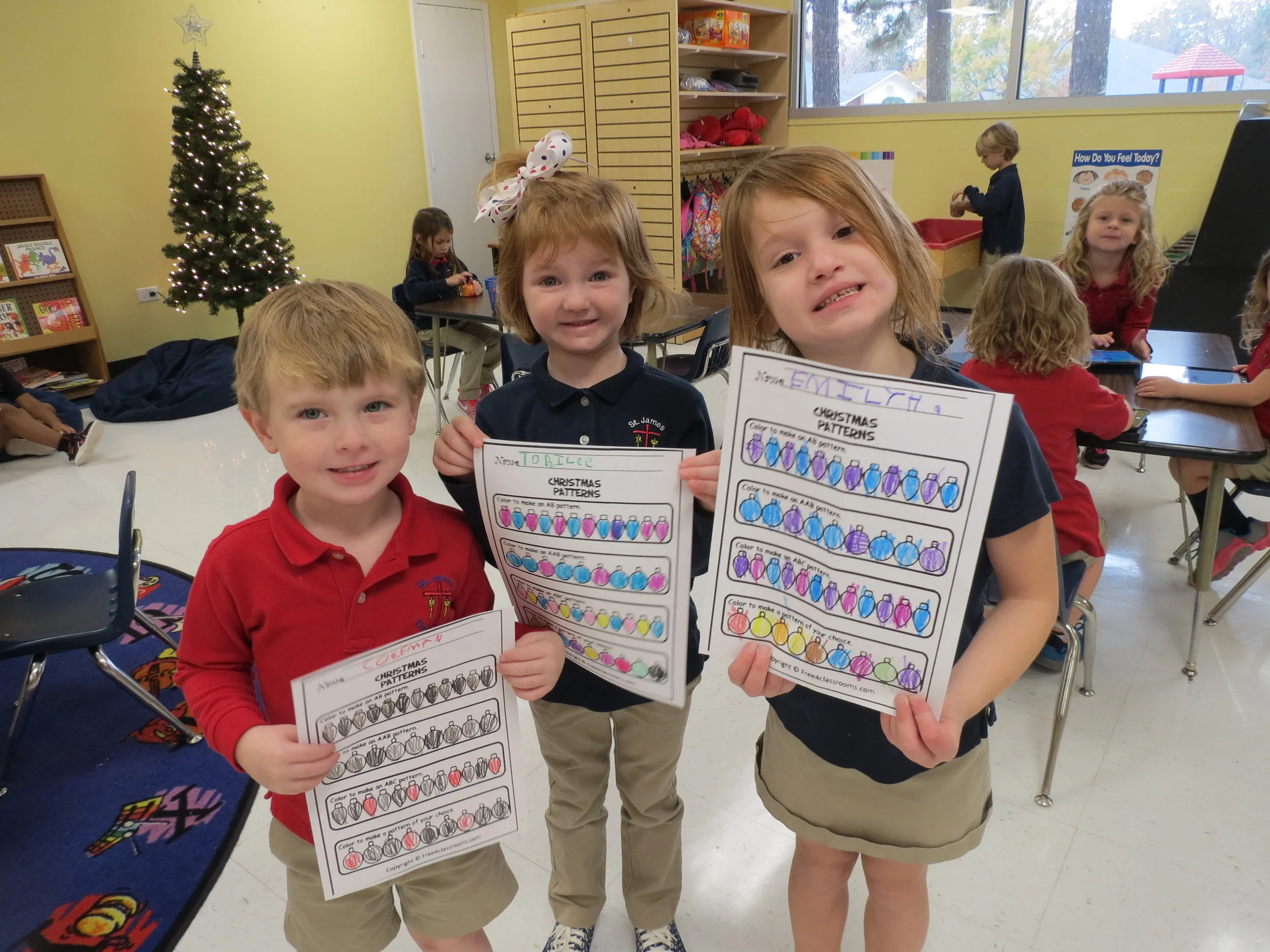
We worked on AB, AAB, and ABC Christmas patterns. Guiding children to understand patterns is a foundational skill in mathematics.  Children begin to identify patterns in their environment at an early age.  As they learn to label patterns by having one name stand for something else, they are creating an algebraic representation.

We put up our Christmas tree, and have been making our own ornaments.  The children painted their own Christmas tree and decorated it with pompoms.  They are very unique and are on display in our windows. 

I absolutely love teaching at St. James and being able to lead the little ones in a daily chapel and the Pledge of Allegiance.  What a great way to get your day started on a positive note!

I have been talking to the students about kindness.  The simple acts of kindness seem to go unnoticed in this world we live in.  The children were given the prompt “I can light up the world with kindness by…..” on a Christmas bulb.  They had to draw of picture of them performing an act of kindness and I transcribed their words onto the picture.   Activities like this are helping their emergent writing and critical thinking skills.  Writing originates from drawing and is supported by make-believe play.  Understanding the mechanics of the writing system has a moderate correlation with reading in the primary grades.  


Tracy Jones
Bread Study and Community Service

We have investigated bread!  Bread is everywhere.  Nearly every culture in the world eats some type of bread.   As we studied bread, we learned concepts and skills related to physical development, literacy, math, science, social studies, the arts, and technology.  We also developed thinking skills as we observed, investigated, asked questions, solved problems, made predictions, and tested our ideas.

We enjoyed making our own bread.  Making bread allows the children to demonstrate their knowledge of print by following a recipe.  Children see print in their homes, in their schools, on street signs, and elsewhere throughout their communities.  Knowledge of print and its uses includes understanding that print carries a message and that print is organized and read in particular ways.  Young children’s concepts about print are a good predictor of later reading, writing, and spelling ability.   Making our own bread also allowed them to compare and measure ingredients.  Preschool children understand that there are different ways of measuring.  They are beginning to recognize the attributes of length, height, width, capacity, and weight.   

One of the reasons I love teaching at St. James is the fact that I have the flexibility to allow a child to make breakfast for his friends. Colin, our guest chef, served chocolate chip waffles to his classmates and teachers……..priceless moment!  Who would not want this loving, nurturing and FUN environment for their child?  This is the prime example of building positive relationships with peers, which is so important in social-emotional development.

We celebrated our study of bread by taking a field trip to Be the Blessing Bakery.  The bakery is a program of the Randy Sams' Outreach Shelter. They provide jobs by employing individuals experiencing homelessness.  Cathy Smith, Bakery Program Director, taught our little ones the importance of wearing nets over their hair while cooking.  They were able to see how cupcakes are made and the ingredients used.  Each child took a turn at putting the batter into a muffin cup and then were able to decorate and eat their own creations!! 


Our community service project this fall was making decorations and cards for the Randy Sams Thanksgiving luncheon.  Both PreK classes joined together for this project.  Together we made 102 cards, and 130 placemats for the shelter.  Also, 216 tubes of toothpaste were generously donated by longtime St. James Day School supporter Andrew S. Curry, D.D.S.  Mrs. Jennifer Laurent, Executive Director of the Randy Sams Shelter, came to our classroom and talked to the children about the shelter, and picked up the decorations.

Tracy Jones
Happy Halloween!

Part of our community service in PreK is going to Opportunities, Inc., to sing halloween songs. These types of activities help with their social-emotional development.  The foundational skills for being a productive member of social and learning groups are established during the early childhood years, and they are important for early school success.  Children who are socially competent interpret social situations and match their behavior accordingly.  We have been practicing for about a month and the children did an outstanding job!

IMG_5350.JPG
IMG_5370.JPG
IMG_5374.JPG
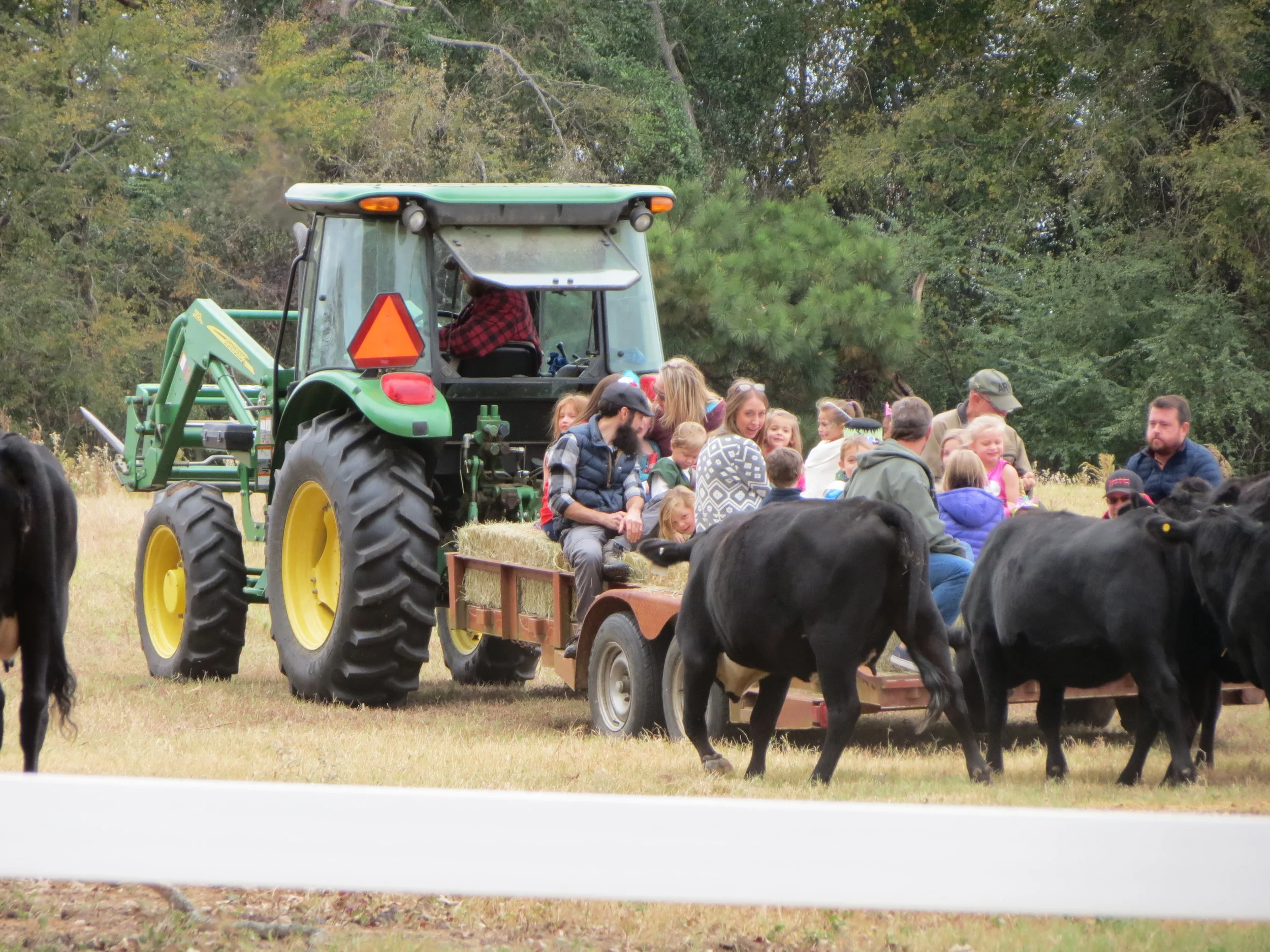
After singing, we loaded up and headed over to the Curtis farm for a hayride, games, and lunch.  What a great way to establish and sustain positive relationships, and making and keeping friends.  Being able to establish caring relationship…

After singing, we loaded up and headed over to the Curtis farm for a hayride, games, and lunch.  What a great way to establish and sustain positive relationships, and making and keeping friends.  Being able to establish caring relationships and to enter successfully into ongoing social interactions are essential skills for school and for success in life.  A very special thank you to the Curtis family for sharing their house with us.  The children had a great time!! 

IMG_5389.JPG
IMG_5393.JPG
IMG_5399.JPG
IMG_5400.JPG
IMG_5396.JPG
IMG_5402.JPG
IMG_5405.JPG
Tracy Jones
Ending of our pet study

What a great way to end our pet study by taking a field trip to DogPatch pet store!  I love being able to bring a study to life for the children.   They were able to pet a snake, puppies, iguana, rabbit, and a guinea pig.  A very special thank you to Mr. Braswell and his staff for letting us come into his store, and having lots of patience! In studying pets, we have learned concepts and skills in the areas of literacy, mathematics, science, social studies, the arts, and technology.  We developed thinking skills as we observed, investigated, asked questions, solved problems, made predictions, and tested our ideas.

IMG_5299.JPG
IMG_5292.JPG
IMG_5303.JPG
IMG_5300.JPG

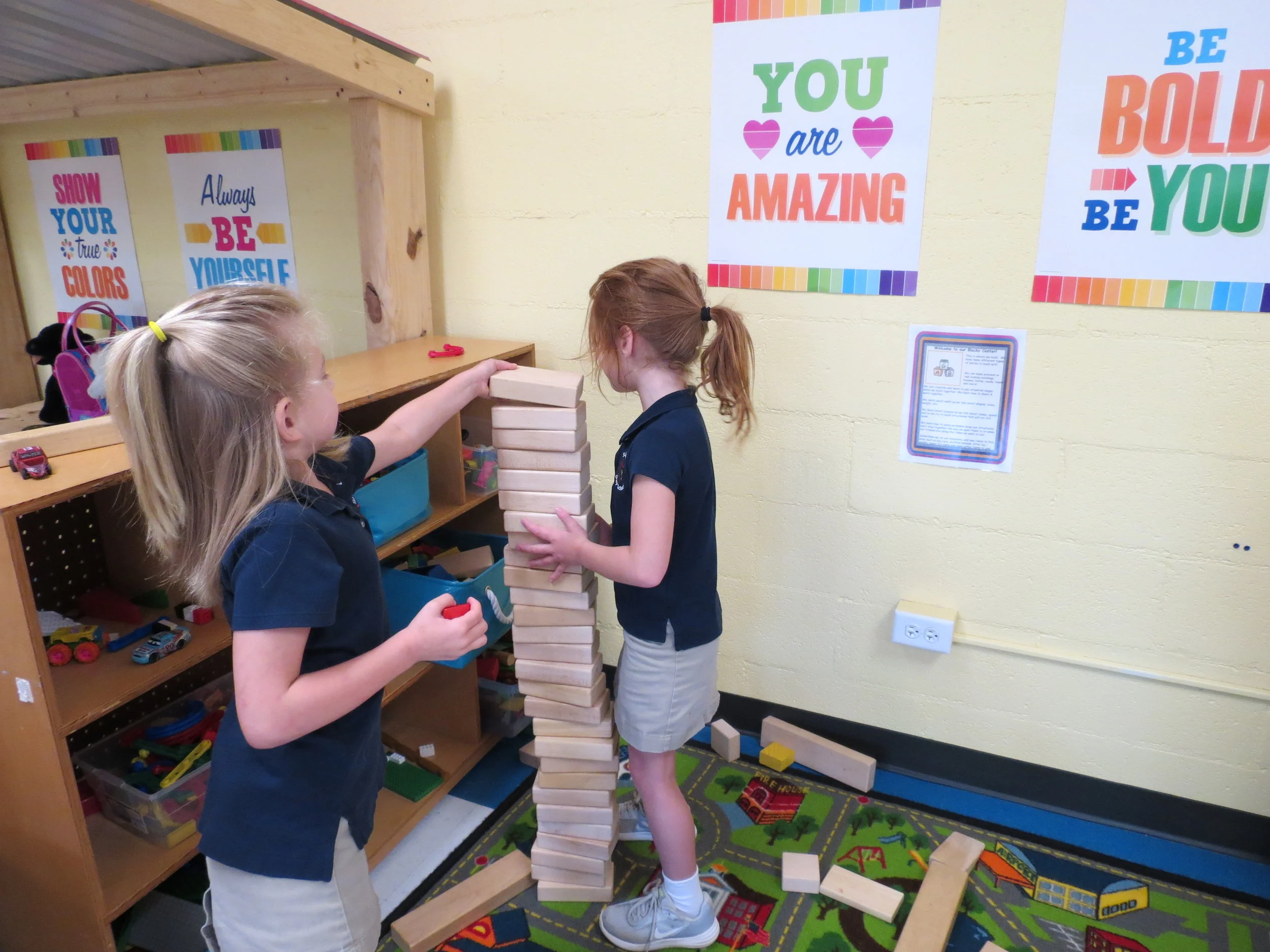
We focused on the letter T and number five this week.  We learned about Tom Tuttle using his timer and the sound it makes.  We added the words Tobi Lee, turtle, timer, and Townes to our word wall.  We made toothpick art, twizzler pets, and learned about the State of Texas.  We added telephones to our pet center, and built tall towers in the block center. 

IMG_5259.JPG
IMG_5260.JPG

Piper’s dog Meggie, came for a morning visit, and Colin’s dog, Lovey, came for an afternoon visit dressed in a school uniform!

IMG_5264.JPG
IMG_5267.JPG

In small group we worked with number cards.  The children were given cards with a numeral and its number word printed on one side.  They were instructed to use manipulatives to count out each quantity.  With this activity they are using number concepts and operations.  This is important because children’s understanding of counting, number symbols, and number operations are fundamental to their success with more complex mathematics.  To count well, children must learn one-to-one correspondence, i.e., that one number name is matched to a single object in a set being counted.

IMG_5273.JPG
Tracy Jones
Reading, Pets and P.E.

During library time on Monday, the 4th graders read to the class. Moments like this are one of the things that make me love St. James! Where else can you get this interaction with older peers? My class really looks up to the big kids and loves spending time with them. The simple act of having an older peer read to them is helping to establish and sustain positive relationships. The ability to enter successfully into ongoing social interactions is an important social skill. The preschooler who talks about friendships becomes a kindergartner who establishes and maintains relationships over time with special friends. Children’s ability to build positive relationships with peers affects their social competence, school adjustment, academic success, and mental health in adulthood.

We have had several pet visitors, and my little dog Holly, came for a visit on Friday. She is 13, and the children were so sweet and gentle with her. 

In PE this week we worked on our balancing skills. We are very fortunate to be able to participate in PE every day!! The children had to walk along a balance beam heel to toe and side to side. Balancing involves movement to help stabilize the body’s position when the person is not at rest. Children’s ability to balance affects their performance of gross-motor tasks. Appropriate instruction, practice, and safe materials and equipment are needed to help children improve their balancing skills.
 

savannah jarratt